Everyone is trying to persuade you, and most of them are working from instinct. Rhetoric is the study of persuasion as a discipline — its moves, its ethics, and its failure modes — and learning it does two things at once: it makes your own arguments land, and it makes you far harder to manipulate. That double edge is why it is worth studying carefully rather than absorbing by osmosis.
One honest caveat up front: books teach you to recognize the moves, but persuasion is a performance skill. You will only get good by arguing, writing, and speaking in front of real people who can push back. Read these to build the map, then go practice.
Why order matters here
Rhetoric layers. The ancient framework explains what modern behavioral science later measured; the psychology explains why certain classical techniques work at all. Read the science first and it feels like a bag of tricks; read the tradition first and the science feels like confirmation.
The path, stage by stage
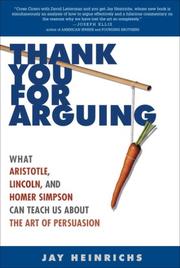
Start with Thank You for Arguing by Jay Heinrichs — a witty, modern tour of classical rhetoric that makes the old vocabulary immediately usable. Then read the source: Rhetoric by Aristotle, still the clearest account of ethos, pathos, and logos ever written. Add The elements of eloquence by Mark Forsyth for the sheer craft of memorable phrasing.
Now bring in the science. Influence by Robert B. Cialdini catalogs the psychological levers of compliance, and its follow-up Pre-Suasion by Robert B. Cialdini shows how framing before the message does much of the work. Thinking, fast and slow by Daniel Kahneman explains the two-system mind all persuasion is really addressing.
For depth on framing and change, Don't Think of an Elephant! by George Lakoff shows how language sets the terms of a debate, and How Minds Change by David McRaney synthesizes the newest research on what actually shifts a belief — usually not a better argument. Finally, On Writing Well by William Zinsser grounds all of it in clear prose, because muddy writing persuades no one.
How to actually learn this
Read actively, then rehearse. After each book, take one argument you actually need to make and rebuild it using that book's tools. Record yourself, or write it out, and get honest feedback. Watch persuasion in the wild — ads, speeches, arguments you lose — and name the technique. And keep the ethics in view: the same skills that clarify can also deceive, so decide early what kind of persuader you want to be.
Ready to build the skill? Follow the full reading path for the staged study plan, visit the subject hub, or explore more subjects.
Ready to learn something deeply?
Build a reading path — free