Neuroscience punishes the bottom-up reader. Start with ion channels and membrane potentials and you'll quit before the brain ever does anything interesting. The subject is far more motivating — and, oddly, more comprehensible — read top-down: the astonishing whole brain first, then a controlled descent into the neurons and circuits that produce it.
Learn neuroscience from books: from the whole brain down to the neuron
July 6, 2026 · 1 min read
The path, stage by stage
Our neuroscience path makes that descent in order.
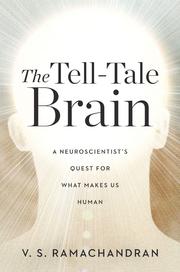
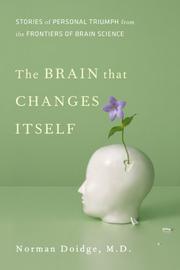
Foundations — the brain in plain language. Ramachandran's The Tell-Tale Brain, Eagleman's Livewired (the brain as a self-rewiring system), and Doidge's The Brain That Changes Itself on neuroplasticity. These read like detective stories and hand you the big questions before any jargon.
The cellular level. Neuroscience: Exploring the Brain is the ideal first textbook, and The Synaptic Self explains how neurons and their connections make a you. Now the ion channels matter, because you know what they build.
Systems neuroscience. Kandel's Principles of Neural Science — the field's monumental reference — and LeDoux's The Emotional Brain on fear and feeling.
Cognitive neuroscience. Gazzaniga's Cognitive Neuroscience and Chalmers' The Conscious Mind, where the science runs headlong into the hardest question of all.
Advanced frontiers. Theoretical Neuroscience and The Neuroscience of Intelligence — computation and theory, the modeling edge of the field.
The habit: trace the pathway
Neuroscience is circuits. For every process — a reflex, a memory, a moment of fear — draw the pathway from input to output, structure by structure. Redrawing the visual system or the fear circuit from memory beats any amount of highlighting.
Around 160 hours, one of the deepest paths here. Follow the path or browse the neuroscience hub. It pairs naturally with the psychology reading path — mind from two directions.
FAQ
- Neuroscience or psychology first?
- Psychology gives you the phenomena (memory, emotion, attention); neuroscience gives you the mechanism. Either order works, but reading them together — behavior and its wiring — is best.
- Do I need biology and chemistry first?
- A little biology helps at the cellular stage; the textbooks review the chemistry they need. The top-down opening books require nothing but curiosity.
Get the books
- 1The Tell-Tale BrainAmazon ↗V. S. Ramachandran (neurology)
- 2LivewiredAmazon ↗David Eagleman
- 3The Brain That Changes ItselfAmazon ↗Norman Doidge
- 4Neuroscience: Exploring the Brain, 3rd EditionAmazon ↗Mark F. Bear
- 5The Synaptic SelfAmazon ↗Joseph E. Ledoux
- 6Principles of neural scienceAmazon ↗Eric R. Kandel
As an Amazon Associate we earn from qualifying purchases. Some book links are affiliate links; you pay the same price and we may earn a small commission.
Follow the full reading path

How to learn Neuroscience
Beginner11books160 hrs5 stages
Ready to learn something deeply?
Build a reading path — free