Here is the uncomfortable finding at the center of learning science: the study methods that feel most productive — rereading, highlighting, cramming — are among the least effective, and the methods that work — testing yourself, spacing, mixing topics — feel awkward and slow. People stall at this subject because they optimize for the feeling of fluency instead of the fact of retention. This path fixes the feeling first, then gives you the machinery.
Memory & Accelerated Learning: The Best Books, in Order
July 9, 2026 · 3 min read
The evidence first
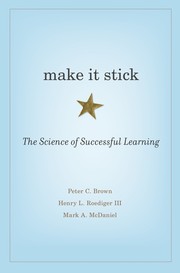
Start with Make It Stick by Peter C. Brown, the definitive popular account of the research. Retrieval practice, spacing, interleaving, desirable difficulties — every technique in the rest of the path traces back to the evidence laid out here. Read it and you will never trust a highlighter again.
The path also lists a third-party summary of Benedict Carey's How We Learn, published under the Shortcut Edition imprint. Skip it. Unauthorized summaries strip out exactly the experimental detail that makes this literature useful, and Make It Stick already covers the same ground with the studies attached. It is in the listing because our catalogue matched the title, not because it earns a place in the sequence.
Then the technique tradition
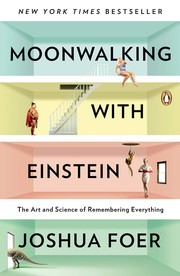
See how far deliberate technique can go. Moonwalking with Einstein by Joshua Foer is the story of a journalist who trained for a year and won the US Memory Championship — the most persuasive existence proof that memory is a skill, not a gift. Follow it with Remember it! by Nelson Dellis, a four-time US memory champion's practical manual for the same techniques: memory palaces, name systems, number systems, applied to groceries and speeches rather than card decks.
Behind both stands The memory book by Harry Lorayne, the 1974 bestseller that taught mnemonics to a generation before anyone called it memory sport. The link-and-substitute-word systems in it are the source material Dellis and Foer are working from, and it is still the most systematic drill book of the three. It is dated in tone and its examples are of their era; the methods are not. Unlimited Memory by Kevin Horsley covers similar territory in a much shorter, more motivational package — useful if Lorayne feels like homework, redundant if it does not. Read one of the two, not both.
Apply it to hard subjects
A Mind for Numbers by Barbara A. Oakley — the book behind the world's most popular online course on learning — covers focused versus diffuse thinking, chunking, and procrastination, aimed at math and science but useful everywhere. Ultralearning by Scott Young scales it up: how to design aggressive self-directed projects, with directness and drills as the core principles.
Close with the mechanisms
Peak by Anders Ericsson is the researcher whose work on deliberate practice got flattened into the 10,000-hour cliché. The original is sharper: improvement comes from targeted practice at the edge of your ability with feedback, and the book shows how to construct that for any skill — including remembering.
Last, The art of changing the brain by James E. Zull is the odd one out and the most interesting. Zull is a biologist writing for teachers, and he maps the experiential learning cycle onto what is actually happening in cortex — sensory intake, reflection, abstraction, active testing. It is the only book here that explains why the techniques in Make It Stick work at the level of tissue rather than at the level of experiment. Read it last, when you have enough of the practical layer for the biology to attach to something.
The habit: close the book and write
At the end of every reading or study session, close the book and write down everything important you can recall — from memory, no peeking — then check what you missed. This is retrieval practice in its cheapest form: five minutes, a notebook, no apps. The misses tell you exactly what to review, and the act of retrieving is what does the strengthening. It will feel worse than rereading. That is how you know it is working.
How long it takes
Nine real books at a normal pace is roughly 90 hours — and since this is the subject that speeds up every other subject, it pays compound interest. Follow the path, or browse the memory and learning hub. The recall habit also pairs naturally with the journaling hub.
FAQ
- Do memory palaces actually work for normal people?
- Yes — they are the best-documented mnemonic technique there is, and Joshua Foer's book is a book-length demonstration that an untrained adult can reach championship level in a year. For everyday use, Nelson Dellis's manual translates the same methods to names, lists, and speeches.
- Is the How We Learn summary in this listing worth reading?
- No. It is a third-party summary rather than Benedict Carey's actual book, and it appears here because our catalogue matched the title. Read Make It Stick instead — it covers the same research with the evidence intact.
- What is the single most effective study technique?
- Retrieval practice — testing yourself instead of rereading. Decades of research summarized in Make It Stick show self-testing beats passive review by a wide margin, especially when spaced out over days.
Get the books
- 1Moonwalking with EinsteinAmazon ↗Joshua Foer
- 2Make It StickAmazon ↗Peter C. Brown
- 3Remember it!Amazon ↗Nelson Dellis
- 4A Mind for NumbersAmazon ↗Barbara A. Oakley
- 5The memory bookAmazon ↗Harry Lorayne
- 6UltralearningAmazon ↗Scott Young
As an Amazon Associate we earn from qualifying purchases. Some book links are affiliate links; you pay the same price and we may earn a small commission.
Follow the full reading path

Remember more of what you learn
Beginner10books59 hrs4 stages
@worksherpa♥ 0
Ready to learn something deeply?
Build a reading path — free