Beginner landscape paintings fail in a predictable way: every tree is green mud, the scene is a postcard cliché centered like a mugshot, and somehow the sunlight doesn't look like light. None of that is a talent problem. It's three learnable skills — values, color temperature, and composition — that the classic books teach directly, and that most beginners try to skip on the way to brushwork.
Paint landscapes in oils or acrylics: the path from drawing to light
July 9, 2026 · 2 min read
The path, stage by stage
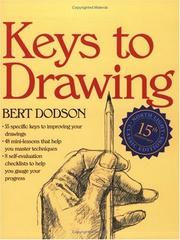
Start below painting, with seeing. Keys to Drawing by Bert Dodson is the best working course in drawing what's in front of you rather than what you assume is there; a painter who can't draw a reliable shape is decorating guesses, and a few weeks of his exercises pay off in every painting after.
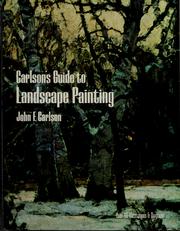
Then the two pillars of landscape knowledge. Carlson's Guide to Landscape Painting by John F. Carlson, from 1929 and never surpassed, delivers the theory of the outdoors itself — his framework for why the sky, ground, slopes, and uprights each occupy a different value range explains, in one chapter, why beginner landscapes look flat. Color and Light by James Gurney is its modern counterpart: a working artist's course in how light actually behaves — warm light and cool shadow, atmospheric perspective — with the clearest explanations in print.
Stage three is composition, the silent killer. Composition of Outdoor Painting by Edgar Alwin Payne catalogs the armatures landscape painters have always leaned on, and The Painter's Secret Geometry by Charles Bouleau traces the underlying design of the masters. Between them you stop centering the barn.
Stage four puts paint down with intent. Alla Prima by Richard Schmid is the modern master's book on direct painting — exacting about drawing, values, and edges. Landscape Painting by Mitchell Albala speaks specifically to the landscape painter's problems: simplifying nature's chaos, massing, and working outdoors. And for spirit, The Art Spirit by Robert Henri remains the book painters reread for fifty years.
The habit: small value studies, three a week
Paint three postcard-sized studies a week — two values only at first (light and shadow), twenty minutes, no details, from life when you can manage it. Value studies are the scales of landscape painting: they train the simplification that Carlson and Albala preach, and they're cheap enough to be fearless. A shoebox of a hundred bad little studies teaches more than ten precious finished paintings. Date each one and note the light — time of day, weather — because comparing March's studies with October's is how you'll actually see yourself improve.
Roughly 90 hours of reading, woven through years at the easel. Follow the path, start at the landscape painting hub, and if your medium is water and paper instead, the watercolor hub runs the parallel route.
FAQ
- Should I start with acrylics or oils?
- Acrylics are cheaper, odorless, and forgiving for studies; oils stay workable longer and suit the blending that landscape light demands. The path’s principles — values, color, composition — are identical in both, so start with whichever removes your excuses.
- Do I have to paint outdoors?
- Not always, but sometimes — photographs flatten values and lie about color in shadows, which is exactly what you’re trying to learn. Alternate: study outdoors, finish larger work from studies indoors, as Carlson’s generation did.
Get the books
- 1Keys to drawingAmazon ↗Bert Dodson
- 2Carlson's guide to landscape paintingAmazon ↗Carlson, John F.
- 3Alla primaAmazon ↗Schmid, Richard
- 4Landscape paintingAmazon ↗Mitchell Albala
- 5Color and lightAmazon ↗James Gurney
- 6Blue and Yellow Don't Make GreenAmazon ↗Michael Wilcox
As an Amazon Associate we earn from qualifying purchases. Some book links are affiliate links; you pay the same price and we may earn a small commission.
Follow the full reading path

Paint landscapes in acrylics or oils
Beginner10books44 hrs5 stages
@craftsherpa♥ 0
Ready to learn something deeply?
Build a reading path — free