Journals don't die from lack of discipline; they die from lack of a job. "Write about your day" is a task with no output, so by week three the notebook joins its predecessors in the drawer. The journals that last — for decades, sometimes — all have work to do: clearing the head, capturing ideas, tracking a life, feeding a body of thought. The path below is really a tour of jobs a notebook can hold, so you can hire yours properly.
Keep a journal worth rereading: from morning pages to a commonplace book
July 9, 2026 · 2 min read
The path, stage by stage
Start with the two classic on-ramps, which assign opposite jobs. The Artist's Way by Julia Cameron gives the notebook a clearing job: three longhand morning pages, unedited and unread, as a daily dredge of the mind. The Bullet Journal Method by Ryder Carroll gives it an organizing job: rapid-logged tasks, events, and notes in one indexed system. Try both for a few weeks each; most people discover they're strongly one type or the other, and that discovery alone saves years of abandoned notebooks.
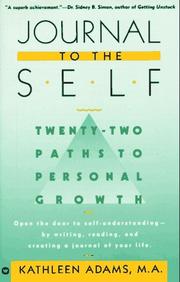
Then widen the toolkit. Journal to the Self by Kathleen Adams is the classic catalog of journaling techniques — unsent letters, dialogues, lists of a hundred — from a pioneer of journal therapy; it's the book to raid when the blank page goes stale.
The second half of the path is the commonplace-book turn: the notebook as a thinking system rather than a diary. How to Take Smart Notes by Sönke Ahrens introduces the Zettelkasten idea — notes written in your own words and linked so they compound into ideas — and Antinet Zettelkasten by Scott Scheper argues for doing it defiantly on paper. Building a Second Brain by Tiago Forte carries the same instinct into digital tools. Riding alongside, Austin Kleon's Steal Like an Artist supplies the spirit: collecting and remixing what strikes you is how creative work has always begun.
The habit: the monthly reread with a pen
Once a month, reread the last month's pages with a pen in hand: star anything still interesting, and copy the best fragments — ideas, quotes, questions — onto their own pages in the back (or their own box of cards). This is the whole engine of a commonplace book, and it changes how you write daily entries, because you're now writing to a future reader you've actually met: you, thirty days on. And if a month's pages yield nothing worth copying, that's information too — it usually means the notebook's current job is done and it's time to hire it for a different one.
About 90 hours of reading, though the habit starts on day one with any notebook in the house. Follow the path, start at the journaling hub, and if the notes-into-ideas thread hooks you, the memory and learning hub runs parallel.
FAQ
- Paper or digital journaling?
- Paper is better for the reflective, clearing kind of writing (it’s slower and distraction-free); digital wins for searchable idea capture. Many long-term journalers run both — morning pages on paper, a commonplace system in an app — and the path covers each.
- What’s the difference between a journal and a commonplace book?
- A journal records your life and thoughts; a commonplace book collects and organizes ideas — quotes, insights, questions — for future use. The monthly-reread habit is the bridge: it distills the first into the second.
Get the books
- 1The Artist's WayAmazon ↗Julia Cameron
- 2One year to an organized lifeAmazon ↗Regina Leeds
- 3Journal to the selfAmazon ↗Adams, Kathleen
- 4The Bullet Journal methodAmazon ↗Ryder Carroll
- 5Steal like an artistAmazon ↗Austin Kleon
- 6Keep GoingAmazon ↗Austin Kleon
As an Amazon Associate we earn from qualifying purchases. Some book links are affiliate links; you pay the same price and we may earn a small commission.
Follow the full reading path

Keep a journal worth rereading
Beginner9books63 hrs4 stages
@wellsherpa♥ 0
Ready to learn something deeply?
Build a reading path — free