The version of American history most of us absorbed treats Indigenous people as prologue: a sparse, timeless wilderness population that recedes as the real story arrives. Every part of that picture is wrong — the population figures, the "wilderness," the passivity, and above all the past tense. Correcting it takes more than one book, because the correction has several layers: what was actually here, what actually happened, and who gets to tell it. This path deliberately mixes Native and non-Native historians whose emphases differ; where they disagree, that tension is part of the education.
Indigenous American History: A Reading Path Beyond the Myths
July 11, 2026 · 3 min read
Why order matters here
Start with the atrocity narratives and Indigenous people enter your understanding as victims first. Start instead with the world before contact — the scale and sophistication of it — and everything afterward reads as what it was: the disruption of civilizations, not the clearing of empty land.
Stage 1: The world that was here
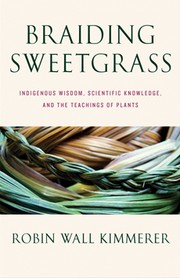
Start with 1491 by Charles Mann, the great revisionist survey of the Americas before Columbus — larger populations, older cities, and managed landscapes far beyond what textbooks taught. Its sequel 1493 shows what contact unleashed globally: the ecological and economic convulsion historians call the Columbian Exchange. Then Braiding Sweetgrass by Robin Wall Kimmerer, a Potawatomi botanist, for something the surveys can't provide — a living Indigenous worldview of reciprocity with the natural world, told through plants and practice.
Stage 2: Conquest, told straight
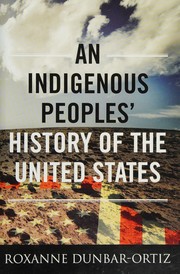
An Indigenous Peoples' History of the United States by Roxanne Dunbar-Ortiz reframes the national story with settler colonialism at its center — polemical by design, rigorous in its sourcing, and the essential counter-narrative to the textbook version. Pair it with Bury My Heart at Wounded Knee by Dee Brown, the 1970 classic that first brought the western wars to a mass audience through Native testimony. Then Killers of the Flower Moon by David Grann — the Osage murders of the 1920s, where oil wealth met systematic predation — proof that the dispossession continued well into the century of automobiles and the FBI.
Stage 3: Native voices on the whole arc
The Inconvenient Indian by Thomas King is the path's sharpest pleasure: a darkly funny, unsparing account of the Indian-white relationship across the continent, and of the difference between the Indians white culture invented and actual people. Custer Died for Your Sins by Vine Deloria Jr. is the foundational manifesto of modern Native political thought — read it partly as history, partly as the moment the subjects of the story seized the pen. Everything You Know About Indians Is Wrong by Paul Chaat Smith extends that critique into art and pop culture with bracing wit.
Stage 4: Depth and the present tense
The Earth Shall Weep by James Wilson offers a fuller narrative synthesis if you want one continuous account. Close with As Long as Grass Grows by Dina Gilio-Whitaker, which connects historical dispossession to environmental justice fights — Standing Rock and beyond — and lands the path's central point: this is a present-tense history.
How to actually study this
Read with a map open; this history is intensely geographic, and knowing whose homelands you're reading about — including where you live — changes it from abstraction to ground. Note where Dunbar-Ortiz, King, and Mann emphasize differently, and treat the differences as historiography to weigh, not errors to resolve.
The staged sequence with study plans is the full reading path. Related reading is at the subject hub, or browse all paths.
FAQ
- What is the best first book on Indigenous American history?
- 1491 by Charles Mann — establishing the scale and sophistication of pre-contact civilizations reframes everything you read afterward.
- Are these books written by Native authors?
- The path deliberately mixes both: Native authors like Robin Wall Kimmerer, Thomas King, Vine Deloria Jr., and Dina Gilio-Whitaker alongside non-Native historians, so you hear the story from multiple positions.
- Is Bury My Heart at Wounded Knee still worth reading?
- Yes, as the influential classic that changed public understanding in 1970 — but read it alongside newer Native-authored works that go beyond its elegiac framing.
Get the books
- 1An Indigenous Peoples' History of the United StatesAmazon ↗Roxanne Dunbar Ortiz
- 21491Amazon ↗Charles C. Mann
- 3Braiding SweetgrassAmazon ↗Robin Wall Kimmerer
- 4Bury My Heart at Wounded KneeAmazon ↗Dee Alexander Brown
- 5The Inconvenient IndianAmazon ↗Thomas King
- 6Killers of the Flower MoonAmazon ↗David Grann
As an Amazon Associate we earn from qualifying purchases. Some book links are affiliate links; you pay the same price and we may earn a small commission.
Follow the full reading path

Indigenous America: the history not taught
Beginner11books104 hrs4 stages
Ready to learn something deeply?
Build a reading path — free