Houseplants almost never die of neglect. They die of care — specifically, care by superstition: watering on a schedule instead of by soil, "bright indirect light" interpreted as a dim corner, repotting as a cure for every symptom. The fix isn't a greener thumb; it's a small amount of actual knowledge about light, water, and roots, applied consistently. That knowledge fits in a few good books, and it makes your tenth plant radically easier than your first.
Keep houseplants alive: the reading path past the watering-can guesswork
July 9, 2026 · 2 min read
The path, stage by stage
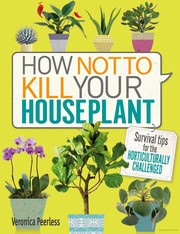
Start with triage. How Not to Kill Your Houseplant by Veronica Peerless is organized around exactly the right question — what's going wrong and why — with visual symptom-by-symptom diagnosis for the plants people actually own. It's short, and it will save a plant within the month. Keep it near the plants, not on the bookshelf — it's a field manual, and its diagnosis pages earn their keep the first time a fiddle-leaf fig starts dropping leaves for no visible reason.
Then build the reference shelf. Plantopedia by Lauren Camilleri is the big, beautiful catalog for identifying what you have and what conditions it evolved for — the single most underrated fact in houseplant care, because a fern and a cactus are not negotiating with your living room from the same position. Alongside it, The Complete Houseplant Survival Manual by Barbara Pleasant goes plant-by-plant with the deeper husbandry: light levels in practical terms, watering by feel, feeding, pests, and propagation.
The final stage is the one that changes how you see the windowsill. What a Plant Knows by Daniel Chamovitz is a scientist's tour of plant senses — how plants perceive light direction, gravity, touch, and time. It sounds like a detour; it isn't. Once you understand that a plant is continuously measuring its light environment, "it's leaning toward the window" stops being cute and starts being data, and you begin reading your plants instead of watering by calendar.
The habit: the weekly finger-test walk
Once a week, same day, walk every plant with two checks: a finger two knuckles into the soil (water only if dry at depth — this single rule prevents the overwatering that kills most houseplants) and a ten-second look at the leaves for color change, stretch, or pests. Rotate each pot a quarter turn as you go. Ten minutes a week, and problems get caught at the stage where they're reversible. Anchor the walk to an existing routine — Sunday coffee works — because the habit only protects the plants if it survives your busy weeks.
This is a compact path — about 50 hours of reading for years of living-room payoff. Follow the path, start at the houseplants hub, and when the windowsill wins, the herb gardening hub turns the same skills edible.
FAQ
- Why do my houseplants keep dying even though I water them?
- Probably because you water them — overwatering is the most common killer. Roots need air as well as moisture; water only when the soil is dry a couple of knuckles down, and make sure the pot drains.
- What’s the best houseplant to start with?
- Something forgiving that shows its needs visibly: a pothos or a snake plant. Peerless’s book covers both, and a forgiving first plant teaches the observation habits the fussier ones will demand.
Get the books
- 1How Not to Kill Your HouseplantAmazon ↗Veronica Peerless
- 2The New Plant ParentAmazon ↗Darryl Cheng
- 3PlantopediaAmazon ↗Lauren Camilleri
- 4The complete houseplant survival manualAmazon ↗Barbara Pleasant
- 5Epic tomatoesAmazon ↗Craig LeHoullier
- 6What a plant knowsAmazon ↗Daniel Chamovitz
As an Amazon Associate we earn from qualifying purchases. Some book links are affiliate links; you pay the same price and we may earn a small commission.
Follow the full reading path

Keep houseplants gloriously alive
Beginner6books46 hrs4 stages
Ready to learn something deeply?
Build a reading path — free