Homeowners consistently spend their efficiency money backwards. Solar panels and smart thermostats are visible and satisfying; air sealing and attic insulation are invisible and boring — so people buy the former while the latter quietly eats their bills. The professionals' rule is simple: measure first, seal the envelope second, upgrade systems third, and only then generate. Panels on a leaky house are an expensive way to heat the sky. This reading path follows exactly that order.
One safety note before the caulk gun comes out: combustion appliances, wiring, and anything at the electrical panel are licensed-professional territory — DIY the sealing, not the circuits.
The path, stage by stage
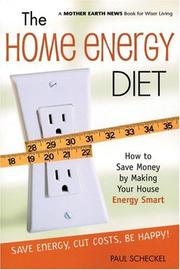
Start by measuring. Paul Scheckel's The Home Energy Diet — written by a veteran energy auditor — teaches you to see your house the way an auditor does: where the kilowatt-hours and therms actually go, and the shockingly uneven payback of different fixes. It turns the vague guilt of a high bill into a ranked to-do list.
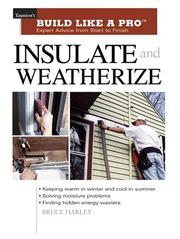
Then attack the envelope, where the cheap wins live. Bruce Harley's Insulate and Weatherize is the definitive homeowner text on air sealing and insulation — the attic hatches, rim joists, and duct leaks that leak more money than any appliance wastes. Richard Heede's Homemade Money reinforces the same logic in cost-benefit terms: efficiency as an investment portfolio, ordered by return.
Stage three thinks in whole-house terms. Michael Maines's Pretty Good House — from the building-science community that coined the term — is the sanity manifesto of modern construction: better than code, short of certification-chasing, every dollar aimed where physics says it matters. It's the book that ties the piecemeal fixes into a coherent standard, whether you're renovating or building.
Only then, generation. Dan Chiras's Power from the Sun covers solar honestly — siting, sizing, and economics — and William H. Kemp's The Renewable Energy Handbook surveys the wider off-grid toolkit. Read after the envelope work, these size a system for a house that sips instead of gulps, which is the difference between a good investment and a rooftop trophy.
The habit: the monthly meter read
On the first of each month, read your electric and gas meters and log the numbers against the outdoor temperature. Twelve data points make your home's energy signature visible — how much is weather, how much is baseload — and every project you do (sealing, insulation, a new appliance) shows up as a bend in the line. It's the homeowner version of the auditor's toolkit, it takes four minutes, and it turns this whole subject from belief into measurement.
Seven books, roughly 70 hours of reading, with a payback period most investments would envy. Follow the path, start at the home energy hub, or begin with the seasonal basics at the winterizing hub.
Ready to learn something deeply?
Build a reading path — free