Most home security purchases are bought like talismans: a doorbell camera goes up, a subscription begins, and the thinking stops. But security isn't a gadget — it's an adversarial way of thinking about your home's layers and weak points, and the DIY route teaches it while also freeing you from cloud subscriptions and someone else's servers. The build itself is a satisfying skill stack: physical security, low-voltage wiring, home networking, a bit of automation. Each layer is well covered in print.
DIY home security: build a camera system you actually control
July 9, 2026 · 2 min read
The path, stage by stage
The path starts with fundamentals that predate every gadget: David Alan Wacker's The Complete Guide to Home Security covers the unglamorous physical layer — doors, locks, lighting, sightlines — that determines whether the camera ever matters. Herman Kruegle's CCTV Surveillance is the serious reference on camera systems: lenses, placement, coverage, and the design thinking that separates a system from a scattering of cameras.
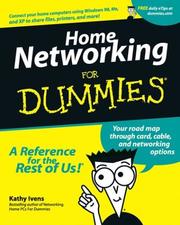
Then the infrastructure. Wiring a House by Rex Cauldwell teaches residential electrical work the professional way — and one line of emphasis here: respect the panel, kill the breaker and verify with a tester before touching anything, and leave line-voltage work to a licensed electrician where code requires it. Home Networking for Dummies by Kathy Ivens gets your cameras on a network you understand, and Eric Faulkner's Home Hacking Projects for Geeks plus Charles Platt's Make More Electronics cover the tinkering layer — sensors, automation, the fun stuff. Al Sweigart's Automate the Boring Stuff with Python turns alerts and recordings into scripts that work for you. Finally, the adversarial capstone: Kevin Mitnick's The Art of Intrusion teaches how attackers actually think, and Chris McNab's Network Security Assessment shows you how to probe your own system — because a camera network with a default password is a liability, not a security system.
The path's shape mirrors how the layers actually stack: physical security decides whether the system matters, wiring and networking decide whether it works, and the security-assessment books decide whether it's an asset or an attack surface. Skipping the last layer is the most common DIY mistake — and the one the internet is full of cautionary tales about.
The habit: audit your own perimeter quarterly
Once a season, attack your own house on paper. Walk the perimeter at night like a stranger: where are the dark approaches, which camera angles have blind spots, what does the network show to an outsider, which passwords haven't rotated? Fix the top finding, log the rest. Security decays quietly — bulbs die, firmware ages, bushes grow — and a quarterly adversarial walk is what keeps a system real instead of decorative.
Expect roughly 90 hours of reading across the stack. Follow the path or start at the home security hub. The automation layer connects naturally to the broader smart home hub.
FAQ
- Is DIY home security actually better than a subscription system?
- Different trade: DIY gives you local storage, no monthly fees, and full control, in exchange for your time and maintenance. The reading matters either way — camera placement and physical-security fundamentals decide effectiveness more than which brand you buy.
- Do I need to know programming or networking first?
- No — the path teaches both at the hobbyist level you need. Basic networking is the one non-negotiable: a camera system on a poorly secured network is worse than no cameras, which is why the path ends on security assessment.
Get the books
- 1The complete guide to home securityAmazon ↗David Alan Wacker
- 2Home Hacking Projects for GeeksAmazon ↗Eric Faulkner
- 3Home networking for dummiesAmazon ↗Kathy Ivens
- 4Make More ElectronicsAmazon ↗Charles Platt
- 5CCTV surveillanceAmazon ↗Herman Kruegle
- 6Wiring a houseAmazon ↗Rex Cauldwell
As an Amazon Associate we earn from qualifying purchases. Some book links are affiliate links; you pay the same price and we may earn a small commission.
Follow the full reading path


Build your own home security camera system
Beginner9books62 hrs5 stages
@homesherpa♥ 0
Ready to learn something deeply?
Build a reading path — free