Golfers don't stall from lack of information — they drown in it. The tip-a-week golfer collects contradictory fixes ("swing slower," "turn more," "hold the lag") and every new one overwrites the last, so nothing compounds. The players who actually improve do something different: they commit to one coherent model of the swing, then spend their practice deepening it instead of replacing it. The books in this path are ordered to build exactly that.
Golf fundamentals from books: build a swing that holds up
July 9, 2026 · 2 min read
The path, stage by stage
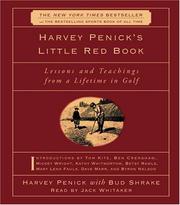
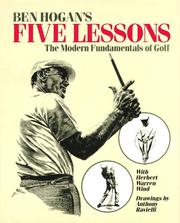
Start friendly, then go deep. Gary McCord's Golf for Dummies is genuinely good — rules, etiquette, equipment, and the basic motions, delivered with a broadcaster's wit. Then the two timeless texts. Harvey Penick's Little Red Book distills a legendary teacher's lifetime into short, warm parables — "take dead aim" — that somehow fix swings by fixing attitudes. Ben Hogan's Five Lessons is its opposite and complement: the grip, stance, and swing plane laid out with mechanical precision. Penick gives you feel, Hogan gives you structure; you need both, in that order. Bobby Clampett's Impact Zone then reframes everything around the only moment the ball cares about — impact — which quietly resolves half the contradictions in golf instruction.
Next, the stage most amateurs skip and shouldn't: the scoring game. Dave Pelz — a former NASA researcher who brought actual measurement to golf — wrote the two definitive texts, the Short Game Bible and the Putting Bible. His data says most strokes are lost inside 100 yards, which means this stage lowers your scores faster than anything you do with a driver.
Finally, the six inches between your ears. Robert J. Rotella's Golf Is Not a Game of Perfect and W. Timothy Gallwey's The Inner Game of Golf are the classics on trusting a swing instead of steering it, and Pia Nilsson's Every Shot Must Have a Purpose turns mental-game theory into an on-course routine.
The habit: the 60/40 practice split
Every practice session, spend at least 60% of your time on shots inside 100 yards — putting, chipping, pitching — and cap full-swing work at 40%. It's the exact inverse of what everyone at the range does, which is why everyone at the range shoots the same scores year after year. Pelz's data justifies the split; your scorecard will confirm it within a month. And practice with targets — a specific hole, a landing circle, a three-foot putt streak — because aimless bucket-emptying grooves nothing but your existing mistakes.
The full path runs nine books — roughly 90 hours of reading, cheaper than a new driver and worth considerably more strokes. Follow the path, browse the golf hub, or — since golf is a thinking game — cross-train your decision-making at the chess hub.
FAQ
- Is Ben Hogan’s Five Lessons too advanced for beginners?
- Read Penick first for feel and attitude, then Hogan for structure. Five Lessons is demanding but not advanced — it’s fundamentals, explained precisely, and it rewards a second reading a season later.
- What actually lowers scores fastest?
- The short game. Pelz’s measurements show most strokes are lost inside 100 yards, so an hour of putting and chipping practice buys more than an hour of driver swings — roughly a 60/40 split in its favor.
Get the books
- 1Golf for dummiesAmazon ↗Gary McCord
- 2Harvey Penick's Little Red BookAmazon ↗Harvey Penick
- 3Ben Hogan's Five LessonsAmazon ↗Ben Hogan
- 4Impact zoneAmazon ↗Bobby Clampett
- 5Dave Pelz's short game BibleAmazon ↗Dave Pelz
- 6Dave Pelz's Putting BibleAmazon ↗Dave Pelz
As an Amazon Associate we earn from qualifying purchases. Some book links are affiliate links; you pay the same price and we may earn a small commission.
Follow the full reading path

Build a real golf swing
Beginner9books51 hrs4 stages
@wellsherpa♥ 0
Ready to learn something deeply?
Build a reading path — free