Most marathon attempts do not fail at mile 20. They fail in week six of training, when a runner who has been doing every run at a medium-hard grind gets injured, sick, or quietly quits. The single biggest error in the sport is running easy days too fast, and almost every book on this path hammers it from a different angle. Read them in order and you get the progression the sport itself follows: finish one, then race one, then get fast.
The Best Marathon Training Books, in the Order to Read Them
July 9, 2026 · 3 min read
Stage one: get to the start line
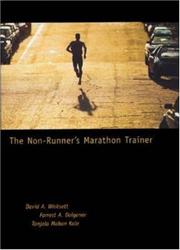
If the marathon feels impossible, start with The non-runner's marathon trainer by David A. Whitsett — a four-day-a-week program built around the psychology of becoming a person who finishes, based on a university course with a remarkable completion record. Alongside it, Marathon: The Ultimate Training Guide by Hal Higdon is the sport's default manual: the training plans half of all first-timers use, plus plain answers to every logistical question a novice has. Higdon's Novice 1 plan is probably the most-run marathon schedule in existence, and the current revision of the book is where to get it with the reasoning attached.
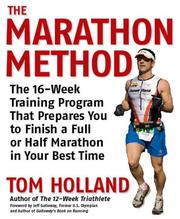
The Marathon Method by Tom Holland is the third option in this stage and the one for people short on time. Holland builds around four running days with strength and cross-training deliberately written in, and he is blunt that most first-timers over-run and under-recover. Pick one plan from these three and commit — the failure mode here is reading all three and blending them into something with no rest days.
Stage two: fix your intensity
Once you can train consistently, fix your intensity. 80/20 running by Matt Fitzgerald makes the evidence-based case that elites do roughly 80 percent of their volume at low intensity — and that recreational runners improve fastest when they stop living in the moderate-effort no-man's-land. This is the book that makes the rest of the path work.
Then get systematic. Daniels' running formula by Jack Daniels gives you paces with a rationale — VDOT, training zones, and workouts where every minute has a defined purpose. Run faster from the 5k to the marathon by Brad Hudson offers the alternative philosophy: adaptive running, where you adjust the week based on how the last one went rather than following a printed grid. Runners who keep breaking down on rigid plans often do much better on Hudson's approach.
Stage three: the marathoner's edges
When you are ready to train like a serious marathoner, Advanced marathoning by Pete Pfitzinger delivers the famous higher-mileage plans and the physiology behind them. It is the standard step up from Higdon, and it is genuinely harder — do not start here.
Two books cover the parts of performance that are not running. Racing weight, also by Matt Fitzgerald, deals with body composition for endurance athletes, and it is worth reading precisely because the subject is a minefield: the useful content is about fuelling training properly and improving diet quality, not about restriction. If you have any history of disordered eating, skip this one or read it with a professional — that is a genuine risk in this sport, not a formality.
And The Haywire Heart by Christopher J. Case examines heart rhythm problems in long-time endurance athletes. It is not a reason to skip the marathon — it is a reason to respect recovery, and to talk to a doctor about symptoms like fluttering or unexplained fainting rather than training through them. As with everything here, these books are training guidance, not medical advice.
The habit: log every run with an effort grade
After every run, record three things: time, how it felt on a 1-to-10 effort scale, and one sentence. The effort grade is the point — if your log shows easy days drifting to 6s and 7s, you have caught the classic mistake weeks before it becomes an injury. Thirty seconds a day, and it turns the 80/20 principle from advice into something you can audit — and gives you the season-long record every book on this path assumes you are keeping.
How long it takes
Nine books is roughly 90 hours of reading — conveniently close to one 18-week training block's worth of evenings. Follow the path, or start at the marathon hub. Runners over 40 should also look at the strength after 40 hub — durability is a training input, not a bonus.
FAQ
- How long should I train for my first marathon?
- Most credible plans run 16 to 20 weeks, assuming you can already run 15 to 20 miles per week comfortably. Higdon's, Whitsett's, and Holland's books on this path are all built around that timeline for first-timers.
- Should I follow a fixed plan or an adaptive one?
- Start with a fixed plan from Higdon or Whitsett for your first marathon — decisions are the enemy when you are new. Move to Brad Hudson's adaptive approach later if rigid schedules keep leaving you overtrained or injured.
- What does 80/20 running actually mean?
- Roughly 80 percent of your weekly running time at genuinely easy effort — conversational pace — and about 20 percent at hard effort. Matt Fitzgerald's book lays out the research showing this split beats the moderately-hard-every-day approach most amateurs default to.
Get the books
- 1The non-runner's marathon trainerAmazon ↗David A. Whitsett
- 2Amazon ↗
- 3The Marathon MethodAmazon ↗Tom Holland
- 480/20 runningAmazon ↗Matt Fitzgerald
- 5Daniels' running formulaAmazon ↗Jack Daniels
- 6Racing weightAmazon ↗Matt Fitzgerald
As an Amazon Associate we earn from qualifying purchases. Some book links are affiliate links; you pay the same price and we may earn a small commission.
Follow the full reading path

Run your first marathon
Beginner9books56 hrs5 stages
@wellsherpa♥ 0
Ready to learn something deeply?
Build a reading path — free