New foragers don't usually quit because they can't find wild food — it's everywhere. They quit because uncertainty is exhausting. Standing over a plant that's probably wild carrot but possibly something much worse, dinner loses its appeal. Apps and photo-matching make this worse, not better, by offering confident guesses without understanding. The way out is boring and reliable: learn plant families first, then learn individual species deeply, one at a time.
The non-negotiable rule, stated once and meant completely: never eat anything you haven't identified with 100% certainty — "probably" is not an identification.
The path, stage by stage
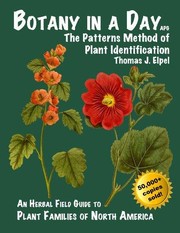
Start with the skill under the skill. Thomas J. Elpel's Botany in a Day teaches the pattern method: recognize a plant family by its shared traits and you've narrowed thousands of species to a handful before opening a field guide. It's the difference between memorizing plants and understanding them.
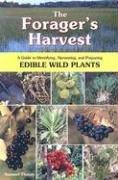
Then meet the master teacher. Samuel Thayer's The Forager's Harvest covers a modest number of plants in extraordinary depth — identification at every growth stage, lookalikes, harvest timing, and preparation, written by someone who actually eats this way. His Nature's Garden extends the method to a second set of plants. Thayer's depth-over-breadth approach is the model for how to learn this subject safely. Roger Tory Peterson's Edible Wild Plants adds a classic field-guide breadth to Thayer's depth, and John Kallas's Edible Wild Plants fills a genuine gap — the greens most guides mention in passing, treated with real thoroughness.
Mushrooms get their own stage because they deserve their own caution. David Arora's Mushrooms Demystified is the encyclopedic reference, and his All That the Rain Promises and More is the field-sized companion with a sense of humor — both insist on rigorous identification over vibes. Finally, Marie Viljoen's Forage, Harvest, Feast answers the question the field guides don't: what do you actually cook? Hundreds of recipes that turn identification skill into dinners worth the effort.
The habit: adopt one plant a month
Pick a single species and follow it for a full month — find it in three locations, photograph it weekly as it changes, key it out formally, learn its lookalikes, and only then (if it's a confirmed edible) harvest and cook it. Twelve months, twelve plants you know cold — which beats five hundred plants you sort of recognize by more than it sounds, because certainty about a few species is what actually puts wild food on the table, and it compounds: every deeply learned plant makes its whole family easier to read.
Eight books, roughly 80 hours of reading, spread naturally across seasons. Follow the path, start at the foraging hub, or go deeper on fungi at the mushroom growing hub.
Ready to learn something deeply?
Build a reading path — free