Here's why most flexibility efforts fizzle: people treat stretching as a standalone chore — five minutes of toe-touches after a walk — when the research increasingly says mobility is something you build with strength, load, and daily movement, not alongside them. Stretch a weak joint and you get a slightly longer weak joint. The books in this path converge on that point from very different directions.
Flexibility and mobility after 40: books that keep you moving
July 9, 2026 · 2 min read
The path, stage by stage
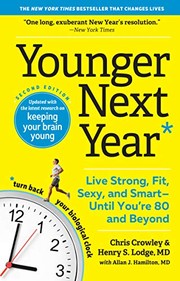
Stage one is motivation with a mechanism. Chris Crowley's Younger Next Year makes the blunt case that most of what we call aging is decay we signal for by sitting still — and that daily movement is the counter-signal. Joan Vernikos's Designed to Move backs it from an unexpected angle: she ran NASA's life sciences division, and her research on astronauts shows that gravity-loaded movement all day long matters more than a single heroic workout.
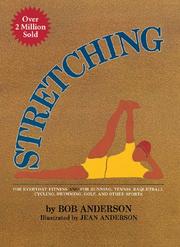
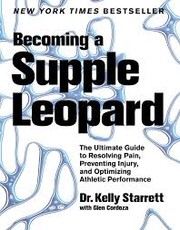
Stage two is practice. Bob Anderson's Stretching has been the gentle, illustrated standard for decades — routines by activity and body part, zero ideology. Thomas Kurz's Stretching Scientifically adds the training-methods layer: dynamic versus static work, when each belongs, and how flexibility responds to progressive training like any other adaptation. Kelly Starrett's Becoming a Supple Leopard reframes the whole project around positions and movement quality; treat his protocols as a toolbox to test on your own body rather than gospel — that's the evidence-honest way to read any mobility system.
Stage three adds the missing half: load. Mark Rippetoe's Starting Strength teaches the barbell basics, and Jonathon M. Sullivan's The Barbell Prescription — written by an emergency physician specifically for lifters over 40 — makes the case that strength training is the single highest-leverage intervention for aging well. Full-range strength work is, quietly, some of the best flexibility training there is. Peter Attia's Outlive closes the path by putting mobility and strength inside the bigger longevity picture.
The habit: the daily floor sit
Every evening, spend ten minutes on the floor — not stretching to a routine, just sitting, squatting, kneeling, and changing positions while you read or watch something. Getting down to the floor and back up daily trains hips, ankles, and balance in exactly the ranges aging steals first, and it's frictionless enough to survive your motivation dips. Cultures that sit on the floor into old age keep these ranges for life without a single stretching routine. The books supply the structure; the floor time supplies the reps.
Nine books, roughly 90 hours of reading — though the practice books are meant to be used, not finished. Follow the path, browse the flexibility hub, or pair it with the strength after 40 hub — the two halves of the same project.
FAQ
- Does static stretching actually work?
- It reliably increases range of motion over weeks; what’s contested is how much of that transfers to injury prevention or performance. That’s why this path pairs stretching with strength and daily movement — the combination is far better supported than stretching alone.
- Am I too old to start barbell training?
- The Barbell Prescription was written precisely for this question — its author is a physician whose patients start in their 40s through 70s. Load is scaled to you, and the strength stage matters more, not less, as you age.
Get the books
- 1Younger next yearAmazon ↗Chris Crowley
- 2StretchingAmazon ↗Anderson, Bob
- 3Becoming a Supple LeopardAmazon ↗Kelly Starrett
- 4Designed to moveAmazon ↗Joan Vernikos
- 5Anatomy trainsAmazon ↗Myers, Thomas W. LMT
- 6Stretching ScientificallyAmazon ↗Thomas Kurz
As an Amazon Associate we earn from qualifying purchases. Some book links are affiliate links; you pay the same price and we may earn a small commission.
Follow the full reading path
Stay limber: flexibility for the second half of life
Beginner10books80 hrs5 stages
@wellsherpa♥ 0
Ready to learn something deeply?
Build a reading path — free