Every botched drywall patch fails the same way: the repair holds fine, but you can see it from across the room — a proud lump under the paint, catching light at every angle. That's because drywall is two different skills wearing one name. Hanging and patching is carpentry, and it's easy. Finishing — taping, mudding in thin coats, feathering edges, matching texture — is a trade, and it's the part homeowners skip straight past on the way to the paint can. Read the finishing chapters twice; that's where the invisible patch lives.
Drywall repair and finishing: invisible patches, professional walls
July 9, 2026 · 2 min read
The path, stage by stage
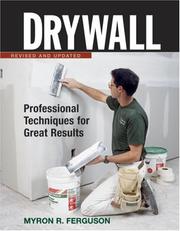
The core of the path is Myron R. Ferguson's Drywall — the trade standard, written by a career finisher, covering everything from hanging sheets to the coat-by-coat sequence that produces flat walls: wide knives, thin passes, patience between coats. This one book is the difference between a patch you hide behind a picture frame and one you genuinely cannot find.
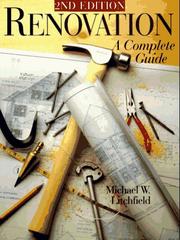
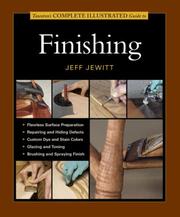
Around it, the path builds context. Michael W. Litchfield's Renovation is the whole-house reference that situates drywall inside real projects — what's behind the wall, how repairs sequence with plumbing and electrical work, when a patch job is actually a bigger job. Working Alone by John Carroll solves the practical problem nobody warns you about: sheets are heavy and walls are wide, and solo techniques and simple jigs are the difference between a manageable Saturday and a chiropractor visit. Then the surface itself: the Painting and Decorating Craftsman's Manual covers professional surface prep and paint application — the final coat your finishing gets judged through — and Jeff Jewitt's Taunton's Complete Illustrated Guide to Finishing deepens the finishing eye, teaching how prepared surfaces take a finish and why prep is destiny.
The habit: practice coats on scrap, judged with a raking light
Buy one sheet of drywall, cut it into practice panels, and rehearse: screw two pieces to a frame, tape the joint, and run the full three-coat sequence before touching a real wall. Then judge your work the way finishers do — with a raking light. A work lamp held at a sharp angle to the surface reveals every ridge and hollow that overhead light forgives. Sand, skim, re-check — the loop takes an evening and costs almost nothing. When your practice joint survives the raking light without a shadow, your living room wall is safe, and so is every wall after it.
This is a fast path — about 50 hours of reading — that pays for itself on the first repair bill you don't get. Follow the path or start at the drywall repair hub. Walls tend to get opened for reasons — the home plumbing hub covers the most common one.
FAQ
- Why does my drywall patch always show through the paint?
- Almost always finishing, not patching: coats applied too thick, edges not feathered wide enough, or texture unmatched. The fix is thin coats with progressively wider knives and a raking light to check your work — exactly the sequence Ferguson’s book drills.
- Should I use mesh or paper tape for repairs?
- Paper tape with setting-type compound is the stronger, crack-resistant choice for joints; mesh is convenient for small patches. Ferguson covers when each is appropriate — the tape matters less than the thin, patient coats over it.
Get the books
- 1DrywallAmazon ↗Myron R. Ferguson
- 2RenovationAmazon ↗Michael W. Litchfield
- 3Amazon ↗
- 4Painting and decorating craftsman's manual and textbookAmazon ↗Painting and Decorating Contractors of America.
- 5Working AloneAmazon ↗John Carroll
As an Amazon Associate we earn from qualifying purchases. Some book links are affiliate links; you pay the same price and we may earn a small commission.
Follow the full reading path
Repair drywall like a pro
Beginner5books60 hrs3 stages
@homesherpa♥ 0
Ready to learn something deeply?
Build a reading path — free