Charcuterie intimidates people for the right reason and stops them for the wrong one. Yes, curing meat has real safety rules — this is the one culinary craft where you weigh salt to the gram and follow curing-salt guidelines exactly, no exceptions, because the stakes include botulism. But that precision is precisely why it's learnable: unlike sauce-making or seasoning-to-taste, curing is a written-down discipline with measurable inputs and repeatable outcomes. The people who fail at charcuterie are almost never the careful ones. They're the winging-it ones.
Charcuterie and meat curing: salt, time, and the science between them
July 9, 2026 · 2 min read
The path, stage by stage
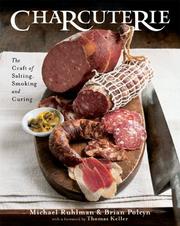
The path opens with the book that launched a thousand home curing chambers: Michael Ruhlman's Charcuterie — bacon, pancetta, fresh sausage, confit, pâté — the full craft in a form a home cook can actually execute. Stanley Marianski's Home Production of Quality Meats and Sausages runs alongside it as the engineering manual: exact percentages, curing-salt math, and the food-science reasoning most cookbooks skip.
Then the path graduates to the advanced wing: dry curing and fermentation, where meat is transformed by salt, time, and controlled microbiology rather than heat. Ruhlman's Salumi covers the Italian dry-cured tradition; Marianski's The Art of Making Fermented Sausages handles the trickiest category — salami — with the rigor it demands. Taylor Boetticher's In the Charcuterie brings the modern craft-butchery perspective, and Steven Lamb's River Cottage Curing & Smoking Handbook adds the approachable British smokehouse tradition. Harold McGee's On Food and Cooking sits underneath it all, explaining what salt, nitrite, and time are actually doing to muscle.
Read the Ruhlman-Marianski pairs together deliberately: Ruhlman supplies the craft narrative and the recipes you'll actually cook from, while Marianski supplies the percentages and the safety engineering underneath them. Neither is complete alone — the cookbook without the math invites improvisation exactly where improvisation is dangerous, and the math without the cookbook is a textbook nobody finishes. Together they're the rare amateur curriculum that matches how professionals are actually trained.
The habit: weigh everything, log everything
The habit that defines safe, consistent curing: a gram scale and a curing log, used every single time. Record the meat's weight, the salt and cure percentages, dates in and out, chamber temperature and humidity, and weight loss along the way — dry-cured products are done by percentage of weight lost, not by look. The log is your safety system and your improvement engine in one notebook, and six months from now it's the reason batch twelve is better than batch two. Cooks eyeball; curers weigh.
Budget about 80 hours of reading, most of it while something delicious hangs and waits. Follow the path or start at the charcuterie hub. The obvious companion craft is meat smoking — same patience, faster gratification.
FAQ
- What’s a safe first charcuterie project?
- Home-cured bacon or fresh sausage. Both use straightforward measured cures or none at all, need no special chamber, and teach the weighing-and-logging discipline before you attempt dry curing. Whole-muscle cures like pancetta are the natural next step.
- Do I really need curing salt?
- For anything cooked low, smoked, or dry-cured — yes, in the exact measured amounts the recipes specify. Curing salts prevent botulism in low-oxygen environments. The books explain the science and the math; this is the one area where you never substitute or estimate.
Get the books
- 1CharcuterieAmazon ↗Michael Ruhlman
- 2Home production of quality meats and sausagesAmazon ↗Stanley Marianski
- 3SalumiAmazon ↗Michael Ruhlman
- 4The Art of Making Fermented SausagesAmazon ↗Stanley Marianski
- 5In the charcuterieAmazon ↗Taylor Boetticher
- 6The River Cottage curing & smoking handbookAmazon ↗Steven Lamb
As an Amazon Associate we earn from qualifying purchases. Some book links are affiliate links; you pay the same price and we may earn a small commission.
Follow the full reading path


Cure your own charcuterie
Beginner8books70 hrs4 stages
Ready to learn something deeply?
Build a reading path — free