We suffer from "plant blindness" — the tendency to see a forest as green scenery rather than thousands of living, competing, cooperating organisms. Botany cures it, but the cure has to be sequenced carefully, because the subject spans wonder (trees talk to each other!) and hard science (how a leaf actually manages gas exchange), and starting on the wrong end loses people.
Begin with wonder and wide-angle natural history, then earn the plant physiology, then learn to name what you're looking at.
Fall in love with the forest
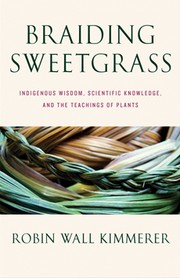
Start with Wisdom from the Hidden Life of Trees by Peter Wohlleben, a distilled, awe-first introduction to trees as social, communicating beings. Pair it with Braiding Sweetgrass by Robin Wall Kimmerer, which braids Indigenous knowledge with botanical training and reframes plants as teachers and kin — the emotional center of the whole path.
Then slow all the way down with The Forest Unseen by David George Haskell, who watches a single square meter of forest for a year and shows you how much is happening in it.
Learn how plants actually work
Now the mechanism. Botany for Gardeners by Brian Capon is the friendliest real introduction to plant science — roots, growth, reproduction — written for people who grow things, not for exam-takers. Go deeper into the physics of it with The Life of a Leaf by Steven Vogel, which explains how a leaf handles light, water, and wind. This is where botany stops being poetry and becomes biology.
Learn to name and connect
With the science in place, get practical. The Tree Identification Book by George W. D. Symonds turns "some kind of oak" into a confident ID, and A Natural History of North American Trees by Donald Culross Peattie gives each species a story worth remembering.
Finally, widen the lens with two integrative books: Finding the Mother Tree by Suzanne Simard, the scientist whose research revealed how forests share resources underground, and The Botany of Desire by Michael Pollan, which flips the usual view and asks how plants have shaped us. If you want the whole subject as fiction, The Overstory by Richard Powers is the novel that made a generation care about trees.
How to actually study this
Botany is a walking subject. Adopt one tree near you and observe it across a season — bud, leaf, flower, fruit, fall. Carry the ID book and name three plants every walk until it becomes reflex. Keep the physiology and the wonder in dialogue: knowing how a leaf works makes the "hidden life" more astonishing, not less.
Read them in order on the full reading path, explore the trees & botany hub, or browse Discover to connect trees to geology, pollinators, and foraging.
Ready to learn something deeply?
Build a reading path — free