Most people treat balance the way they treat eyesight: something that fades with age, to be accommodated rather than trained. The evidence points the other way. Balance is a skill — a fast conversation between inner ear, eyes, joints, and reflexes — and like any skill it declines with disuse and responds to practice. The reason people fail at training it is that they never treat it as its own subject; they assume walking is enough. It isn't, because walking only rehearses the balance you already have.
Balance training books: steadiness as you age is a skill, not luck
July 9, 2026 · 2 min read
The path, stage by stage
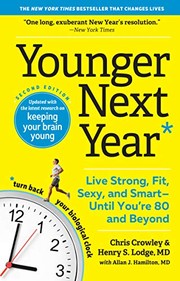
Start with the why. Younger next year by Chris Crowley makes the blunt, motivating case that most age-related decline is decay from disuse, and that consistent training changes the trajectory. It's the book that gets you to actually start, which for this subject is most of the battle.
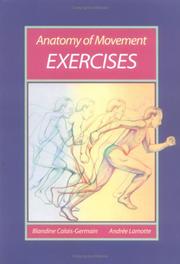
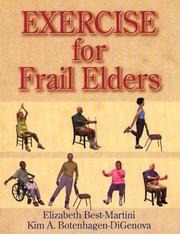
Then understand the machine. Anatomy of movement exercises by Blandine Calais-Germain connects each exercise to the structures doing the work, so training stops being a list of moves and becomes something you can reason about. From there the path goes practical in two directions: Exercise for frail elders by Elizabeth Best-Martini — a careful, professional progression for anyone starting from a shaky baseline or helping a parent who is — and New Functional Training for Sports by Michael Boyle for the stronger reader, whose single-leg training philosophy is essentially balance work with a barbell-adjacent vocabulary.
The quietly powerful stage is tai chi. The tai chi book by Robert Chuckrow explains a practice that repeatedly shows up well in falls-prevention research — slow weight shifts, controlled single-leg moments, constant postural attention. It is balance training that people actually keep doing, which matters more than any theoretically optimal protocol. For the professionally curious, Gait analysis by Jacquelin Perry is the classic clinical text on how human walking actually works — far beyond a hobbyist need, and fascinating precisely because of it.
The habit: the daily single-leg minute
Once a day, stand on one leg — while brushing your teeth, waiting for coffee — thirty seconds per side. When that gets easy, close your eyes, or stand on a folded towel, or turn your head slowly. It is the smallest effective dose in fitness: it needs no equipment, attaches to an existing routine, and directly rehearses the recovery reflexes that prevent falls. Progress is measurable weekly — time yourself monthly and write it down — which keeps you honest and, unusually for exercise, visibly rewards you within weeks rather than months.
This path is about 70 hours of reading. Follow the path or start at the balance training hub. It pairs naturally with the strength after 40 hub, because strong legs are half of steady ones.
FAQ
- Can balance really be improved at any age?
- The research on trainability is encouraging at essentially every age studied — balance responds to specific practice, and tai chi in particular has a solid falls-prevention track record. Gains are real, though gradual; consistency beats intensity.
- Is walking enough to maintain balance?
- Walking helps general fitness but mostly rehearses balance you already have. Improvement needs challenge at the edge of your ability — single-leg stances, weight shifts, unstable surfaces — which is what dedicated balance work provides.
Get the books
- 1Younger next yearAmazon ↗Chris Crowley
- 2Anatomy of movement exercisesAmazon ↗Blandine Calais-Germain
- 3Exercise for frail eldersAmazon ↗Elizabeth Best-Martini
- 4New Functional Training for Sports 2nd EditionAmazon ↗Michael Boyle
- 5Strength Training for WomenAmazon ↗Lori Incledon
- 6The tai chi bookAmazon ↗Robert Chuckrow
As an Amazon Associate we earn from qualifying purchases. Some book links are affiliate links; you pay the same price and we may earn a small commission.
Follow the full reading path
Improve your balance as you age
Beginner8books52 hrs4 stages
@wellsherpa♥ 0
Ready to learn something deeply?
Build a reading path — free