Improve your balance as you age
This curriculum builds from the ground up — starting with how the body senses and controls balance, moving through evidence-based exercise science for fall prevention, and finishing with clinical and programming depth for designing real interventions. Each stage equips the reader with the vocabulary and conceptual framework needed to absorb the next, creating a coherent, science-grounded path from curious beginner to confident practitioner.
Foundations: How the Body Balances
BeginnerUnderstand the sensory systems (vestibular, proprioceptive, visual) that govern balance, why they decline with age, and what that means for fall risk — building the vocabulary for everything that follows.
▸ Study plan for this stage
Pace: 4–5 weeks total. Week 1–2: Read the relevant chapters of "Younger Next Year" (focus on the biology-of-aging and "use it or lose it" chapters, ~20–25 pages/day). Week 3–5: Work through "Anatomy of Movement Exercises" section by section, more slowly due to anatomical diagrams (~15–20 pages/day, pausin
- The three pillars of balance: vestibular (inner ear), proprioceptive (muscles/joints), and visual systems — and how they integrate in real time
- Neuroplasticity and the 'use it or lose it' principle: Crowley's argument that physical and neural decline is largely driven by disuse, not inevitable aging
- Age-related decline in sensory acuity: how each of the three balance systems degrades over decades and why the combined loss dramatically raises fall risk
- Proprioception in detail: how muscle spindles, Golgi tendon organs, and joint receptors in the feet, ankles, and spine continuously feed positional data to the brain (grounded in Calais-Germain's anatomical illustrations)
- The role of the cerebellum and motor cortex in processing balance signals and issuing corrective muscle commands
- Postural muscles vs. movement muscles: Calais-Germain's distinction between deep stabilizers (e.g., intrinsic foot muscles, deep spinal extensors) and global movers, and why stabilizers are the first to weaken
- Fall risk as a compounding problem: how reduced muscle strength, slower nerve conduction, and sensory decline interact — Crowley's public-health framing of falls as largely preventable
- Foundational vocabulary: terms such as afferent/efferent signals, righting reflex, center of gravity, base of support, and somatosensory feedback
- According to Crowley, what biological mechanism explains why balance deteriorates faster in sedentary adults than in active ones of the same age?
- Name and describe the three sensory systems that govern balance. What happens when one system is temporarily removed (e.g., eyes closed)?
- Using Calais-Germain's anatomical framework, where are the primary proprioceptors located in the lower limb, and what specific information does each type send to the brain?
- What is the difference between a postural (stabilizing) muscle and a phasic (movement) muscle, and why does this distinction matter for balance training?
- How do age-related changes in the vestibular system (e.g., loss of hair cells in the semicircular canals) translate into observable balance problems in everyday life?
- Define 'center of gravity' and 'base of support.' Using these two concepts, explain why standing on one leg is harder than standing with feet shoulder-width apart.
- Single-leg stance test (eyes open, then eyes closed, 30 seconds each): perform this before starting the books and log your time — this is your personal baseline for fall-risk awareness and mirrors the sensory-system concepts Crowley introduces
- Sensory-isolation walk: take a slow 5-minute barefoot walk on a textured surface (grass, gravel path) with eyes open, then repeat with eyes closed for 30 seconds in a safe spot. Journal which sensory system compensates when vision is removed, linking the experience to Calais-Germain's proprioceptor diagrams
- Anatomy sketch exercise: after each major lower-limb chapter in Calais-Germain, close the book and redraw the key muscles and joints from memory, labeling the proprioceptors discussed. Compare to the original illustration and note gaps
- Vocabulary flash-card deck: as you read both books, create a card for every bolded or unfamiliar term (afferent, efferent, righting reflex, base of support, etc.). Review the deck for 5 minutes each morning throughout the stage
- Crowley reflection journal: after finishing the aging-biology chapters of 'Younger Next Year,' write a one-page personal audit — which of your daily habits currently support or undermine each of the three balance systems? Set one concrete behavioral intention per system
- Postural muscle activation drill: using Calais-Germain's descriptions of deep stabilizers, practice 'finding' the intrinsic foot muscles and deep spinal extensors. Stand barefoot, spread your toes actively, and hold for 10 seconds × 5 reps. Notice how this changes your perceived stability — connect the sensation back to the proprioceptive theory in both books
Next up: By internalizing how the vestibular, proprioceptive, and visual systems work and why they weaken, the reader now has the biological 'why' that makes the specific training methods and exercise progressions in the next stage immediately meaningful rather than arbitrary.
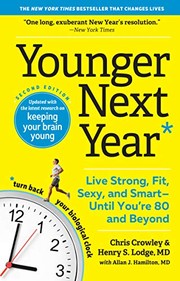
An accessible, motivating entry point that explains how aging affects the body's physical systems — including balance and coordination — and makes a compelling evidence-based case for exercise as the primary countermeasure.
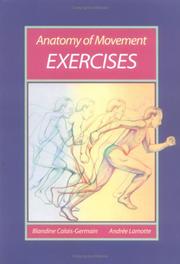
Provides clear, illustrated coverage of the joints, muscles, and postural chains involved in upright stability, giving the reader the anatomical vocabulary needed to understand balance training exercises precisely.
The Science of Falls and Fall Prevention
BeginnerUnderstand the epidemiology of falls in older adults, the major risk factors, and the evidence base for which interventions actually reduce fall rates.
▸ Study plan for this stage
Pace: 4–5 weeks, ~20–25 pages/day; read in two passes — first a quick skim of each chapter for structure, then a slow re-read with notes. Allow extra time for the appendices and assessment tools in "Exercise for Frail Elders," which are dense but highly practical.
- Epidemiology of falls in older adults: incidence rates, mortality/morbidity consequences, and the disproportionate impact on frail versus robust elders
- Definition and dimensions of frailty: how Best-Martini distinguishes frail elders from the general older-adult population and why this changes exercise prescription
- Intrinsic vs. extrinsic risk factors for falls: physiological decline (muscle weakness, reduced proprioception, vestibular changes, vision loss) versus environmental hazards
- The role of deconditioning and sedentary behavior as a compounding fall-risk multiplier in frail populations
- Evidence-based exercise modalities for fall prevention: strength training, balance training, flexibility, and functional mobility work as presented in the book's programming framework
- Functional assessment tools: how Best-Martini uses baseline assessments (e.g., chair-stand tests, gait-speed measures) to stratify fall risk and set safe starting points
- Safety principles and contraindications: spotting techniques, progression rules, and red-flag conditions specific to frail elders
- The biopsychosocial model of fall prevention: how fear of falling, self-efficacy, and social support interact with physical risk factors
- According to Best-Martini, what physiological changes associated with aging most directly increase fall risk, and how does frailty accelerate those changes?
- What is the difference between intrinsic and extrinsic fall-risk factors, and which category does exercise intervention primarily address?
- Which specific exercise modalities does Best-Martini identify as having the strongest evidence for reducing fall rates in frail elders, and what dosage parameters does she recommend?
- How does Best-Martini recommend using functional assessments before beginning a program, and what do the results tell you about a participant's fall-risk level?
- What safety modifications and spotting strategies does the book prescribe for working with frail elders, and when should exercise be contraindicated or modified?
- How does fear of falling create a self-reinforcing cycle of inactivity and increased risk, and what does Best-Martini suggest instructors do to address it?
- Conduct a self-administered functional assessment battery from the book (e.g., 30-second chair-stand test, single-leg stance timed hold, comfortable gait speed over 10 m) on yourself or a willing participant, then score and interpret the results using Best-Martini's risk-stratification criteria.
- Create a two-column risk-factor audit: list every intrinsic and extrinsic fall-risk factor mentioned in the book, then for each one write one sentence describing the specific exercise or environmental strategy Best-Martini recommends to address it.
- Design a beginner 4-week fall-prevention exercise program for a hypothetical 78-year-old frail elder using only the exercises and progression guidelines from the book; annotate each exercise choice with the evidence rationale Best-Martini provides.
- Visit or observe (in person or via video) a group exercise class for older adults and use Best-Martini's safety checklist as a lens — note which principles are being applied well and which are missing, then write a one-page reflection.
- Build a personal 'concept map' linking the book's key terms (frailty, deconditioning, proprioception, fear of falling, functional assessment, progressive overload) with arrows showing cause-and-effect relationships; use only evidence cited in the text.
- Write a one-page plain-language handout (as if for a real elder participant) explaining why balance and strength exercise reduces fall risk, drawing exclusively on the mechanisms and statistics Best-Martini presents.
Next up: Understanding who falls, why they fall, and what the evidence says about prevention creates the essential "why" foundation — the next stage can now build directly on this by introducing the biomechanical and neuromuscular mechanisms (center of mass, base of support, reactive balance) that explain *how* targeted balance and stability training produces the outcomes Best-Martini describes.
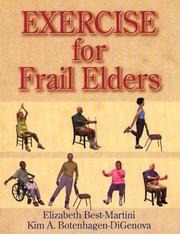
A research-grounded, practical guide to exercise programming for older and deconditioned adults, with dedicated coverage of balance, gait, and fall-prevention principles — ideal as a first structured look at the evidence.
Evidence-Based Exercise Programming
IntermediateLearn how to design and progress structured balance and strength training programs using the methods with the strongest evidence — including the Otago and Tai Chi approaches — and understand the principles of progressive overload applied to stability.
▸ Study plan for this stage
Pace: 6–8 weeks total: Weeks 1–4 cover "New Functional Training for Sports" (~20–25 pages/day, reading actively with notes on programming principles); Weeks 5–8 cover "The Tai Chi Book" (~15–20 pages/day, slower pace to absorb movement philosophy and practice alongside reading).
- Progressive overload applied to stability: how Boyle's joint-by-joint approach and movement progressions systematically increase balance demand over time
- The mobility-stability alternating joint model (Boyle): understanding which joints need stability vs. mobility and how this drives exercise selection for safe, effective programming
- Single-leg stance as a training cornerstone: Boyle's rationale for prioritizing unilateral lower-body work as the foundation of functional balance programming
- Movement screening and corrective hierarchy: using assessment to identify weak links before loading, ensuring program design addresses individual stability deficits
- Tai Chi's internal principles (Chuckrow): sung (relaxation), rooting, weight shifting, and the role of the central axis as a model for neuromuscular balance training
- Mind-body integration in stability (Chuckrow): how conscious attention to posture, breath, and slow deliberate movement trains proprioceptive pathways that complement conventional strength-based approaches
- Program structure and periodization: how Boyle organizes training phases (corrective → strength → power) and how Chuckrow's incremental form-learning mirrors progressive overload in a non-linear context
- Evidence-based rationale for Tai Chi and functional training: connecting the physiological and neurological mechanisms described in both books to fall-prevention outcomes (Otago-style thinking applied to the texts)
- According to Boyle's joint-by-joint model, which joints in the lower body require primary stability training, and how does this inform the sequencing of a balance program?
- How does Boyle justify the shift from bilateral to unilateral exercise as a form of progressive overload in stability training — and what are the key single-leg progressions he outlines?
- What does Chuckrow identify as the most common postural errors that undermine balance in Tai Chi practice, and how do his corrections map onto the stability principles Boyle describes?
- How do the concepts of 'rooting' and 'sung' (relaxed alertness) in Chuckrow's Tai Chi framework relate to neuromuscular control and co-contraction strategies discussed in functional training literature?
- How would you design a 4-week progressive balance program for an intermediate adult by combining Boyle's loading progressions with Chuckrow's slow, attentional movement principles?
- What are the key differences in HOW progressive overload is applied between Boyle's strength-and-stability model and Chuckrow's Tai Chi model, and what does each approach uniquely contribute to a comprehensive program?
- Joint-by-joint audit: After reading Boyle's mobility-stability chapters, draw a diagram of the body's joints and label each as 'mobility' or 'stability' dominant. Then audit your own current workout routine — does it respect this model? Rewrite one week of training to align with it.
- Single-leg progression ladder: Using Boyle's unilateral exercise progressions, build a 4-week single-leg stability ladder (e.g., static stance → eyes closed → perturbation → loaded RDL → single-leg squat). Perform each level for one week, logging balance errors and improvements.
- Tai Chi posture lab: After each Chuckrow chapter on posture and rooting, stand in Wu Chi (basic Tai Chi standing posture) for 3–5 minutes, consciously applying one principle at a time (relaxed knees, sunken chest, rooted feet). Journal what you notice about weight distribution and muscle tension.
- Weight-shift drill integration: Practice Chuckrow's foundational weight-shifting sequences (70/30 and full weight transfer) daily for 10 minutes during Weeks 5–8. After each session, note which of Boyle's stability concepts (hip stability, ankle mobility, core control) you felt being challenged.
- Program design capstone: At the end of both books, write a fully structured 6-week 'Balance & Stability' program for a hypothetical intermediate client. Include 2 sessions/week, specify warm-up (Tai Chi-inspired), main block (Boyle progressions), and cool-down. Justify every exercise choice with a citation to one of the two books.
- Comparative reflection journal: Keep a two-column reading journal throughout the stage — one column for Boyle's key programming principles, one for Chuckrow's movement insights. At the end of each week, write 3–5 sentences connecting an idea from each column, building toward a unified evidence-based philosophy.
Next up: Mastering structured progression and the complementary strength-based and mind-body approaches in these two books equips the reader to critically evaluate real-world clinical and athletic populations, setting the stage for the next level of study: applying and adapting these programs to special populations, injury rehabilitation contexts, and long-term periodization.

Introduces the concept of training movement patterns rather than isolated muscles, with strong coverage of single-leg stability and proprioceptive progressions that are directly applicable to fall-prevention programming.
Focuses specifically on the older adult population, translating resistance and balance training research into safe, progressive program templates — a practical bridge between the science and the gym floor.

Tai Chi has the strongest single-modality evidence base for fall reduction in older adults; this book explains its principles and mechanics clearly, allowing the reader to understand why and how it improves balance.
Clinical Depth and Assessment
ExpertUnderstand clinical assessment tools (Berg Balance Scale, Timed Up and Go, etc.), the neuroscience of postural control, and how to evaluate and individualize fall-prevention programs at a professional level.
▸ Study plan for this stage
Pace: 10–12 weeks total: Weeks 1–5 on "NeuroKinetic Therapy" (~20–25 pages/day, including re-reading dense motor-control chapters); Weeks 6–12 on "Gait Analysis" (~25–30 pages/day, with slower passes through biomechanical data chapters). Reserve the final week for cross-book integration and review.
- Motor Control Compensation Patterns (NeuroKinetic Therapy): How the motor control center (MCC) stores dysfunctional compensation patterns after injury or chronic imbalance, and why releasing a compensator before activating the inhibited muscle is essential for restoring postural stability.
- Muscle Inhibition and Facilitation Testing (NeuroKinetic Therapy): The manual muscle-testing protocol used to identify which muscles are neurologically inhibited and which are overworking as compensators — the diagnostic foundation for individualized fall-prevention programming.
- Neuroplasticity and Motor Re-education (NeuroKinetic Therapy): How the cerebellum and motor cortex can be re-patterned through specific release-then-activate sequences, underpinning the neuroscience of postural re-training.
- Postural Control Hierarchy (both books): The interplay of the vestibular, visual, and somatosensory systems in maintaining upright stance, and how deficits in any channel cascade into gait and balance dysfunction.
- Gait Cycle Phases and Sub-phases (Gait Analysis): Perry's detailed subdivision of the gait cycle — initial contact, loading response, mid-stance, terminal stance, pre-swing, and the three swing phases — and the precise muscular and joint demands of each.
- Kinematics vs. Kinetics in Gait (Gait Analysis): Distinguishing joint motion (kinematics) from the forces and moments driving that motion (kinetics), and how deviations in either domain signal fall risk or pathological compensation.
- Pathological Gait Deviations and Their Neuromuscular Origins (Gait Analysis): Perry's systematic catalogue of gait deviations (e.g., Trendelenburg, foot drop, knee hyperextension) mapped to specific muscle weakness or spasticity — directly applicable to clinical assessment and fall-risk profiling.
- Clinical Assessment Integration: Connecting Perry's observational and instrumented gait metrics with Weinstock's NKT inhibition/facilitation findings to build a comprehensive, individualized balance and fall-prevention evaluation framework.
- After performing an NKT assessment on a patient with chronic ankle instability, you find the peroneals are inhibited and the TFL is overworking as a compensator. According to Weinstock's protocol, what is the correct sequence of intervention, and why does order matter for reprogramming the motor control center?
- Perry describes the role of the gluteus medius across multiple gait sub-phases. How does weakness or inhibition of this muscle (as would be identified via NKT testing) manifest as a specific gait deviation, and what are the downstream balance and fall-risk implications?
- How do the vestibular, visual, and somatosensory systems interact during Perry's 'loading response' sub-phase, and what compensatory gait strategies might emerge when one system is compromised in an older adult?
- Using Perry's kinetic data on the ankle plantarflexors during terminal stance and pre-swing, explain how reduced push-off power would alter the body's center-of-mass trajectory and elevate fall risk — and how NKT testing might identify the neuromuscular inhibition driving that deficit.
- How would you design a step-by-step clinical assessment session for a 72-year-old patient with a recent fall history, integrating NKT manual muscle testing with Perry's observational gait analysis framework to prioritize intervention targets?
- Weinstock argues that treating the symptom site (the inhibited muscle) without first addressing the compensator leads to temporary results. How does this principle align or conflict with traditional rehabilitation approaches described in Perry's discussion of pathological gait correction?
- NKT Self-Assessment Lab: Working with a partner, practice the full NKT manual muscle-testing sequence from Weinstock on at least five muscle pairs (e.g., glute max/hip flexor, deep cervical flexors/upper traps). Document which muscles test inhibited, hypothesize the compensatory relationship, apply the release-then-activate protocol, and retest — recording outcomes in a clinical log.
- Gait Deviation Mapping: Video-record a volunteer walking 10 meters. Using Perry's gait deviation catalogue as a reference, pause the video at each sub-phase and annotate every observable deviation (trunk lean, knee alignment, foot clearance, arm swing). Then cross-reference each deviation with the corresponding NKT inhibition pattern that could plausibly cause it.
- Phase-by-Phase Muscle Demand Chart: Create a one-page reference table (based on Perry's data) listing each of the eight gait sub-phases, the primary muscles active, their functional role, and the balance consequence of their failure. Use this as a clinical quick-reference during patient observations.
- Individualized Fall-Prevention Program Design: Select a case study (real patient or constructed scenario) with at least three identified impairments. Write a structured program that (1) lists NKT inhibition/compensation findings, (2) maps those findings to Perry's gait deviations, (3) prescribes a prioritized release-activate sequence, and (4) includes progressive balance challenges tied to specif
- Neuroscience Concept Map: Draw a visual diagram connecting the motor control center (Weinstock) to the cerebellum, motor cortex, and the three sensory systems governing postural control. Annotate each connection with a clinical example of what happens when that link is disrupted, drawing on case examples from both books.
- Peer Teaching Session: Prepare and deliver a 15-minute presentation to a colleague or study group explaining Perry's kinetic analysis of one gait sub-phase (e.g., terminal stance) and how NKT testing would be used to identify and address the neuromuscular deficits underlying a deviation observed in that phase. Invite critical questions to test depth of understanding.
Next up: Mastering the neuromuscular diagnostic logic of NKT and the biomechanical precision of Perry's gait analysis equips the reader with the clinical assessment vocabulary and individualization framework needed to critically evaluate evidence-based fall-prevention protocols and advanced therapeutic exercise progressions in subsequent stages.

Explores the motor control system and how the brain coordinates movement and posture, providing the neurological depth needed to understand why certain balance deficits occur and how to address them systematically.
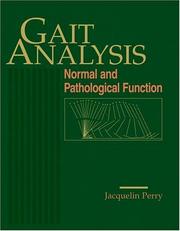
The canonical clinical reference on human gait and postural mechanics; reading this last gives the reader a rigorous, evidence-based framework for analyzing movement quality and identifying fall-risk patterns in real clients.
Discussion
Keep reading
Paths that share books, cover the same subject, or open a related topic.