Human anatomy has a reputation for being pure memorization — hundreds of Latin names to cram and forget. That reputation is why so many people bounce off it. The truth is that anatomy only sticks when you understand physiology, the story of what everything is FOR. A bone or a vessel you can explain is a bone you remember; a label you merely stared at is gone by morning.
That is why order matters so much here. Open a 1,200-page medical textbook cold and you will memorize, panic, and quit. Build up to it and the same book becomes a reference you actually enjoy.
Before we start: these books are for informed curiosity, not self-diagnosis. They help you weigh evidence and ask a clinician better questions — they are never a substitute for professional medical care.
Start with the body as a story
Begin with The Body by Bill Bryson, a witty tour of human biology that is not a textbook at all — it is the book that makes you WANT to learn anatomy. It gives you the big picture and a sense of wonder to carry into the harder material. Alongside it, How the Body Works by Peter Abrahams is the illustrated companion: system-by-system spreads with cutaways and diagrams, designed to be browsed rather than read straight through. Between them you get the narrative and the pictures before a single term is demanded of you. Then, if you want an easy on-ramp to the terminology, Anatomy and Physiology All-In-One for Dummies by Erin Odya lays out the systems in plain language with quizzes to check yourself.
Make it stick with active recall
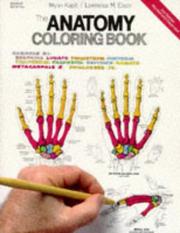
Now get your hands involved. The anatomy coloring book by Wynn Kapit is deceptively powerful: physically coloring and labeling structures forces the active recall that reading alone never triggers. It is the single best tool on this list for actually retaining what you learn, and it pairs with everything after it.
One book on the path is worth a scope note. Human anatomy for artists by Eliot Goldfinger is a superb reference, but it is aimed at people who draw the figure — surface form, bony landmarks, muscle shape under skin. If you are learning anatomy to render it, it belongs near the top of your stack. If you are learning it for health or science, it will teach you less about function than anything else here, so treat it as optional rather than as part of the spine.
Move into a real course
With the vocabulary and a mental map in place, step up to a proper textbook. Human Anatomy & Physiology by Elaine Marieb is the standard undergraduate text for a reason — thorough, clearly written, and built to teach rather than just catalog. If you want an alternative with the same rigor, Principles of Anatomy and Physiology by Gerard Tortora covers the same ground with excellent figures. Read one of these as your spine, not both.
Go deeper where you care
From there, specialize. Gray's anatomy for students by Richard Drake is the clinical anatomy reference — dense, superbly illustrated, and aimed at people who need structural detail. For the functional side, Physiology by Linda Costanzo is a beloved, concise account of how the systems actually operate; it is short enough to read cover to cover, which is exactly why it works.
The last step up is Guyton and Hall textbook of medical physiology, the reference medical students live inside for two years. It is not a book you read; it is a book you go to when Costanzo has left you wanting the mechanism in full — renal handling of sodium, cardiac output regulation, acid-base balance. Buy it late, use it as an encyclopedia, and it will outlast every other book on this list.
How to actually study it
Anatomy rewards spacing and repetition over marathon sessions. Color or draw a structure, close the book, and try to reproduce and name it from memory — that retrieval is what builds durable knowledge. Study systems in functional groups (the heart with its vessels, the lungs with gas exchange) rather than as isolated parts. And connect what you read to your own body; palpate a bone, feel a pulse, and the diagrams stop being abstract.
Because interpretations in health and physiology get revised as evidence accumulates, treat even textbook claims as the current best understanding, and take any question about your own health to a professional.
Want the staged plan? Follow the full reading path, explore the subject hub, or browse related science paths.