Latin American literature is one of the great stories of modern writing: a region that, over a single century, produced Borges's philosophical labyrinths, the magical realism of the "Boom," and the sprawling, violent epics of Bolaño. Read those books at random and they can feel like unrelated firework shows. Read them in order and you see a conversation — each generation answering, extending, and rebelling against the last.
So the arc moves from the master who invented the mode, through the Boom that made it global, to the writers who broke it open again.
Begin with Borges
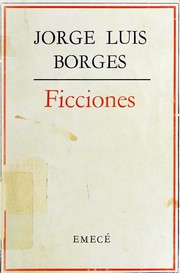
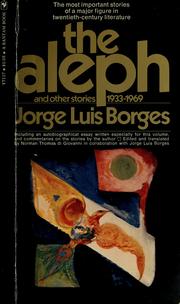
Start with Jorge Luis Borges, the fountainhead. Ficciones collects the mind-bending stories — infinite libraries, forking time, imaginary worlds — that reshaped what fiction could do, and The Aleph and other stories deepens the same vision. To feel his signature move, The Garden of Forking Paths remains the classic labyrinth of branching time. Borges is short, dazzling, and the key to everything that follows.
Live through the Boom
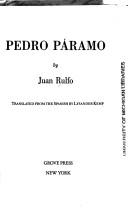
Now the explosion. Pedro Páramo by Juan Rulfo, a slim, haunting novel of a town of ghosts, is the direct ancestor of magical realism. Then One Hundred Years of Solitude by Gabriel García Márquez, the Boom's supreme masterpiece and the book most people mean by the phrase. The House of the Spirits by Isabel Allende carries the mode into a family saga of politics and the supernatural, and Hopscotch by Julio Cortázar invites you to read its chapters in multiple orders — the Boom at its most playful and experimental. García Márquez's The General in his Labyrinth reimagines Simón Bolívar's last days, showing the movement's historical reach.
Break it open again
The tradition kept reinventing itself. Kiss of the spider woman by Manuel Puig fuses politics, sexuality, and pop culture in a novel told almost entirely in dialogue. Then Roberto Bolaño detonates the whole inheritance: The Savage Detectives is a wild, generation-spanning quest through poetry and exile, and 2666 is his monumental, unfinished final epic — the ambitious endpoint of this path and one of the great novels of our century.
Read in this order, Latin American literature becomes a single evolving argument about reality, memory, and power — not a scatter of exotic classics. Follow the full reading path for the staged version, or browse the subject hub.
Ready to learn something deeply?
Build a reading path — free