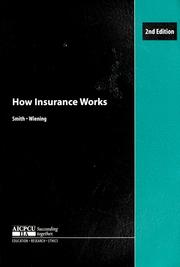
Most people who want to become an adjuster start in the wrong place — a state license cram guide — and end up memorizing definitions they cannot use. The exam is real and unavoidable, but it teaches the vocabulary, not the job. The job is walking a loss, reading a policy, writing an estimate a carrier will pay, and doing it fairly. Those are different skills, and books can build them in a sensible order.
Sequence matters because each layer assumes the one below it. You cannot evaluate a claim until you understand what insurance is buying and selling, and you cannot write a credible estimate until you can read a policy and a building.
Stage 1: what insurance actually is
Start with How insurance works by Barry D. Smith for a plain-language model of premiums, risk pooling, and coverage — the frame everything else hangs on. Then move to the Property and Casualty Insurance License Exam Study Guide 2019-2020 to pass the gate every carrier requires; treat it as vocabulary drill, not the destination.
Stage 2: how claims really run
Now the craft. The claims environment by James J. Markham is the industry's own primer on how a claim moves from first notice to close, and the roles around it. Its companion Property Loss Adjusting, also by Markham, goes deeper into investigating, valuing, and settling property losses — the daily work of the job.
Stage 3: estimating and the building
An adjuster who cannot estimate cannot be trusted with files. Xactimate 28 for Insurance Professionals by Nathan Mellor teaches the software carriers actually use to price repairs. Pair it with Contractor's guide to the building code by Jack M. Hageman so your scopes reflect how structures are legally built and repaired, not guesswork.
Stage 4: judgment, ethics, and independence
The last stage is about doing it well and doing it right. Adjusting Today by Adjusters International collects real coverage disputes that sharpen your reading of ambiguous policies. Insurance Bad Faith Law by William M. Shernoff shows the line you must not cross and why fair dealing is a legal duty, not a courtesy. The Adjuster's Handbook by International Loss Adjusters is a field reference for loss types you will meet, and Independent Adjuster's Playbook by Brent Kelly maps the business side for anyone who wants to work storm claims or go independent.
How to study it
Adjusting is learned by doing, so read with a file in mind. After each book, take a sample policy and a mock loss and practice the move it taught — classify the peril, scope the damage, price it, defend the number. Books build the framework and the ethics; the license and supervised field experience make you an adjuster. No book replaces state licensing or a carrier's training, and this path is education, not legal advice.
The staged version, with a study plan for each stage, is the full reading path. Browse the subject hub for adjacent routes, or build your own list from titles you trust.
Ready to learn something deeply?
Build a reading path — free