Hungarian cooking has a reputation problem outside Hungary: it gets reduced to goulash, and goulash gets reduced to beef stew with red powder in it. The reality is a cuisine built on a small number of highly specific techniques that recur constantly — the onion and lard base, paprika added off the heat so it does not scorch bitter, sour cream tempered so it does not break, and a pastry tradition inherited from the Austro-Hungarian coffeehouse that is as demanding as any in Europe.
Learn those techniques and hundreds of dishes open at once. Learn recipes without them and you will produce approximations that taste vaguely correct and never right. So the reading order goes: the encyclopedic book that explains the logic, then the classic recipe canon, then regional and Central European breadth, then pastry as its own discipline.
The one book to start with
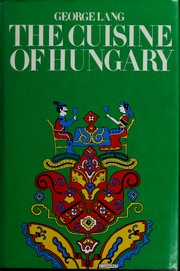
The cuisine of Hungary by George Lang is the foundational text in English and it is not close. Lang was a restaurateur and a serious cultural historian, and the book interleaves the history of Hungarian food — Ottoman influence, the arrival of paprika, the coffeehouse era, regional divergence — with recipes that actually work. Crucially, he explains the technique behind the categories: what separates gulyás from pörkölt from paprikás from tokány is not a garnish but the ratio of onion to meat, the cut, the liquid, and whether sour cream enters. Once you have that table in your head, the cuisine becomes navigable.
The canon
Gundel's Hungarian cookbook is the classic restaurant canon, from the family behind Budapest's most famous dining room. It is terse in the older style — short recipes that assume you can cook — which is exactly why it works well after Lang rather than before him. Use it for the standard versions of the dishes Lang has already explained.
The Hungarian cookbook by Susan Derecskey is the friendlier home-kitchen counterpart, written for an American audience with clearer quantities and more hand-holding. If you find Gundel too compressed, cook from Derecskey instead; the two overlap substantially and you do not need both.
Widen out
Culinaria Hungary by Anikó Gergely is the illustrated regional survey — wine regions, Lake Balaton fish, the Great Plain, Christmas and Easter traditions, charcuterie, and the food geography that explains why dishes differ across the country. It is as much a cultural reference as a cookbook and it is the best single source here on what is eaten where.
Then The cooking of Vienna's empire by Joseph Wechsberg places Hungarian food in its Austro-Hungarian context alongside Austrian, Czech, and Balkan traditions. It clarifies which dishes are shared inheritance and which are genuinely Hungarian, and it is a pleasure to read as food writing.
Pastry last, because it is hardest
Close with Kaffeehaus by Rick Rodgers, devoted to the cakes, tortes, strudels, and pastries of Vienna, Budapest, and Prague — Dobos torte, Esterházy, rétes, palacsinta. Baking demands precision the savory side forgives, and Rodgers gives modern, tested quantities and clear method, which the older Hungarian sources often do not. Leaving it until last means you arrive with the technique and the context already in place.
A practical note: the paprika matters more than any other ingredient decision. Buy fresh Hungarian paprika in useful quantity, store it away from heat and light, and replace it annually — stale paprika is the most common reason a correctly followed recipe tastes dull. Adjacent cuisines are worth exploring at Lebanese cooking.
Cook the sequence and you will understand the cuisine, not just its greatest hits. Follow the full path to keep the order.
Follow the full ordered path here: How to Learn Hungarian Cooking From Books, in Order.