New spinners almost always make the same lumpy, over-twisted first yarn, then assume they lack talent. They do not — they lack the sequence of small skills that turn raw fiber into consistent yarn. Learn those in order and your yarn becomes something you design rather than something that happens to you.
The path below starts with the spindle and the fundamentals, moves into fleece preparation and control, and ends in designing yarn for specific uses. Each book adds a lever you can pull deliberately.
Learn the spindle and the basics
Start with Respect the spindle by Abby Franquemont, the definitive guide to spinning on a drop spindle — the cheapest, most portable way to learn real technique. Spinning in the Old Way by Priscilla Gibson-Roberts reinforces traditional, efficient methods that build a solid foundation before you touch a wheel.
Prepare fiber and gain control
Great yarn starts before the twist. The fleece and fiber sourcebook by Deborah Robson is the essential reference on the traits of different wools and fibers, and Preparing the Fleece teaches washing, carding, and combing raw fiber into something spinnable. The intentional spinner by Judith MacKenzie McCuin then shows how to control every variable to get the yarn you actually want.
Design your yarn
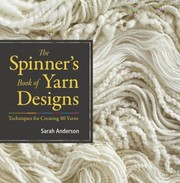
The payoff is designing yarn for a purpose. The Spinners Book of Yarn Designs by Sarah Anderson is a visual catalog of structures — singles, plies, and novelty yarns — you can learn to reproduce. Yarns to Dye For connects spinning to color, Spin to weave by Sara Lamb tailors your yarn for the loom, and Handspun Revolution rounds out the craft with practical, approachable projects.
Work these in order and spinning becomes an act of design. Follow the full path from your first spindle-full to yarn built for the project in your head.
Follow the full reading path →
Ready to learn something deeply?
Build a reading path — free