Geometry is unusual among math subjects because it lives in two places at once: the picture in front of you and the logical structure underneath it. Read it in the wrong order and you get one without the other, either pretty diagrams you cannot justify or airtight proofs you cannot see. A good sequence keeps both alive.
The other reason order matters here is history. Geometry is one long argument stretching from Euclid to Einstein, and each stage answers a question the previous one raised. Follow that thread and even the strange non-Euclidean geometries feel inevitable rather than bizarre.
Start with intuition and the classics
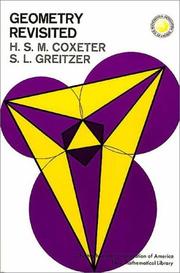
Open with Shape by Jordan Ellenberg, a wide, entertaining case for why geometry underlies everything from elections to machine learning. It sets the stakes without demanding proof-writing. Then sharpen your eye with Geometry revisited by H. S. M. Coxeter, which revives the beautiful classical theorems most curricula skip and teaches you to actually look at a figure.
Now go to the source: The First Six Books of the Elements of Euclid. Working through Euclid is the single best training in deductive reasoning ever written, and everything later on is a reaction to it.
Build the rigorous core
Geometry by Robin Hartshorne is the ideal modern companion to Euclid, revisiting the ancient axioms with contemporary rigor and showing exactly where Euclid was airtight and where he quietly assumed. Broaden the picture with Introduction to geometry by Coxeter, a sweeping survey that connects the classical, the modern, and the exotic in one voice.
From there, Geometry by Michele Audin brings a cleaner, more algebraic treatment that bridges toward the linear-algebra view of the subject, a natural next step if you are also studying that.
Reach the deeper ideas
Two threads open up the modern subject. Transformation Geometry by George E. Martin reframes shapes through the motions that preserve them, which is the doorway to symmetry, and Symmetry by Hermann Weyl is the classic meditation on why that idea matters across art and physics as well as math.
Then push past the flat plane. Projective Geometry by Coxeter shows what happens when parallel lines are allowed to meet, and Euclidean and Non-Euclidean Geometries: Development and History by Marvin Jay Greenberg tells the full story of how mathematicians discovered that Euclid's fifth postulate could be denied, and whole consistent universes appear.
Read the path in this order and geometry stops being a school subject and becomes what it was to Euclid and to Einstein: a way of reasoning about space itself. Follow the complete sequence to get there.
Follow the full reading path →
Ready to learn something deeply?
Build a reading path — free