Algebra rewards a good reading order more than almost any subject, because it is cumulative in a strict sense: every new idea leans on an earlier one being solid. Skip the reasoning behind why you can move a term across an equals sign and you spend years memorizing rules that feel arbitrary. Build the ideas in sequence and the rules become obvious.
The trap most self-learners fall into is jumping to an "adult" abstract-algebra book before the mechanical fluency is there. The path below fixes that: first a map of the terrain, then patient skill-building, then the deeper structural view once symbols feel like second nature.
Get your bearings first
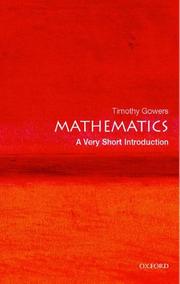
Start with Mathematics by Timothy Gowers, a short, honest tour of what mathematical thinking actually is. It will not teach you to factor a quadratic, but it reframes algebra as reasoning rather than arithmetic with letters, which is exactly the mindset the rest of the path needs.
Then rebuild the foundation with Pre-Algebra by Richard Rusczyk. Even if you "did algebra in school," this closes the quiet gaps around fractions, negatives, and the meaning of a variable that later trip everyone up.
Build real fluency
Introduction to Algebra, also by Rusczyk, is the workhorse of this path. It is problem-first and demands you discover techniques rather than be handed them, which is slower but sticks. Alongside it, read Algebra by Israel M. Gel'fand, a slim, deep book that treats a handful of ideas with unusual care and teaches you to think like a mathematician about equations.
Push into Intermediate algebra by Rusczyk for the harder machinery, then let Gel'fand's companions do the conceptual heavy lifting: Functions and graphs makes the leap from static equations to functions you can picture, and The method of coordinates fuses algebra with geometry so that a curve and its equation become one object. This trio is where algebra stops being a set of tricks.
See the deeper structure
Once you can manipulate symbols without thinking, Algebra by Michael Artin shows what those symbols were always pointing at: groups, rings, and fields, the actual objects modern math studies. It is a genuine step up in abstraction, so arrive here fluent.
To read Artin honestly you need to write proofs, so pair it with How to prove it by Daniel J. Velleman, which teaches the logical scaffolding of a real argument. Many people read Velleman a little earlier, the moment proofs start appearing, and that works too.
Follow the full path in order and you will move from "I can solve for x" to "I understand what algebra is a theory of," which is the difference between using math and knowing it.
Follow the full reading path →