Electronics is one of those subjects where you can either build a blinking LED on a breadboard in an afternoon or stall out for years in equations that never connect to anything physical. The difference is order. Hands-on intuition — actually seeing current flow, components heat up, and circuits work — has to come before the theory, or the theory floats free of any meaning.
So this path starts practical and gets rigorous. First, a feel for electricity and building simple circuits; then the analog theory that governs how real components behave; then the digital design that leads to computers. Each stage gives the next something concrete to explain, which is exactly how electronics is best learned.
Get a feel for electricity
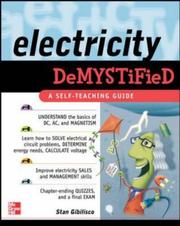
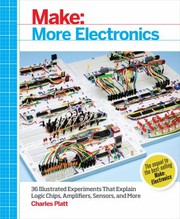
Start with Electricity Demystified by Stan Gibilisco, a gentle, clear introduction to voltage, current, and resistance for someone starting from zero. Then Make More Electronics by Charles Platt is the hands-on, build-as-you-learn book that turns those concepts into working circuits on your bench — the fastest way to make electricity feel real.
Learn the analog theory
With intuition in place, build the rigor. Fundamentals of electric circuits by Alexander and Sadiku is the standard, thorough textbook on circuit analysis — Ohm's and Kirchhoff's laws, AC, and beyond. Then The art of electronics by Horowitz and Hill is the legendary practical bible that bridges theory and real design like nothing else. Microelectronic Circuit Analysis and Design by Neamen goes deep on the semiconductor devices — transistors and amplifiers — underneath it all, and Op Amp Applications Handbook by Walt Jung is the definitive reference on the operational amplifier, the workhorse of analog design.
Reach digital and real-world design
Finally, move into digital and practice. Digital design by Morris Mano teaches logic gates, flip-flops, and the building blocks of computers, while But How Do It Know explains, in plain language, how those pieces assemble into a CPU. Practical Electronics for Inventors by Paul Scherz is the comprehensive maker's reference for building real projects, and High Speed Signal Propagation by Howard Johnson tackles the hard problems that appear when signals get fast.
Follow the path in order and electronics goes from mysterious to predictable — the perfect foundation beneath the computer-science and hardware paths.
Follow the full reading path →
Ready to learn something deeply?
Build a reading path — free