Food allergy literature is unusually noisy because the word gets applied to at least three different things: IgE-mediated immune reactions that can kill, enzyme deficiencies like lactose intolerance, and a broad category of self-reported sensitivities with no consistent mechanism. A book that blurs those will send you down the wrong road entirely — eliminating foods you tolerate, or worse, under-preparing for a reaction that is actually immunological.
So the order below starts with diagnosis and mechanism, moves to living with a confirmed allergy, and ends with the treatment science that has changed fastest in the past decade. It is deliberately front-loaded with clinician-written books.
State the boundary plainly: anaphylaxis is a medical emergency, epinephrine is the treatment, and no book on this list replaces an allergist's testing or an emergency action plan. Oral immunotherapy in particular is only done under medical supervision. Read to understand, then decide with a clinician.
Diagnosis and what the words mean
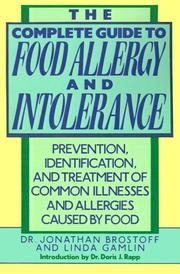
Start with The Food Allergy Fix, in which Sakina Bajowala, an allergist, walks through how allergy actually develops, what testing does and does not prove, and why a positive skin-prick result is not by itself a diagnosis. It is the most current of the introductory books and the least alarmist. Then read The complete guide to food allergy and intolerance — Brostoff and Gamlin's long-standing survey is the clearest treatment of the allergy-versus-intolerance boundary, covering enzyme deficiencies, additive reactions, and the elimination-and-challenge protocol that is still the only reliable way to identify a non-IgE trigger.
Food allergies by Scott Sicherer is written by one of the field's leading researchers and is organized as a patient's question list: what causes it, what the tests mean, how children outgrow some allergies, how schools should respond. If you want one authoritative reference to keep, take this one.
Living with it day to day
Dealing with Food Allergies by Janice Vickerstaff Joneja is the practical dietitian's manual — how to run an elimination diet properly, how to read labels, how to avoid the nutritional gaps that come from cutting whole food groups. It is more detailed than the introductory books and answers the questions they leave open.
For the single most common serious allergy, The Peanut Allergy Answer Book by Michael Young covers cross-contamination, restaurant strategy, school policy, and what the labelling terms actually mean. The food allergy mama's baking book by Kelly Rudnicki is the narrowest book here and a genuinely useful one — recipes free of milk, eggs, and nuts, which solves the recurring birthday-party problem that dominates allergy parenting.
Allergic Girl by Sloane Miller shifts the register to adult life: dating, travel, restaurants, and the social negotiation of a condition other people find inconvenient. It fills a gap the clinical books leave completely empty.
The clinical and research end
Anaphylaxis and hypersensitivity reactions, edited by Mariana Castells, is a clinical text rather than a patient guide — mechanisms, mast-cell biology, diagnosis, and emergency management. Read it if you want the underlying immunology or if you work in healthcare. Close with The end of food allergy, in which Kari Nadeau and Sloan Barnett lay out the case for early introduction and oral immunotherapy, including the LEAP trial evidence that reversed decades of avoidance advice. It is the most hopeful book on the path and the most explicit that these treatments belong in supervised clinical settings.
Read in this order and you will be able to tell a mechanism from a marketing claim. Follow the full path, and if allergy overlaps with asthma in your household, the asthma hub covers the other half.
Follow the full ordered path here: The Best Books on Food Allergies to Read First.