Feng shui is the centuries-old Chinese practice of arranging your surroundings so a space feels ordered, calm, and intentional. Whether you approach it as a spiritual system or simply as a disciplined way to think about how a room affects your mood, it is worth exploring — and it pairs naturally with decluttering and design. Two honest notes up front. First, feng shui is a traditional and metaphysical practice, not a scientific one; read it as a lens and a philosophy, and hold its bolder claims about luck and energy lightly. Second, its real, testable payoff — living in a space that is uncluttered, functional, and deliberately arranged — is something you feel immediately, whatever you believe about the rest.
Feng Shui: Best Books to Read, in Order
July 12, 2026 · 2 min read
Why order matters here
Start with a dense classical handbook and the jargon of compass schools and flying stars will bury you. Start with a friendly modern guide and the tradition later reads as depth rather than confusion. Accessible first, traditional second.
The path, stage by stage
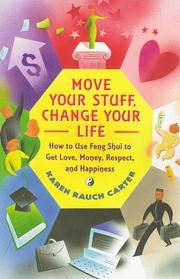
Begin with the most approachable on-ramp. Move your stuff, change your life by Karen Rauch Carter is a warm, practical introduction that maps feng shui onto everyday rooms and problems — the easiest way in. Pair it with The Western Guide to Feng Shui by Terah Kathryn Collins, which adapts the tradition for Western homes and the popular bagua-map approach, so the concepts feel usable rather than foreign.
Then focus on the single most effective practice. Clear your clutter with feng shui by Karen Kingston connects feng shui to decluttering, and it is the part of the whole subject with the clearest, most immediate effect on how a space feels. This is where belief and results overlap most.
Next, go broader and gentler. Feng shui by Nancy SantoPietro widens the picture with more principles and applications, and Feng Shui for the Soul by Denise Linn brings in the reflective, intention-setting side that connects the practice to meditation and mindfulness.
Finally, if you want the traditional depth, reach for The Feng Shui handbook by Derek Walters — a fuller reference on the classical system, its compass directions, and its history. Approach it once the modern books have given you the vocabulary; on its own it is a lot.
How to actually study this
Treat your own home as the laboratory. After each book, change one thing — clear a cluttered entryway, reposition a bed, open a dark corner — and notice honestly how the space and your mood shift. Keep what genuinely helps and set aside what does not resonate; feng shui is meant to be practiced, not just read. And keep the two lenses separate in your mind: what is measurable comfort and function, and what is tradition and belief. Both can be valuable; conflating them is where credibility slips.
Read the modern guides cover to cover; use the handbook as a reference. See the full reading path for the staged study plan, and the subject hub for links to interior design and decluttering. Browse related topics at /subjects.
FAQ
- What is the best feng shui book for beginners?
- Move your stuff, change your life by Karen Rauch Carter — a practical, friendly introduction that maps feng shui onto real rooms and everyday problems.
- Does feng shui actually work?
- Its clearest benefit — an uncluttered, deliberately arranged space that feels calmer — is real and immediate. Its metaphysical claims are traditional beliefs, best held thoughtfully rather than as science.
Get the books
- 1Move your stuff, change your lifeAmazon ↗Karen Rauch Carter
- 2Feng shuiAmazon ↗Nancy SantoPietro
- 3The Western Guide to Feng ShuiAmazon ↗Terah Kathryn Collins
- 4Clear your clutter with feng shuiAmazon ↗Karen Kingston
- 5The Western Guide to Feng-shuiAmazon ↗Terah Kathryn Collins
- 6Feng Shui for the SoulAmazon ↗Denise Linn
As an Amazon Associate we earn from qualifying purchases. Some book links are affiliate links; you pay the same price and we may earn a small commission.
Follow the full reading path

Feng shui: arrange your space with intention
Beginner8books44 hrs4 stages
@homesherpa♥ 0
Ready to learn something deeply?
Build a reading path — free