Exploit development is one of the most demanding corners of security, and it punishes gaps in your foundation harder than almost any other subject. Memory layout, assembly, operating-system internals, and the mitigations that stop naive attacks all have to click before advanced techniques make sense. That is why reading order matters so much here. And to be clear: this knowledge is for authorized research, vulnerability disclosure, and building defenses, never for attacking systems you do not own or have permission to test.
The path builds from first principles to shellcode to deep internals and modern tooling.
Build the foundation
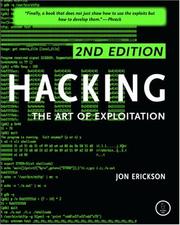
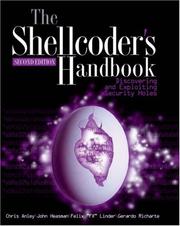
Start with Hacking, which teaches the low-level programming, memory, and exploitation basics with real, runnable examples. Then The shellcoder's handbook is the classic that walks through crafting exploits across platforms and vulnerability classes. Together they give you the working model of how a bug becomes control.
Go into the operating system
Real exploitation lives in OS internals, so read Windows Internals, Part 1 to understand how the platform actually manages processes, memory, and privilege. Then A Guide to Kernel Exploitation takes you into the most privileged and unforgiving target of all. Pair this with The art of software security assessment to sharpen your eye for the flaws worth exploiting, and Shellcode: The Fundamentals of Exploit Development to drill the payload-writing craft.
Modern tooling and defenses
Finding bugs at scale means automation, so The Fuzzing Book teaches the fuzzing techniques that surface crashes to investigate. Practical Binary Analysis gives you the disassembly and instrumentation skills to reverse and analyze real binaries. Understand the defensive landscape with Exploitation Techniques and Defenses, and see the deepest form of persistence and stealth in The rootkit arsenal so you know what advanced attackers do and how to detect it.
This is offensive knowledge in service of defense and research, always under proper authorization. Follow the full path to keep the sequence.
Follow the full reading path →
Ready to learn something deeply?
Build a reading path — free