Cartooning looks spontaneous, but the appeal you admire usually rests on drawing fundamentals most beginners skip. Jump straight to inking gags and you tend to plateau fast, because what holds a cartoon together lives underneath the style: how you see shape, how a figure carries weight, how an expression reads in a fraction of a second.
Reading in order fixes that. You build the eye first, then construction, then acting and staging, and only then production craft like color, lettering, and publishing. Each book below sits where it does for a reason.
See and construct first
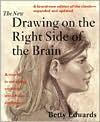
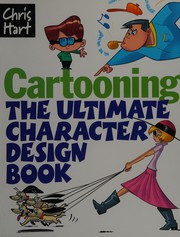
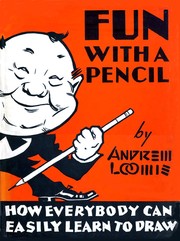
Start with The New Drawing on the Right Side of the Brain, which retrains how you perceive edges and negative space instead of drawing the symbols already in your head. From there, Cartooning by Christopher Hart gives you the working vocabulary of the form, and Fun With a Pencil by Andrew Loomis teaches head and figure construction from simple blocks, the scaffolding every cartoon hangs on.
Make it move and emote
Once shapes feel solid, learn to make them act. The animator's survival kit by Richard Williams is the standard on timing, weight, and motion even for still panels, and Facial expressions by Mark Simon is a reference you'll open constantly to keep emotion legible. Character Design Quarterly rounds this stage out by showing how working artists develop a cast with a consistent, appealing look.
Stage, finish, and publish
With drawing and acting in hand, turn to storytelling and production. Framed Ink Drawing And Composition For Visual Storytellers by Marcos Mateu-Mestre teaches you to compose a panel so the eye lands where you want, and The DC Comics guide to coloring and lettering comics covers the finishing craft that makes pages read cleanly. For history and taste, The illusion of life traces Disney's principles at their source and Cartoon modern by Amid Amidi shows the flat, graphic mid-century style that still shapes the field. Finally, How to make webcomics by Scott Kurtz gets your work in front of an audience.
Work these in sequence and you'll draw with intent instead of luck. If you like building a visual eye this way, the related documentary photography path trains composition from a different angle. Follow the full reading path to keep going in order.
Follow the full reading path →
Ready to learn something deeply?
Build a reading path — free