Software architecture is where good code and bad outcomes meet: a project can be full of tidy functions and still collapse because the big-picture structure was wrong. Learning it well means building intuition for the decisions that are hard to reverse, and that intuition builds best in a deliberate order.
The sequence that works starts with principles of good design, moves through the cataloged patterns that solve recurring structural problems, and ends with the realities of building systems that stay reliable at scale. Read it that way and you learn to reason about tradeoffs rather than memorize diagrams.
Start with principles
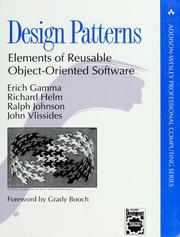
Begin with Clean Architecture, which frames architecture as the art of keeping options open — separating policy from detail so systems can evolve. Pair it with A Philosophy of Software Design, a short, sharp book about managing complexity, the root problem all architecture is really trying to solve. Then Design Patterns gives you the shared vocabulary of reusable solutions that the rest of the field assumes you know.
Learn the enterprise patterns
Real systems have recurring shapes, and this arc catalogs them. Patterns of Enterprise Application Architecture is the reference for structuring business applications — layering, domain logic, and data mapping. Enterprise integration patterns does the same for the harder problem of making separate systems talk to each other reliably through messaging. And Fundamentals of Software Architecture pulls back to teach the discipline itself: architecture characteristics, styles, and the soft skills of the role.
Design for scale and change
The final books confront scale head-on. Software Architecture : the Hard Parts tackles the genuinely difficult distributed-systems decisions — how to pull things apart and when not to. Designing Data-Intensive Applications is the modern classic on how data systems actually behave under load, covering replication, partitioning, and consistency with unusual clarity. And Building Microservices offers a grounded, tradeoff-aware take on decomposing systems into services without creating a distributed mess.
Follow this order and architecture stops being buzzwords on a whiteboard and becomes a set of reasoned tradeoffs you can defend. Read the full path to build systems that survive both growth and change.
Follow the full reading path →
Ready to learn something deeply?
Build a reading path — free