Chemical engineering is one of the most stubbornly cumulative subjects there is. You cannot understand a reactor without kinetics, you cannot understand kinetics without thermodynamics, and none of it makes sense until you can close a mass and energy balance in your sleep. Skip a rung and the ladder collapses.
That is why a reading order matters so much here. The classic texts are excellent but unforgiving — each assumes you already own the one before it. Sequenced properly, though, they build into a real curriculum, from your first balance to a full plant design.
Start with balances and thermodynamics
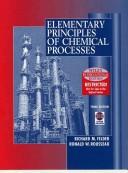
Begin with Elementary principles of chemical processes, the book nearly every program uses to teach the material and energy balances that underlie everything else. It is patient, example-heavy, and the right place to build habits you will lean on for years. From there, Introduction to Chemical Engineering Thermodynamics takes over: it is the discipline's thermodynamics text, moving from the first law through phase and chemical equilibrium with the rigor the later courses demand.
Learn how things move: transport and heat
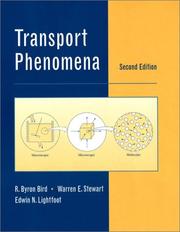
With balances and thermo solid, the next arc is transport. Transport phenomena is the famous, demanding treatment of momentum, heat, and mass transfer unified under one framework — hard, but it rewires how you see every flow and gradient. Pair it with Heat Transfer, a focused text that grounds conduction, convection, and radiation with the worked detail that makes design calculations tractable.
Reactors, separations, and design
Now the subject becomes recognizably chemical engineering. Elements of chemical reaction engineering is the standard reactor-design book, teaching kinetics and reactor sizing through its signature algorithmic style; read alongside it, Chemical reaction engineering offers a clearer conceptual complement that many students find sharpens the intuition. Once reactions are handled, Separation Process Principles covers distillation, absorption, and the mass-transfer operations that dominate real plants.
The final stage is synthesis. Chemical Process Design and Integration teaches you to think about a whole flowsheet — heat integration, utilities, and economics — rather than isolated units. Chemical engineering design then walks the full design of processes and equipment, bridging coursework and practice. Keep Perry's chemical engineers' handbook nearby throughout as the profession's reference volume: not a book to read cover to cover, but the one you reach for when you need a correlation, a property, or a standard.
Worked in this order, chemical engineering stops feeling like a wall of intimidating textbooks and becomes a single connected argument — from the first balance to a plant you could actually build. Follow the full path to move through it stage by stage.
Follow the full reading path →
Ready to learn something deeply?
Build a reading path — free