Chemical engineering: a reading path from reactors to processes
This curriculum builds a rigorous, practice-oriented mastery of chemical engineering across five progressive stages. Starting from the core quantitative framework of balances and thermodynamics, it advances through transport phenomena and reaction engineering before culminating in the design and scaling of real industrial processes. Each stage sharpens the tools needed to tackle the next, creating a coherent arc from analysis to synthesis.
Foundations: Balances & Thermodynamics
IntermediateEstablish fluency in material and energy balances and classical chemical engineering thermodynamics — the universal language of every subsequent topic.
▸ Study plan for this stage
Pace: 8–10 weeks, ~40–50 pages/day with problem sets
- Material balance fundamentals: conservation of mass, steady-state vs. unsteady-state systems, and degree-of-freedom analysis
- Energy balance principles: first law of thermodynamics, enthalpy, sensible and latent heat, and energy conservation in open and closed systems
- Process thermodynamics: phase equilibria, vapor-liquid equilibrium (VLE), and thermodynamic properties of pure substances and mixtures
- Simultaneous material and energy balances: reactive and non-reactive processes with phase changes and heat transfer
- Thermodynamic property estimation: steam tables, psychrometric charts, and equations of state for real-gas behavior
- System analysis and problem-solving methodology: defining system boundaries, identifying unknowns, and systematic solution approaches
- Industrial applications: distillation, evaporation, combustion, and separation processes grounded in balance equations
- Recycle, bypass, and purge streams: handling complex flowsheets with material recirculation and their thermodynamic implications
- How do you set up and solve a material balance for a steady-state process with multiple streams and recycle? What is degree-of-freedom analysis and why does it matter?
- Explain the first law of thermodynamics for an open system. How do you account for enthalpy, kinetic energy, and potential energy in energy balances?
- What is the difference between sensible heat and latent heat? How do you use steam tables and psychrometric charts to find thermodynamic properties?
- How do you perform simultaneous material and energy balances on a process with phase changes (e.g., evaporation or condensation)?
- For a reactive process, how do you incorporate stoichiometry and heat of reaction into combined balances?
- What are the key assumptions in ideal gas behavior, and when must you use real-gas equations of state or generalized correlations?
- Solve 15–20 material balance problems from Felder covering: single-unit processes, multiple-unit systems, recycle streams, and bypass/purge operations. Work through both with and without chemical reaction.
- Work through 10–12 energy balance problems: calculate enthalpy changes using steam tables, psychrometric charts, and sensible/latent heat. Include at least 3 problems with phase changes.
- Perform 8–10 simultaneous material and energy balance problems on realistic unit operations: evaporators, heat exchangers, reactors with cooling, and distillation columns (qualitative).
- Create a personal reference sheet for each major process type (evaporation, condensation, combustion, mixing) showing the standard balance equations and key assumptions.
- Solve 5–6 problems involving recycle streams with convergence or iteration required; use either manual iteration or a spreadsheet tool to find the solution.
- Practice reading and interpreting steam tables, psychrometric charts, and generalized compressibility factor charts; solve 6–8 property-lookup problems to build fluency.
Next up: Mastery of material and energy balances provides the quantitative foundation for analyzing separation processes (distillation, absorption, extraction) and reactor design, where these balances are applied to specific unit operations with their own thermodynamic and kinetic constraints.
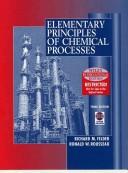
The definitive starting point for mass and energy balances; its systematic approach to process diagrams and degree-of-freedom analysis builds the quantitative intuition every later topic demands.
The canonical thermodynamics text for chemical engineers, covering PVT behavior, phase equilibria, and chemical reaction equilibria in a rigorous yet accessible way — essential before tackling transport or reactor design.
Transport Phenomena
IntermediateDevelop a unified, mathematical understanding of momentum, heat, and mass transfer — the physical mechanisms that govern every piece of process equipment.
▸ Study plan for this stage
Pace: 12–14 weeks, ~40–50 pages/day (Bird: 8–9 weeks, ~45 pages/day; Ozisik: 4–5 weeks, ~40 pages/day). Allocate 1 week for integration and problem-solving across both texts.
- Continuum hypothesis and the Navier-Stokes equations as the foundation for momentum transfer in fluids
- Viscous flow and boundary layer theory: laminar and turbulent flow regimes, velocity profiles, and shear stress
- Heat transfer mechanisms (conduction, convection, radiation) and the energy equation in moving fluids
- Mass transfer and diffusion: Fick's laws, concentration gradients, and analogy between momentum, heat, and mass transfer
- Mathematical framework: differential equations, dimensionless numbers (Re, Pr, Sc, Nu, Sh), and similarity solutions
- Transport coefficients: viscosity, thermal conductivity, and diffusivity; their temperature and pressure dependence
- Coupled transport phenomena: simultaneous momentum, heat, and mass transfer in real equipment
- Practical applications: flow in pipes, heat exchangers, packed beds, and boundary layer separation
- Derive the Navier-Stokes equations from first principles using a shell momentum balance, and explain the physical meaning of each term.
- How do the Prandtl, Schmidt, and Reynolds numbers relate momentum, heat, and mass transfer? What do these dimensionless groups tell you about transport behavior?
- Solve a laminar flow problem (e.g., Couette or Poiseuille flow) using the Navier-Stokes equations and calculate velocity profiles and shear stress.
- Explain the analogy between momentum, heat, and mass transfer. Why do the governing equations have similar mathematical forms, and what are the limitations of this analogy?
- For a given heat transfer scenario (conduction, convection, or combined), set up and solve the energy equation to find temperature distributions.
- Describe boundary layer development over a flat plate: how do velocity and thermal boundary layers grow, and how does this affect local and average transfer coefficients?
- Work through Bird's shell balance problems (Chapters 2–3): solve for velocity profiles in Couette, Poiseuille, and annular flows; calculate pressure drops and volumetric flow rates.
- Derive the thermal energy equation from an energy balance on a fluid element; apply it to steady-state conduction in a slab and convection in a duct (Bird Ch. 9; Ozisik Ch. 1–2).
- Solve Ozisik's conduction problems: 1D steady-state with various boundary conditions, then 2D/3D using separation of variables or numerical methods (Ozisik Ch. 3–4).
- Calculate convective heat transfer coefficients for laminar and turbulent flow using correlations and boundary layer theory; compare predictions to experimental data (Ozisik Ch. 6–7).
- Perform a dimensional analysis on a transport problem (e.g., heat transfer from a cylinder in cross-flow) to derive dimensionless correlations; validate against published data.
- Solve a coupled momentum-heat transfer problem: e.g., thermal entrance region in a pipe or flow over a heated flat plate; compute velocity and temperature profiles simultaneously.
Next up: This stage establishes the mathematical and physical foundations of transport phenomena, enabling the next stage to apply these principles to design and optimization of industrial equipment (reactors, separators, contactors) where momentum, heat, and mass transfer occur simultaneously.
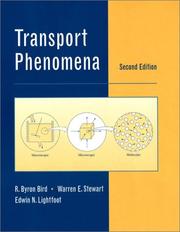
The landmark text that unified the three transport disciplines under one mathematical framework; reading it after thermodynamics reveals the deep analogies between momentum, heat, and mass transfer.

Provides focused, applied treatment of heat transfer with worked engineering problems, reinforcing Bird's theory with the practical calculation skills needed for equipment sizing.
Reaction Engineering
IntermediateMaster the design and analysis of chemical reactors — combining kinetics, thermodynamics, and transport to predict and optimize reaction systems.
▸ Study plan for this stage
Pace: 8–10 weeks, ~40–50 pages/day (mix of theory and worked examples). Fogler: 5–6 weeks (~4–5 chapters/week); Levenspiel: 2–3 weeks for selective deep-dives and alternative perspectives on key reactor types.
- Rate laws, reaction orders, and elementary vs. non-elementary reactions: how to determine kinetic parameters from experimental data (Fogler Ch. 3–4, Levenspiel Ch. 2–3)
- Ideal reactor models (batch, CSTR, PFR, packed bed): design equations, residence time distribution, and conversion-selectivity trade-offs (Fogler Ch. 2, 5–8; Levenspiel Ch. 4–7)
- Non-ideal flow and residence time distribution (RTD): how real reactors deviate from ideal models and methods to characterize them (Fogler Ch. 13–14; Levenspiel Ch. 8–9)
- Reaction mechanisms and multiple reactions: series, parallel, and complex reactions; selectivity and yield optimization (Fogler Ch. 6–7; Levenspiel Ch. 10–11)
- Catalysis and heterogeneous reactions: catalyst deactivation, diffusion limitations, and effectiveness factors (Fogler Ch. 9–10; Levenspiel Ch. 12–13)
- Reactor scale-up and practical design considerations: heat effects, safety, and transition from lab to industrial scale (Fogler Ch. 11–12; Levenspiel Ch. 14–15)
- Thermodynamic constraints and equilibrium: how equilibrium conversion limits affect reactor design and operation (Fogler Ch. 4; Levenspiel Ch. 3)
- Optimization and control: maximizing conversion, selectivity, or yield through reactor choice and operating conditions (Fogler Ch. 8; Levenspiel Ch. 16)
- Given experimental kinetic data (concentration vs. time), how do you determine the reaction order and rate constant? What methods does Fogler present, and how does Levenspiel's graphical approach differ?
- Derive and explain the design equations for a batch reactor, CSTR, and PFR. Under what conditions would you choose each, and what are the conversion–residence time trade-offs?
- What is residence time distribution (RTD), and why do real reactors deviate from ideal models? How can RTD data be used to improve reactor design?
- For a series reaction (A → B → C), how do you maximize the yield of intermediate B? What reactor type and operating conditions would you recommend, and why?
- Explain the concept of effectiveness factor in a catalytic reactor. How do diffusion limitations affect conversion, and what design strategies minimize their impact?
- How do you scale up a reactor from bench scale to production scale? What are the key challenges, and how do Fogler and Levenspiel address safety and heat transfer?
- Fogler Ch. 2–3 worked examples: solve 5–6 design problems for batch and CSTR reactors with different reaction orders; verify your answers against the textbook solutions.
- Levenspiel graphical method practice: use Levenspiel's plots (conversion vs. space time) to design a PFR for a given reaction; compare results with Fogler's analytical approach.
- RTD experiment simulation: use Fogler Ch. 13 tracer response data to construct an RTD curve; fit to models (tanks-in-series, dispersion) and predict conversion for a real reactor.
- Multiple reactions case study: design a reactor system (batch + CSTR or PFR cascade) to maximize selectivity to a desired product in a series or parallel reaction; document trade-offs.
- Catalytic reactor problem: calculate effectiveness factor for a spherical catalyst pellet (Fogler Ch. 10); assess how pore diffusion limits overall conversion and propose design modifications.
- Scale-up design project: take a lab-scale batch reactor result and design an equivalent industrial CSTR or PFR; address heat removal, mixing, and safety constraints using principles from both texts.
Next up: This stage equips you with the fundamental tools to predict reactor performance and optimize conversions under ideal and real conditions; the next stage will likely extend these principles to multiphase systems (gas–liquid, solid–liquid), non-isothermal reactors, and advanced control strategies that depend on mastering single-phase kinetics and transport first.
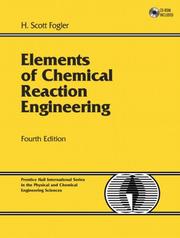
The most widely used reactor design text worldwide; its problem-based approach integrates rate laws, reactor sizing, and non-ideal flow in a way that directly builds on the balances and thermodynamics already learned.

Levenspiel's classic offers deep physical intuition on residence time distributions and non-ideal reactors that complements Fogler's more algorithmic treatment, solidifying conceptual understanding.
Process Design & Separation Systems
ExpertLearn to synthesize complete chemical processes — integrating separations, heat integration, and economic analysis into coherent plant designs.
▸ Study plan for this stage
Pace: 8–10 weeks, ~40–50 pages/day (alternating focus: Smith 3–4 days/week, Seader 2–3 days/week)
- Pinch analysis and heat integration: identifying thermodynamic targets and minimum utility requirements to reduce energy consumption
- Process synthesis and flowsheet development: systematic methods for selecting and sequencing unit operations to achieve separation and conversion goals
- Distillation and multicomponent separation: rigorous design of fractionation columns, including shortcut and rigorous methods (McCabe-Thiele, NRTL, UNIQUAC)
- Gas-liquid and liquid-liquid separations: absorption, stripping, extraction, and membrane processes with equilibrium and rate-based models
- Capital and operating cost estimation: equipment sizing, material selection, and economic trade-offs in process design decisions
- Heat exchanger network design: systematic integration of hot and cold streams to minimize external utility consumption
- Optimization and trade-offs: balancing thermodynamic efficiency, capital investment, operability, and safety in plant-scale designs
- Process intensification and alternative separations: evaluating reactive distillation, adsorption, and hybrid systems as alternatives to conventional unit operations
- How do you use pinch analysis to identify the minimum hot and cold utility requirements for a given process, and what is the significance of the pinch point?
- What are the key differences between shortcut methods (Fenske-Underwood-Gilliland) and rigorous distillation design, and when should each be applied?
- How would you design a heat exchanger network to integrate hot and cold streams while respecting thermodynamic constraints and minimizing capital cost?
- Given a separation problem (e.g., separating a ternary mixture), how do you select between distillation, extraction, adsorption, or hybrid approaches, and what criteria drive your decision?
- How do you estimate equipment costs and operating expenses for a preliminary process design, and how do these estimates influence design trade-offs?
- What are the mass and energy balance requirements for a complete flowsheet, and how do you validate them across interconnected unit operations?
- Work through a complete pinch analysis case study from Smith (Chapters 6–7): identify the pinch point, calculate minimum utility targets, and sketch a feasible heat exchanger network for a multi-stream process
- Design a distillation column for a binary mixture using both shortcut (Fenske-Underwood-Gilliland) and rigorous methods (from Seader); compare results and explain discrepancies
- Develop a preliminary flowsheet for a ternary separation problem (e.g., separating benzene-toluene-xylene): specify unit operations, estimate capital and operating costs, and justify your choices
- Perform a sensitivity analysis on a distillation design: vary reflux ratio, feed stage location, and column diameter; plot trade-offs between capital cost, energy consumption, and separation efficiency
- Design and optimize a heat exchanger network for a given set of hot and cold streams using the composite curve method; compare your design against the pinch-based target
- Conduct a case study comparing two alternative separation routes (e.g., distillation vs. membrane separation) for a specific feed; include mass balances, energy requirements, equipment sizing, and economic analysis
Next up: This stage equips you with the integrated design and optimization skills needed to move into advanced topics such as dynamic process control, safety and reliability analysis, or specialized domains (e.g., biochemical engineering, petroleum refining) where these principles are applied to complex, large-scale industrial systems.

A comprehensive, modern treatment of process synthesis, heat exchanger networks, and distillation design; it bridges the gap between individual unit operations and whole-plant thinking.

The authoritative reference on separation operations — distillation, absorption, extraction, and membrane processes — providing the rigorous design methods needed before tackling industrial scale-up.
Industrial Scale-Up & Advanced Process Engineering
ExpertUnderstand how laboratory and pilot-scale chemistry is translated into safe, economical, and operable industrial plants, including economic evaluation and scale-up heuristics.
▸ Study plan for this stage
Pace: 8–10 weeks, ~40–50 pages/day (mix of dense technical content and reference material)
- Scale-up methodology: translating pilot-scale results to industrial equipment using dimensional analysis, similarity principles, and empirical correlations
- Equipment design and selection: sizing reactors, heat exchangers, distillation columns, and separators for commercial production
- Process economics and capital cost estimation: fixed/variable costs, capital expenditure (CapEx), operating expenditure (OpEx), and payback period analysis
- Safety and hazard analysis at industrial scale: HAZOP, LOPA, and inherent safety principles applied to full-scale operations
- Process control and operability: instrumentation, control loops, and strategies for stable, reliable plant operation
- Thermodynamic and transport property data: using Perry's handbook to select accurate properties for design calculations
- Material selection and corrosion: choosing construction materials for chemical compatibility and long-term durability
- Debottlenecking and optimization: identifying and removing production constraints to maximize throughput and profitability
- How do you use dimensional analysis and similarity principles to scale up a batch reactor from 10 L pilot scale to 10,000 L industrial scale, and what are the key assumptions and limitations?
- Walk through a complete equipment sizing calculation for a distillation column: what data do you extract from Perry's handbook, and how do you account for efficiency and pressure drop?
- Explain the difference between fixed and variable costs in a chemical plant, and how you would estimate total capital cost and operating cost for a new process.
- What is a HAZOP study, and how would you apply it to identify and mitigate hazards in a scaled-up synthesis process?
- Describe the role of process control and instrumentation in ensuring safe and stable operation of an industrial chemical plant.
- How do you select a construction material for a reactor vessel handling a corrosive chemical at elevated temperature and pressure?
- Complete a full scale-up design exercise from Towler: select a pilot-scale reaction, apply scale-up heuristics, size a reactor, and justify your design choices with calculations.
- Use Perry's handbook to look up thermodynamic properties (vapor pressure, enthalpy, viscosity, thermal conductivity) for a multi-component mixture and perform a heat balance on a heat exchanger.
- Estimate the capital and operating costs for a hypothetical 1,000 ton/year chemical plant using cost correlations from Towler; calculate payback period and NPV.
- Conduct a simplified HAZOP on a distillation unit: identify hazards, causes, consequences, and propose safeguards for each deviation from normal operation.
- Design a process control strategy for a continuous reactor: specify instrumentation (temperature, pressure, flow sensors), control loops, and alarm setpoints.
- Select materials of construction for a reactor, condenser, and storage tank handling a specific chemical; justify choices based on corrosion data and economic trade-offs.
Next up: This stage equips you with the practical engineering skills to move from concept to commercial reality; the next stage will likely deepen your expertise in specialized unit operations, advanced process intensification, or sustainability and green engineering principles.
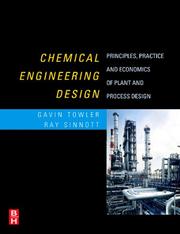
Covers the full project lifecycle from conceptual design through detailed engineering and cost estimation, making it the ideal capstone text for understanding how all prior knowledge is applied at industrial scale.

The profession's definitive reference compendium; after building deep conceptual understanding, using Perry's as a working reference teaches how practicing engineers look up, verify, and apply data and correlations on real projects.
Discussion
Keep reading
Paths that share books, cover the same subject, or open a related topic.