Real analysis is a rite of passage: the course where the calculus you took on faith gets rebuilt on rigorous foundations, with epsilon-delta proofs replacing hand-waving. It is also where many students hit their first serious mathematical wall, usually because they opened a famously terse classic before they were ready.
The order that works is to build proof-writing skill and intuition first, then a genuinely rigorous but readable text, then the demanding classics, and finally the graduate machinery of measure and integration. Each book below is placed so rigor arrives just as you can handle it.
Build proofs and intuition
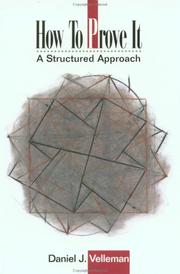
Start with How to prove it by Daniel Velleman, which teaches the logic and proof techniques analysis will relentlessly demand — the single best insurance against getting stuck later. Then Understanding Analysis by Stephen Abbott is the modern favorite: rigorous yet motivated, it explains why the theorems are true and where the subtleties hide, making it the ideal first real analysis book.
Take on the classics
With intuition in place, the rigorous canon awaits. Principles of Mathematical Analysis by Walter Rudin — universally called "baby Rudin" — is the terse, elegant standard that trains you to read and write proofs at a professional level. For a friendlier companion covering similar ground, Real Mathematical Analysis by Charles Pugh is rich with geometric insight and challenging problems. Elementary analysis by Kenneth Ross offers a gentler, slower alternative if Rudin feels too steep.
Reach graduate measure theory
The final arc moves to the modern foundations of integration. Real Analysis: Modern Techniques and Their Applications by Gerald Folland is a leading graduate text on measure theory and functional analysis. Real and complex analysis by Rudin — "big Rudin" — is the demanding classic that unifies real and complex analysis. And Real Analysis by Stein and Shakarchi, part of the Princeton lectures, offers a beautifully modern route into measure theory and beyond.
Read in this order and real analysis stops feeling like a wall of Greek letters. Follow the full path to go from your first epsilon-delta proof to genuine command of rigorous analysis.
Follow the full reading path →
Ready to learn something deeply?
Build a reading path — free