C# is a large language attached to an even larger platform, so the danger is not that it is hard to begin but that it is hard to know what to read next. Jump straight into a web framework and you will copy patterns you do not understand; linger too long on syntax and you never ship anything real.
A good order grounds you in the language, then teaches the idioms that separate working code from professional code, then turns to the runtime concerns and the web stack that most .NET careers actually live in. Follow that arc and each book answers a question the previous one raised.
Learn the language
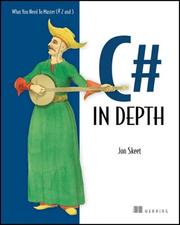
Start with Head first C#, whose visual, exercise-heavy style makes objects, types, and events stick for newcomers. Move to C# 12 and .NET 8 - Modern Cross-Platform Development Fundamentals, a broad, current tour that connects the language to the modern .NET platform and tooling. Then C# in Depth rewards a second pass: it explains how features like generics, LINQ, and async actually work, so you stop guessing at the compiler's behavior.
Write idiomatic, correct code
Once you can build things, Effective C# sharpens judgment with focused items on how experienced developers choose between the language's many options. Concurrency is where beginners most often get burned, and Concurrency in C# Cookbook is the practical antidote, with recipes for async, parallelism, and reactive code that stay correct under load. For the developers who need to squeeze real performance out of the runtime, Pro .NET Memory Management: For Better Code, Performance, and Scalability explains the garbage collector, allocation, and the profiling habits that keep long-running services healthy.
Build real web applications
The payoff for most .NET work is the web. ASP. NET Core in Action, Third Edition is the thorough guide to the framework, from routing and middleware to Razor and minimal APIs. Security is not optional, so Pro ASP.NET Core Identity covers authentication and authorization in the depth production apps demand. To keep large codebases testable and loosely coupled, Dependency Injection Principles, Practices, and Patterns is the definitive treatment of the pattern that underpins modern .NET architecture, and Designing Hexagonal Architecture with Java — despite its title's language — teaches the ports-and-adapters thinking that translates directly to keeping your C# domain logic clean.
Work these in order and C# stops feeling like an endless menu of features and starts feeling like a coherent toolkit. Follow the full path to go from your first console app to a maintainable, well-architected .NET service.
Follow the full reading path →
Ready to learn something deeply?
Build a reading path — free