Strategy is not a vision statement or a longer to-do list. It is a coherent set of choices about where to compete and how to win there, and most of what gets called strategy is really just goals with better fonts. The best way to learn to think like a competitor is to read the people who defined the field, in an order that builds the frameworks first and then stress-tests them against disruption and the real work of leading a company.
This path moves from the foundational analysis of industry structure, to how you choose where to play, to why some advantages last and others evaporate.
Ground yourself in the classic frameworks
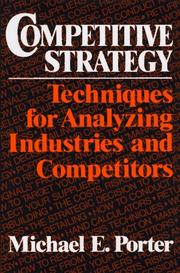
Start with the source. Michael Porter's Competitive Strategy introduced the five forces and the logic of industry structure that still underpins how analysts reason about profitability, and its companion Competitive advantage explains how a firm actually builds a defensible position through cost or differentiation. Porter is dense, so read Joan Magretta's Understanding Michael Porter alongside them, a clear, faithful distillation that makes the core ideas usable.
Learn to choose where to play and how to win
Frameworks are only useful when they force choices. A.G. Lafley and Roger Martin's Playing to Win turns strategy into five linked questions, a practical model drawn from real decisions at Procter and Gamble. W. Chan Kim and Renee Mauborgne's Blue ocean strategy argues for competing where rivals are not by creating uncontested market space, and Richard Rumelt's Good Strategy, Bad Strategy is the sharpest available guide to telling a genuine strategy from the fluff that impersonates one.
Understand disruption and durable advantage
Good positions still get overturned. Clayton Christensen's The Innovator's Dilemma explains why well-run incumbents lose to cheaper, worse products that improve faster than anyone expects, the single most important lesson in competitive dynamics. Then Hamilton Helmer's 7 Powers provides a rigorous taxonomy of the specific advantages, scale economies, network effects, switching costs, that actually make an advantage durable rather than temporary.
Lead strategy under pressure
Finally, see strategy as a leader lives it. Andrew Grove's Only the paranoid survive is a first-hand account of navigating an inflection point that threatens the whole business, and William Thorndike's The Outsiders profiles unconventional CEOs whose capital-allocation discipline, a deeply strategic act, produced extraordinary long-run returns.
Follow the full reading path to move from analyzing an industry to making the hard, specific choices that decide who wins it.
Follow the full reading path →
Ready to learn something deeply?
Build a reading path — free