Bioinformatics is genuinely interdisciplinary, and that is what makes it hard to enter: you need biology, computer science, and statistics, and most people arrive strong in one and shaky in the others. Reading in the right order lets you shore up the gaps deliberately instead of hitting a wall the moment a project needs the skill you skipped.
The path that works is to build the algorithmic foundation first, then the statistics that make biological data interpretable, and finally the programming and practical data skills that get real analyses done. Each book below is placed to fill a specific gap in that trio.
Build the algorithmic core
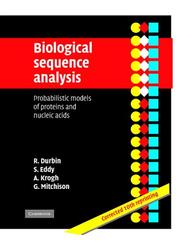
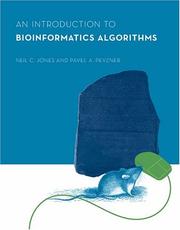
Start with Bioinformatics algorithms by Phillip Compeau, an engaging, problem-driven introduction that teaches the field's core algorithms through real biological questions. An introduction to bioinformatics algorithms by Jones and Pevzner is the classic companion, grounding you in the computational thinking behind sequence comparison and assembly. For the rigorous treatment of the probabilistic models at the heart of the field, Biological sequence analysis by Durbin and colleagues develops hidden Markov models and alignment with mathematical care, and Genome-scale algorithm design covers the data structures that make modern genomics tractable at scale.
Add the statistics
Biology is noisy, so statistics is not optional. Modern Statistics for Modern Biology by Holmes and Huber teaches the modern, computational approach to analyzing biological data, with real datasets and R. Statistical Methods in Bioinformatics by Ewens and Grant provides the deeper probabilistic and statistical foundations that underpin the methods you will use daily.
Get hands-on with data
Theory needs practice. Python for Biologists by Martin Jones teaches programming from scratch for people who know biology but not code, making it the ideal on-ramp. Bioinformatics Data Skills by Vince Buffalo then teaches the practical, day-to-day craft — the command line, data formats, pipelines, and reproducibility — that real analysis depends on. For broader context, An introduction to systems biology by Uri Alon reveals the design principles of biological networks, and Computational genome analysis offers worked examples that tie the algorithms back to genomes.
Read in this order and bioinformatics stops feeling like three subjects you are failing at simultaneously. Follow the full path to go from your first sequence alignment to running real, reproducible genomic analyses.
Follow the full reading path →
Ready to learn something deeply?
Build a reading path — free