Classical finance assumes people are rational. Behavioral finance is the field that noticed we obviously are not — and then worked out how our predictable irrationality shapes markets and personal money decisions. It is one of the most useful subjects you can learn, because the biases it describes are working on you right now.
This path builds from the psychology of individual judgment, to how those biases play out in markets, to practical wisdom for your own decisions. A note: this is education about how people and markets behave, not personalized financial advice.
Understand individual bias
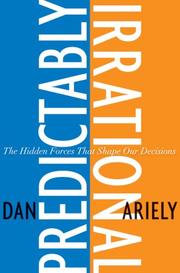
Start with the foundations of judgment. Thinking, fast and slow by Daniel Kahneman is the landmark synthesis of the research that launched the field — the two-system model of the mind that everything else builds on. Predictably Irrational by Dan Ariely is the entertaining, experiment-driven tour of the specific ways we depart from rationality, and it makes the ideas stick.
See bias in the markets
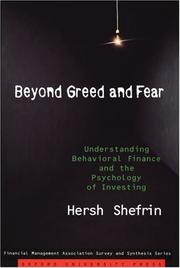
Now scale up to finance. Beyond Greed and Fear by Hersh Shefrin is the direct application of behavioral psychology to investing and markets. Irrational exuberance by Robert Shiller famously explained bubbles before they burst, and Animal spirits by George Akerlof argues that psychology drives the macroeconomy itself. Together they show how individual quirks aggregate into booms and crashes.
Learn from the field's builders and apply it
Finish with the insiders and the practical payoff. Misbehaving by Richard Thaler is the field's own witty history, told by one of its founders, and The Psychology of Money by Morgan Housel translates the research into wise, readable lessons for ordinary savers and investors. For the rigorous edge, A non-random walk down Wall Street by Andrew Lo challenges pure efficient-markets theory, and Advances in behavioral finance collects the deeper academic work.
Books reveal the biases; catching yourself in the act, again and again, is the actual skill. Follow the full path in order.
Follow the full reading path →
Ready to learn something deeply?
Build a reading path — free