Think about where emergency medicine actually happens: a highway shoulder, a cramped bathroom, a kitchen floor at 3 a.m. No two calls alike, incomplete information, a patient who may be frightened or combative, and decisions in minutes with hands on a human being. If you are looking for work that AI assists but cannot do, EMS is close to the definitional case. Algorithms already help with protocols and dispatch; the person kneeling next to the patient is not being replaced.
Be clear about the path first: EMS is a certified profession. EMT certification typically takes a semester-length course plus the national registry exam; paramedic is one to two additional years of intensive training with clinical hours. Books cannot substitute for any of that — but they do two things certification cannot: show you honestly what the life is like before you commit, and give you the clinical scaffolding that makes coursework stick. The full reading path is staged exactly that way.
Stage 1: Ride along on paper
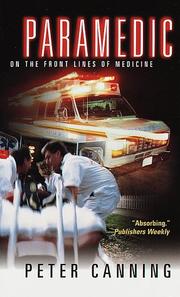
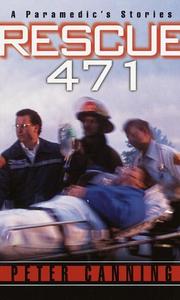
Start with Paramedic by Peter Canning — a memoir of actual street medicine in Hartford, unromantic about the tedium, the tragedy, and the moments that make people stay. Follow it with his Rescue 471 for the longer arc: what years on the ambulance do to your judgment and your heart. Then read Lights & Sirens by Kevin Grange, an account of paramedic school itself — the closest you can get to previewing the training without enrolling. If these three books repel you, you have saved yourself a career mistake at the cost of a few evenings. If they pull you in, that is data.
Stage 2: The clinical foundation
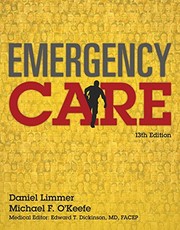
Emergency Care by Andrew W. Stern is the EMT-level textbook territory: assessment, airway, trauma, medical emergencies — the actual curriculum of your first certification. Read it alongside (or just ahead of) an EMT course rather than instead of one. When you are pointed at paramedic school, Paramedic Care: Principles and Practices by Bryan E. Bledsoe represents the standard multi-volume paramedic curriculum — deeper pharmacology, cardiology, and advanced interventions.
Stage 3: Reference depth
Tintinalli's Emergency Medicine Manual by Judith Tintinalli is the pocket version of emergency medicine's bible — beyond what an EMT needs, exactly what a serious paramedic student grows into. It is where you go when you want to understand what happens after you hand the patient off.
How to actually start
This one has an unusually fast first step: EMT courses run at community colleges nearly everywhere, often in a single semester, frequently for under a couple thousand dollars. Enroll. While the course runs, read Stage 1 and volunteer or work part-time — many rescue squads and private ambulance services hire fresh EMTs immediately, and the experience tells you whether paramedic school is the next move. Know the honest trade-offs going in: EMS pay is modest relative to its demands, shifts are long, and the emotional load is real (Canning does not hide this, which is why he is worth reading first). Many people use EMS as a proving ground toward paramedic, nursing, or firefighting — all resilient careers.
Humans in crisis need humans. That has not changed in the entire history of medicine, and it is not changing now. Start at the subject hub, or see how EMS compares across the AI-proof career hub.
Ready to learn something deeply?
Build a reading path — free