Aesthetics asks deceptively simple questions, what is art, what is beauty, why does either matter, and answers them with some of the densest writing in philosophy. Skip around and the field feels like unrelated experts talking past each other. Read it in order and it becomes a long, coherent argument, each thinker responding to inherited problems.
The path below runs roughly chronologically, from the ancient and Enlightenment foundations, through the great nineteenth and twentieth-century systems, to the sharp analytic questions that dominate the field today.
The foundations
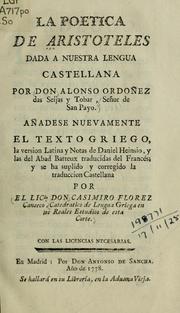
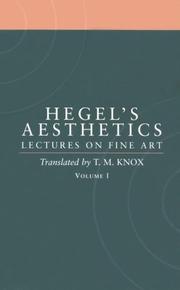
Begin with Poetics, Aristotle's short study of tragedy, the first systematic work of art theory and the source of ideas like catharsis and mimesis still argued over today. Then leap to the Enlightenment cornerstone: Critique of Judgment, Immanuel Kant's analysis of beauty and the sublime, which set the terms for nearly all modern aesthetics with its account of disinterested pleasure. Aesthetics, Hegel's lectures on the philosophy of art, follows by placing art inside the grand movement of spirit and history.
The modern systems
The twentieth century broadened the questions. The principles of art, R. G. Collingwood's theory of art as expression, and Art as Experience, John Dewey's pragmatist classic connecting art to lived experience, both push against art as mere object. Aesthetic Theory, Adorno's demanding late masterwork, reads art as critical resistance in a damaged society, difficult but profound.
The analytic turn
The final arc sharpens the definitional questions. Languages of Art, Nelson Goodman's rigorous study, treats artworks as symbol systems, and The transfiguration of the commonplace, Arthur Danto's influential book, asks what separates a Warhol box from an identical grocery carton. El Circulo Del Arte/the Circle of Art, George Dickie's institutional theory, answers that art is defined by the artworld itself. Work and object, Peter Lamarque's study of what artworks are, and The Aesthetic and the Ethical, Marcia Eaton's exploration of art and morality, extend the debate, before Aesthetics and the Philosophy of Art, Lamarque's synthesizing overview, ties the modern discussion together.
Read in this order, aesthetics becomes a living conversation rather than a pile of theories. Follow the full path from Aristotle to the present.
Follow the full reading path →
Ready to learn something deeply?
Build a reading path — free