Astrophysics asks you to apply physics across a comic range of scales, from the nuclear reactions in a star's core to the expansion of the entire cosmos. That breadth is thrilling and also a trap: dive into cosmology before you understand a single star and the equations become symbol-pushing. Order tames the scope.
A good sequence starts with wonder and orientation, then builds the physics of stars and galaxies, and finally scales up to the universe as a whole. Each level supplies the tools the next one needs.
Get oriented
Start with The Cosmos: Astronomy in the New Millennium, a broad and accessible survey that maps the whole landscape before you commit to the math. Astrophysics for People in a Hurry by Tyson is even lighter — a short, elegant tour that fixes the big ideas in mind and keeps you motivated. These are not the destination, but they make everything after them feel purposeful.
The physics of stars and galaxies
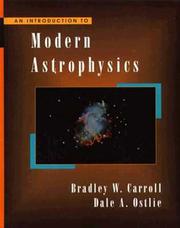
The core of a serious education is An introduction to modern astrophysics, the comprehensive undergraduate text that develops stellar structure, radiation, and orbital mechanics in depth. From there the subject specializes: Black holes, white dwarfs, and neutron stars covers the exotic physics of compact objects, where gravity and quantum matter collide. Zooming out, Galactic dynamics by Binney is the definitive treatment of how stars move within galaxies, and Galaxies in the Universe surveys the structure and evolution of galaxies as systems.
Scale up to the universe
The final arc is cosmology. Introduction to Cosmology by Ryden is the clear, well-paced entry point, teaching the expanding universe and the cosmic microwave background at an approachable level. Cosmology by Weinberg is the authoritative graduate treatment for those ready for full rigor, and The Early universe by Kolb rounds it out with the particle physics of the first moments after the Big Bang.
Read in this order and the universe assembles itself logically, scale by scale. Follow the full path to go from your first look at the night sky to the equations that describe the cosmos as a whole.
Follow the full reading path →
Ready to learn something deeply?
Build a reading path — free