Best Books to Learn Wireless Communications, in Order
Wireless communications is digital communications plus one enormous complication: the channel changes while you are using it. Almost everything distinctive about the field — fading, diversity, adaptive modulation, MIMO, OFDM — is a response to that. This path therefore refuses to start with the wireless books. It builds the digital communication background first, because a reader who cannot draw a matched filter or explain why intersymbol interference happens will not survive Rappaport's chapter four, let alone Tse and Viswanath. Prerequisites are real and non-negotiable: probability and random processes, Fourier analysis and linear systems, and enough linear algebra to be comfortable with eigendecompositions before the multi-antenna stage. Note that most of the standard texts here are long-lived and our records skew to early editions — buy current.
Digital communication first
IntermediateUnderstand modulation, matched filtering, symbol error probability, equalisation and channel coding over a fixed channel, so that fading is the only new idea when it arrives.
▸ Study plan for this stage
Pace: Six to nine months, and refusing to skip this stage is the single decision that determines whether the rest of the path works. The four books total 2,898 pages but you are not meant to read all four: pick a route. Haykin's Communication systems is 735 pages and is the undergraduate on-ramp — read it
- Signal space representation and the geometric view of modulation
- The matched filter and the correlation receiver as the optimum detector in additive white Gaussian noise
- Symbol error probability and its dependence on minimum distance and energy per bit
- Intersymbol interference, the Nyquist criterion, and pulse shaping
- Equalisation: zero-forcing, MMSE, decision feedback and the maximum-likelihood sequence detector
- Carrier and timing synchronisation, and why acquisition and tracking are separate problems
- Channel coding fundamentals, coding gain, and the distinction between hard and soft decision decoding
- Complex baseband representation, and why every modern implementation works there
- Why is the matched filter optimum, and what exactly is it maximising?
- Derive the symbol error probability for quadrature amplitude modulation in terms of minimum distance — where does the union bound enter and how loose is it?
- What is the Nyquist criterion for zero intersymbol interference, and why can a raised-cosine pulse satisfy it with finite bandwidth?
- When does a decision feedback equaliser beat a linear one, and what failure mode does it introduce?
- What is the difference between coherent and non-coherent detection, and what does each cost you in energy per bit?
- Why does the complex baseband representation lose no information about a real passband signal?
- Derive the error probability for binary phase shift keying from first principles following Proakis, then simulate it and confirm your curve lies on the analytic one
- Implement a raised-cosine pulse shape and eye diagram in software, then reduce the roll-off factor until the eye closes and relate what you see to the Nyquist criterion
- Build a zero-forcing and an MMSE equaliser for the same three-tap channel and compare their noise enhancement at low signal-to-noise ratio
- Work Lee and Messerschmitt's treatment of a timing recovery loop and implement one, then verify it acquires from a deliberate offset
- Reimplement one of Madhow's complex-baseband examples end to end — modulate, filter, add noise, detect — and confirm you get the error rate the theory predicts
Next up: Everything so far assumed a channel that stays still; the next stage introduces the one that does not, and every distinctive idea in wireless is a response to that.
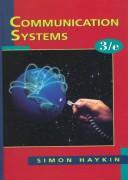
The undergraduate on-ramp: analogue through digital, signal space, and noise, at a pace that assumes only signals-and-systems. Start here if your last communications course was a while ago. Our record is the 1978 first edition of a book now in its fifth — buy current.
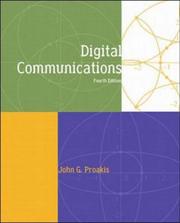
The standard graduate reference underneath everything else on this path: optimum receivers, signal space, equalisation, and the error-probability derivations the wireless books cite rather than repeat. Read the first six chapters before the wireless texts. Our record is the 1983 first edition; the fifth, with Salehi, is the one in use.

Lee and Messerschmitt is the clearest treatment anywhere of synchronisation, timing recovery and equalisation — the parts of a receiver that Proakis states and real hardware lives or dies by. A companion to Proakis, not a substitute.
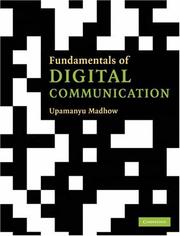
The modern, compact alternative to Proakis, written from a complex-baseband viewpoint that maps directly onto how a software radio is actually built. Read it instead of Proakis if you want one book rather than a reference, and read it last in this stage either way.
The standard first wireless course
IntermediateModel a radio channel: path loss and shadowing, small-scale multipath fading, Doppler, delay spread and coherence bandwidth — then cellular concepts, frequency reuse and multiple access.
▸ Study plan for this stage
Pace: Three to four months for 1,380 pages, read in the stated order rather than in parallel. Rappaport's Wireless Communications: Principles and Practice is 641 pages and is still the best book on propagation and channel measurement specifically — the empirical models a real link budget uses. Work it at
- Large-scale path loss: free space, log-distance, and the empirical models fitted to measurement
- Log-normal shadowing and the link margin it forces into a budget
- Small-scale multipath fading, and the Rayleigh and Rician envelope distributions
- Delay spread and coherence bandwidth, and the frequency-selective versus flat classification
- Doppler spread and coherence time, and the fast versus slow fading classification
- Cellular concepts: frequency reuse, cluster size, co-channel interference and cell splitting
- Multiple access — frequency, time, and code division — and the interference structure each produces
- The link budget as the document where all of this becomes one number
- Given a measured delay spread, how do you decide whether a given symbol rate sees a flat or a frequency-selective channel?
- What physical situation produces Rician rather than Rayleigh statistics, and how does the K-factor encode it?
- How does coherence time constrain how often a system must re-estimate the channel?
- Why does reducing cluster size raise capacity and degrade the signal-to-interference ratio, and how is that tradeoff resolved in practice?
- What does a log-normal shadowing standard deviation of eight decibels do to the margin you must carry for a given outage probability?
- Where does Stuber derive a result Rappaport asserts, and does the derivation change what you would do with it?
- Compute a full link budget for a real deployment scenario using Rappaport's models — transmit power, antenna gains, path loss, shadowing margin, noise figure — and state the outage probability it delivers
- Simulate a Rayleigh fading envelope with a specified Doppler spectrum and measure the level crossing rate and average fade duration, then check them against Rappaport's formulas
- Take a measured or synthesised power delay profile, compute the RMS delay spread, and determine the maximum symbol rate that keeps the channel flat
- Work Stuber's derivation of the Clarke model and confirm it produces the Doppler spectrum you simulated
- Lay out a seven-cell reuse pattern, compute the worst-case co-channel signal-to-interference ratio, and then recompute for a cluster size of four
Next up: You can now describe a fading channel; the next stage asks what its capacity is and what to do about it, which is where the subject becomes information theory.

The standard first course, and still the best book on propagation and channel measurement specifically — the empirical models a link budget actually uses. Read it first in this stage. Our record is the 1996 first edition; the second edition of 2002 is far more widely used and a third has since appeared, so buy current.

The rigorous counterpart to Rappaport: the same territory with the statistical channel models derived rather than asserted, plus much stronger coverage of cellular system design and interference. Take it as the second pass. The record is an early edition of a book now in its fourth.
The graduate texts
BeginnerReason about capacity and outage over a fading channel, choose between diversity and multiplexing on principle, and understand OFDM and adaptive transmission as answers to specific channel impairments.
▸ Study plan for this stage
Pace: Nine months to a year for 2,131 pages, and the ordering here is the whole argument of the path. Goldsmith's Wireless Communications is 672 pages and is the book to work through in full: capacity under fading, adaptive modulation, diversity combining, all with problems. Six months at 4-5 pages a day
- Ergodic capacity versus outage capacity, and which one a delay-constrained system actually faces
- Channel state information at transmitter and at receiver, and how much each is worth
- Adaptive modulation and power control, and the water-filling solution over fading states
- Diversity: time, frequency, space — and the combining rules, selection through maximal ratio
- Diversity order as the slope of the error curve, and what determines it
- OFDM as a response to frequency selectivity, with the cyclic prefix, the peak-to-average problem and subcarrier synchronisation
- Spatial multiplexing and the capacity scaling of a multi-antenna channel
- The diversity-multiplexing tradeoff, and why it makes the earlier techniques points on one curve
- Why does the capacity of a fading channel with transmitter channel knowledge exceed that without it, and by how much at low signal-to-noise ratio?
- What is outage capacity, and why is it the right measure for a system that cannot code across fades?
- Where does the diversity gain of maximal ratio combining come from, and what is its diversity order with L branches?
- Why does OFDM convert a frequency-selective channel into parallel flat ones, and what does the cyclic prefix cost in spectral efficiency?
- State the diversity-multiplexing tradeoff precisely — what are the two axes, and what does the curve say a system must give up?
- How does the capacity of a multi-antenna link scale with the number of antennas, and what channel property is required for that scaling?
- Compute and plot ergodic and outage capacity for a Rayleigh channel across signal-to-noise ratio following Goldsmith, and identify the region where the gap matters
- Implement adaptive modulation with a target error rate over a simulated fading channel and measure the throughput gain over fixed modulation
- Simulate maximal ratio combining for one, two and four branches and extract the diversity order from the slope of the error curves
- Build a small OFDM transceiver in software, add a multipath channel, and demonstrate that the cyclic prefix removes intersymbol interference until you make the delay spread exceed it
- Work Tse and Viswanath's derivation of the diversity-multiplexing tradeoff for a two-by-two channel and reproduce the tradeoff curve
- Use Molisch to look up the physical layer of one deployed standard and identify which of Goldsmith's techniques it uses and which it does not
Next up: Tse tells you which techniques must exist and why; the last stage is the component-level literature on how each is actually built, and the network layer above them.
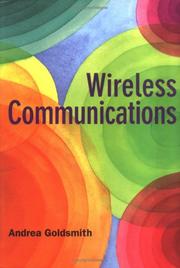
The graduate course text, and the most systematic treatment of capacity under fading, adaptive modulation and diversity combining. This is the book to work through in full; note that its display title is shared with Molisch's quite different book below.
The broadest of the three: channel modelling, standards, and the actual air interfaces of deployed systems, at the cost of Goldsmith's depth on capacity. Use it as the encyclopaedia alongside Goldsmith's course. Our record is the first edition and later editions add material on LTE and beyond.
Tse and Viswanath is the intellectual summit of the path and the reason it is ordered this way: it derives the whole subject from information theory, and the diversity-multiplexing tradeoff it introduced is the concept the field organises itself around. Do not attempt it before Goldsmith.
Antennas, coding and the multi-antenna system
BeginnerWork at the component level a real system is assembled from — antenna arrays, error control codes, space-time processing — and connect the physical layer to the network above it.
▸ Study plan for this stage
Pace: Nine months to a year for 2,755 pages, and this is a stage of specialist references rather than a course — read them in the order that matches what you are building. Biglieri's MIMO wireless communications is 334 pages and follows most naturally from Tse: space-time codes, spatial multiplexing, rece
- Space-time block and trellis codes, and the rate-diversity tradeoff between them
- MIMO receiver algorithms: zero-forcing, MMSE, successive interference cancellation and sphere decoding
- Correlated MIMO channel models, and how antenna spacing and scattering set the achievable rank
- Linear block and convolutional codes, minimum distance, and the Viterbi algorithm
- Turbo and LDPC codes, iterative belief-propagation decoding, and why they approach capacity
- Antenna fundamentals: radiation pattern, gain, impedance and polarisation
- Array factor, beam steering, grating lobes and the physical basis of beamforming
- Medium access control, scheduling and resource allocation, and cross-layer design across the physical and network layers
- What does the Alamouti scheme achieve, and why is its rate and diversity combination special among space-time block codes?
- Why does a zero-forcing MIMO receiver lose diversity order relative to maximum likelihood detection, and what does successive cancellation recover?
- How does antenna correlation reduce MIMO capacity, and what physical arrangement causes it?
- What makes an LDPC code decodable by belief propagation when a general linear block code is not, and why does that material require the second edition of Lin and Costello?
- How does the array factor determine beamwidth, and what element spacing produces a grating lobe?
- What is a cross-layer design, and give a case from Mark and Zhuang where ignoring the physical layer costs the network layer badly
- Implement Alamouti transmit diversity over a simulated channel and verify it achieves the same diversity order as two-branch maximal ratio combining
- Implement zero-forcing, MMSE and successive cancellation receivers for a two-by-two MIMO channel and compare their error curves at equal signal-to-noise ratio
- Encode and decode a short LDPC code with belief propagation following the second edition of Lin and Costello, and watch the iterations converge or fail as you cross the threshold
- Compute and plot the array factor for a uniform linear array of eight elements from Balanis, then steer the beam and find the spacing at which a grating lobe appears
- Take a correlated MIMO channel model from Biglieri and measure how capacity falls as you increase correlation, then relate the result to the antenna spacing that produced it
- Read Mark and Zhuang's resource allocation chapter and work out how a scheduler that uses channel state information changes the fairness-throughput tradeoff
Next up: This is the end of the path: from here the natural continuations are the standards documents themselves, the massive-MIMO and millimetre-wave literature, and the network-level research Mark and Zhuang open the door to.

The dedicated multi-antenna volume: space-time codes, spatial multiplexing, receiver algorithms and the channel models MIMO performance depends on. Read it after Tse, whose treatment gives you the reason each technique exists.
Lin and Costello is the standard coding reference, and the second edition is the one that covers turbo and LDPC codes — which is what every modern wireless standard actually uses. Our record is the 1982 first edition, so this is a case where the edition genuinely changes the content: buy the second.

The physical layer beneath the physical layer. Balanis is the standard antenna text, and the array chapters are the prerequisite for taking beamforming seriously rather than treating it as a matrix. Our record is the first edition; the fourth is current.
The step upward from the radio link to the network: medium access, resource allocation, mobility management and cross-layer design. Mark and Zhuang closes the path by showing what the earlier books' link-level results are for.
Discussion
Keep reading
Paths that share books, cover the same subject, or open a related topic.