Best Books on Wildland Firefighting and Wildfire, in Reading Order
Wildfire is two subjects wearing one name: a physically demanding seasonal job, and a century-long argument about whether to fight fire at all. This path gives you both. It starts with the two classics that define the literature, moves to first-hand accounts of the crews and the lookouts, then to the fatality investigations that changed how the work is done. Only after that does it turn to fire ecology and policy history, which is where the reader learns that the suppression the earlier books describe so heroically is also the thing most experts now blame for the fires we have.
The two classics
BeginnerUnderstand the Mann Gulch disaster and the 1910 Big Blowup, and how those two events shaped both the culture of the fire service and federal fire policy
▸ Study plan for this stage
Pace: Four to five weeks. Young Men and Fire is 320 pages but it is not a fast 320 — Maclean loops back over the same twenty minutes repeatedly, and the last third contains the mathematical reconstruction of the fire's spread, which is worth working through rather than skimming. Give it three weeks. The B
- The Mann Gulch sequence itself: a lightning fire in Montana in August 1949, fifteen smokejumpers dropped in, a blowup that turned the fire uphill toward them, and thirteen dead in a matter of minutes. Know the ground — the gulch, the ridge, the reef of rock near the top — because Maclean's whole boo
- Wagner Dodge's escape fire: he lit a patch of grass ahead of the flames and lay down in the burned area. It saved him, nobody followed him, and the crew's failure to understand what he was doing is the human centre of the book
- Blowup as a physical event rather than a metaphor — the conditions under which a fire's rate of spread increases by an order of magnitude, and why a slope, a wind and cured grass are the classic combination
- Maclean's method, which is the reason this book founded a genre: he goes back to the ground with survivors and researchers, measures distances, and reconstructs the timing minute by minute. It is forensic investigation used as literature
- The 1910 Big Blowup in Egan: three million acres in two days across Idaho and Montana, eighty-seven dead, and Ed Pulaski's crew driven into a mine tunnel. It is the founding trauma of the US Forest Service
- Egan's institutional argument: the young Forest Service was politically vulnerable, the fire made it a heroic necessity, and total suppression became the organisation's justification for existing. Policy followed from institutional survival
- The 10 a.m. policy that descended from this — every fire to be controlled by ten the next morning — and the fact that a century of suppression is precisely what stage four will blame for the fuel loads now burning
- The heroic register both books work in, and the tension you should hold onto: these are the two books that made wildfire literature, and they are both, structurally, arguments for fighting fire
- Describe the terrain of Mann Gulch and explain why the fire's turn was survivable for three men and not for thirteen
- What was Dodge's escape fire, why did nobody join him, and what does Maclean conclude about whether they could have understood it in the time available?
- Maclean spends the last section on rate-of-spread calculations. What is he trying to establish, and does the mathematics change the meaning of the story?
- In Egan's account, what was the Forest Service's political position before 1910, and what did the fire change?
- How did the 1910 fire produce the 10 a.m. policy, and what assumption about fire does that policy encode?
- Both books admire the men who fight fire. Where does that admiration shape which questions get asked?
- Draw Mann Gulch from Maclean's descriptions — the river, the gulch, the slope, the ridge, the crosses marking where each man fell — before you reach the reconstruction chapters. Then correct your drawing as he corrects the record. This is the exercise the book is built for.
- Write out the Mann Gulch timeline in minutes from the parachute drop to the last death. Maclean gives you enough to do it. Seeing sixteen minutes laid out is what makes the decisions comprehensible.
- After The Big Burn, write 200 words on the causal chain from the 1910 fire to the 10 a.m. policy. Keep it — stage four will ask you to evaluate that chain rather than just describe it.
- List every piece of equipment and technique mentioned in either book that still exists today. The pulaski tool, named for the man in Egan's book, is the obvious one; there are more.
Next up: Both classics are about catastrophe, which is the exception; the next stage is about the ordinary working season that catastrophe interrupts.
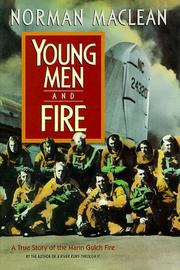
Maclean's reconstruction of the 1949 Mann Gulch fire that killed thirteen smokejumpers is the founding book of the genre, part investigation and part meditation. Start here: everything written about wildfire since is in some sense a response to it.
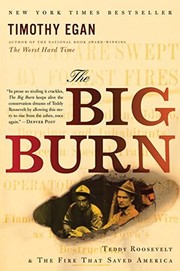
The 1910 fire that burned three million acres, made the Forest Service, and locked total suppression into American policy for the rest of the century. Read it second — it explains where the institution and its instincts came from.
The job
BeginnerKnow what the work actually consists of — hotshot crews, smokejumping, lookouts, the seasonal economy and the physical demands — before deciding it is romantic
▸ Study plan for this stage
Pace: Six to seven weeks. Fire Season is 251 pages and is deliberately slow — read it slowly, a chapter an evening over two weeks, because rushing a book about sitting still in a tower defeats it. Jumping Fire is 448 pages and the longest in the stage; three weeks. Smokejumper is 253 pages and reads quick
- The lookout's actual job in Connors: not spotting drama but watching an enormous quantity of nothing with sufficient attention that the one smoke gets called in. The skill is sustained attention rather than courage
- Connors's Gila setting matters because the Gila is where let-burn policy has been practised longest in the United States. He watches fires he does not report as emergencies, and that is the quiet ideological content of the book
- Fire Season is the first place in this path where somebody suggests that a fire might be left alone. Note how differently that reads after two books about heroic suppression
- Taylor's Alaska smokejumping and the unglamorous specifics that are the reason to read him: the packout — carrying a hundred-plus pounds of gear miles to a pickup point after the fire is out — the injuries, the waiting between calls, the seasonal pay structure
- Crew culture as Taylor describes it: hierarchy by experience, tolerance for discomfort as the currency of respect, and the specific way a group of people who volunteer for this talk to each other
- The physical reality — sleep deprivation, smoke inhalation, weeks of consecutive shifts, and the cumulative rather than acute nature of the damage
- Ramos on modern training and equipment fifteen years later, and the useful comparison the two smokejumper books create: what has changed is technology, logistics and safety protocol; what has not changed is the fundamental task of a person with a hand tool cutting line
- The seasonal economy behind all three books: temporary federal employment, overtime and hazard pay as the actual compensation model, and what that does to who takes the job
- What does Connors actually do all day, and what is the skill involved? Answer without romanticising it
- Where in Fire Season does Connors first suggest a fire should be allowed to burn, and what is his reasoning?
- Describe a packout from Taylor's account. Why is it the part of the job that veterans talk about most?
- What has changed in smokejumping between Taylor's era and Ramos's, and what has stayed the same? Give three items on each side
- What is the pay and employment structure for seasonal wildland firefighters, as these books describe it, and how does it shape the workforce?
- Having read all three, would you take the job? The honest answer requires knowing what the daily work consists of rather than what the emergencies look like
- Make a list of every task Taylor performs on a single fire from the jump to the pickup, in order. Most of it is not firefighting, and that list is the most accurate picture of the job in this path.
- Write 200 words on what Connors's book would lose if something dramatic happened in it. The restraint is the argument and articulating that is worth doing.
- Compare the equipment lists in Taylor and Ramos item by item — parachutes, packs, shelters, communications. Then write a paragraph on which changes are safety improvements and which are merely newer.
- Look up the current pay scale for a federal wildland firefighter and compare it to what these books describe. This is a live political question and having the numbers changes how you read stage five.
- Note every reference in these three books to a fire being allowed to burn or managed rather than suppressed. It is a short list in Taylor and Ramos and a long one in Connors, and the asymmetry sets up stage four.
Next up: You now know what the work is on an ordinary day, which is the necessary background for reading two investigations of days that were not ordinary.
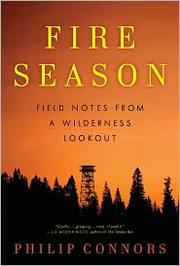
A fire lookout's season alone in the Gila wilderness, and the quietest book on this list. It is also the clearest introduction to the idea that some fires should be allowed to burn, which the later ecology stage develops.
A veteran Alaskan smokejumper's memoir, and the most detailed first-hand account of that job in print. Read it for the unglamorous specifics: the packouts, the injuries, the waiting, the crew culture.

A more recent smokejumper account covering modern training, equipment and operations. Read it after Taylor to see how much of the job has changed in a generation and how much has not.
When it goes wrong
IntermediateFollow fatality fires closely enough to understand entrapment, escape routes, safety zones and the decision-making failures the investigations keep finding
▸ Study plan for this stage
Pace: Four to five weeks. On the Burning Edge is 277 pages and Fire on the Mountain 288 — both take about two weeks each at a steady pace. Read Dickman first because Yarnell is recent and the reporting is from inside the culture, then John Maclean on South Canyon. A warning that should not need saying but
- The Ten Standard Firefighting Orders and the Eighteen Watch Out Situations — the codified safety doctrine that descends directly from Mann Gulch. Both investigations turn on which of them were violated and why violation was routine
- LCES as the working shorthand: Lookouts, Communications, Escape routes, Safety zones. Every entrapment in the literature is a failure in at least one of the four, and usually in all four together
- Yarnell Hill, June 2013: the Granite Mountain Hotshots, nineteen dead, and the unresolved question at the centre of Dickman's book — why the crew left a safe black area and moved through unburned fuel toward the ranch
- Dickman's advantage as a former hotshot: he can explain why a decision that looks inexplicable from outside is entirely legible from inside the culture. That legibility is more damning than any accusation
- South Canyon, July 1994: fourteen dead on Storm King Mountain, a crew building line downhill toward a fire in Gambel oak on a steep slope, with a wind shift. John Maclean's reconstruction is as forensic as his father's
- The pattern the two books share across nineteen years and, with Mann Gulch, across sixty-four: steep terrain, cured fuel, a wind change, a crew above the fire, and an escape route that was too long. The causes are not mysterious and they keep recurring
- Fire shelters, their real capability, and the honest fact that in both incidents deployment was too late to matter. The shelter is a last resort that works only in circumstances where you probably did not need it
- The investigation process itself — what a Serious Accident Investigation produces, what it is permitted to conclude, and the tension between learning and liability that both authors document
- State LCES and apply all four elements to the Yarnell Hill fire. Which failed first?
- Why did the Granite Mountain Hotshots leave the black? Give Dickman's account of the most likely reasoning, then say what remains genuinely unknown
- What is the specific danger of building line downhill toward a fire, and which of the Watch Out Situations covers it?
- Compare South Canyon and Yarnell Hill directly: what conditions were the same, and what does that recurrence tell you about whether the doctrine is understood or merely published?
- What did each official investigation conclude, and what do the authors think it avoided saying?
- If the Ten Orders were followed literally, could the work be done at all? Both books circle this and neither answers it cleanly — where do you land?
- Write out the Ten Standard Firefighting Orders from a public source and check each one against the Mann Gulch, South Canyon and Yarnell Hill sequences. Three fatal fires across sixty-four years against one ten-item list is the most sobering exercise in this path.
- Draw the Yarnell Hill fire's progression and the crew's movement on the same sketch, using Dickman's account. The geometry is what makes the ending inevitable and the prose alone does not convey it.
- For South Canyon, write out the timeline of wind and fire behaviour in the final hour beside the crew's position. Doing it as a table rather than reading it as narrative makes the margin visible.
- Write 300 words on why crews take risks the doctrine forbids, drawing on the crew culture described in stage two. Dickman is the source but stage two is what makes it comprehensible.
- List what changed operationally after each of the three fires. The list is real but shorter than you would hope, and it is worth confronting.
Next up: Three generations of investigation all conclude that the crews were where they should not have been; the next stage asks the larger question of whether they should have been fighting the fire at all.

The Granite Mountain Hotshots and the Yarnell Hill fire that killed nineteen of them in 2013, reported by a former hotshot. The best modern equivalent of Maclean, and the clearest account of how a crew ends up in an unsurvivable position.

The 1994 South Canyon fire on Storm King Mountain, investigated by Norman Maclean's son with the same forensic care. Read it alongside Dickman: two disasters forty-five years after Mann Gulch, with recognisably the same causes.
Fire as a natural force
IntermediateUnderstand fire ecology, the history of American fire policy, and the argument that a century of suppression created the fuel loads now burning
▸ Study plan for this stage
Pace: Twelve to fourteen weeks — the longest and most demanding stage in the path. Fire in America is 654 pages of scholarly environmental history and is not a book to read at speed; six weeks at 15 to 20 pages a day is realistic, and using it as a reference rather than reading every regional chapter is e
- Pyne's foundational claim in Fire in America: fire in North America is a cultural artefact as much as a natural process, because Indigenous peoples burned deliberately and extensively for millennia, and the landscape Europeans found was a fire-managed one
- The three-fire framework Pyne uses across all his work — first fire, the natural kind from lightning; second fire, the anthropogenic kind set deliberately in landscapes; third fire, industrial combustion of fossil fuels. The Pyrocene is built entirely on this distinction
- The suppression century as Pyne narrates it: the 1910 institutional trauma from stage one, the 10 a.m. policy, the CCC labour of the 1930s, aerial attack, and the accumulation of fuel that a century of exclusion produced
- Why exclusion increases severity: frequent low-intensity surface fire consumes fuel and thins understory, and removing it converts a system adapted to burning often and lightly into one that burns rarely and catastrophically. This is the central mechanism of the whole stage
- The light burning controversy of the early twentieth century, which Pyne treats seriously — the practice was advocated at the time, dismissed as unprofessional, and has been substantially vindicated. The profession's early confidence was wrong
- Between Two Fires on the incomplete reform: prescribed burning and managed wildfire have been official policy for decades, and the acreage treated remains far below what the fuel situation requires. Pyne's explanation is institutional, legal and about liability, not scientific ignorance
- The smoke problem as the underrated obstacle — prescribed fire produces smoke on days somebody chose, which is politically and legally far harder than smoke on days nobody chose
- The Pyrocene thesis: humanity has created a fire age analogous to an ice age by combining landscape burning with fossil combustion, and the two are a single phenomenon. It is a genuinely contested framing rather than an established consensus, and Pyne is arguing rather than reporting
- How extensively did Indigenous burning shape North American landscapes, according to Pyne, and what is the evidence base for that claim?
- Explain the mechanism by which fire suppression increases eventual fire severity. Which forest types does it apply to most strongly, and where does it apply less?
- What was the light burning controversy, who was right, and why did the losing side win the argument at the time?
- Prescribed burning has been policy for decades and remains far under-applied. Give Pyne's three main explanations
- State the Pyrocene thesis. What does treating landscape fire and fossil-fuel combustion as one phenomenon buy analytically, and what does it blur?
- Return to your 200-word causal chain from stage one on 1910 to the 10 a.m. policy. Does Pyne's account confirm it, complicate it, or replace it?
- Read the Fire in America chapter covering your own region and write a one-page fire history of where you live — pre-contact burning, settlement, suppression era, present condition. This is the single most useful thing to do with a 654-page reference work.
- Draw two diagrams of the same forest stand: one with surface fire every ten years for two centuries, one with no fire for a century. Label fuel load, understory density and canopy connection. The mechanism becomes obvious and unforgettable.
- Find the actual prescribed-fire acreage figures for a state you care about against the acreage its own agencies say is needed. The ratio is Between Two Fires in one number.
- Write 400 words evaluating the Pyrocene as a framing device. Is it an analytical claim, a rhetorical one, or both? Pyne would not object to the question.
- Go back to Egan's account of the 1910 fire and Maclean's of Mann Gulch, and reread twenty pages of each with Pyne in mind. Both books now read as documents of an ideology rather than as neutral accounts, and noticing that is the payoff of the sequence this path uses.
Next up: With the ecology and the policy history in hand, the last stage takes on the present era of extreme fire and the contested question of what is actually driving it.
The definitive cultural and environmental history of American fire, by the historian who spent fifteen seasons on a fire crew before writing it. Long and scholarly — this is the reference work of the field, and worth the effort.

Pyne's account of the last fifty years, tracing the shift from total suppression toward prescribed burning and managed fire, and why that shift has been so hard to complete. The essential book for understanding current policy fights.

Pyne's argument that humanity has created a fire age comparable to an ice age, combining burned landscapes with burned fossil fuels. It is a thesis book and a contested one, and it reframes everything before it.
Megafire
BeginnerAssess the modern era of extreme fire — the roles of climate, fuel accumulation and building in the wildland-urban interface — and weigh explanations that are politically contested
▸ Study plan for this stage
Pace: Five to six weeks. Fire Weather is a substantial narrative and takes about three weeks; Megafire is 380 pages of global reporting and takes two to three. Read Vaillant first and Kodas second, deliberately, and read them close enough together that you can hold both explanations at once. The point of
- Fort McMurray, May 2016: a fire that overran a city built to service the Athabasca oil sands, forcing the evacuation of roughly 88,000 people. Vaillant's irony is structural rather than cheap — the town exists to produce the hydrocarbons whose combustion warms the climate that dried the boreal fores
- Fire behaviour that outran the models, which is Vaillant's technical core: rates of spread, spotting distances and intensities beyond what the operational tools predicted, and what it means when the professionals say they have never seen anything like it
- The physics of extreme fire — the vapour pressure deficit, fuel moisture, and the way a hotter atmosphere pulls water out of vegetation. Vaillant explains this well and it is the mechanism behind the climate case
- Vaillant's emphasis: climate is the driver, and the fires of the last decade differ in kind rather than degree from what came before. He is making a case, and the case is strong for the boreal forest in particular
- Kodas's competing emphasis: land management, a century of accumulated fuel from stage four, suppression policy, and above all development in the wildland-urban interface — houses built in fuel, with no defensible space, on roads that cannot be evacuated
- The wildland-urban interface as the variable nobody wants to discuss, because addressing it means restricting where people may build and requiring them to spend money on their own property
- Why these are not competing facts but competing weightings: climate, fuel and exposure all increase, and disaster losses are a product of all three. Whether you attribute a given fire mostly to warming or mostly to where the houses were is largely a question of which counterfactual you run
- The political charge on this, stated honestly: the climate emphasis and the forest-management emphasis map onto partisan positions in the United States, which means arguments are often about coalition rather than evidence. Being able to state both cases fairly is the actual skill
- What happened at Fort McMurray, and which specific fire behaviours does Vaillant identify as exceeding professional expectation?
- Explain the physical mechanism by which a warmer atmosphere increases fire risk. Vapour pressure deficit should be in your answer
- What does Kodas emphasise that Vaillant does not, and give a specific fire where Kodas's factors are clearly dominant
- The wildland-urban interface: what would a serious policy response actually require of homeowners and local governments? Why has almost none of it happened?
- Take one recent major fire and estimate how much of its damage you would attribute to climate, to fuel accumulation and to exposure. Then say what evidence would change your allocation
- Having read all five stages: is the century of suppression described in stage one a heroic failure, a rational response given what was known, or both?
- Write the same 500-word explanation of a single recent megafire twice — once as Vaillant would frame it, once as Kodas would. Neither version should contain a false statement. That is the exercise and it is the whole point of the stage.
- Assess your own home or a place you know against published defensible-space guidance: roof material, vents, the first five feet, the first thirty, access roads. Kodas's argument becomes concrete in about an hour.
- Plot annual acres burned in the United States from 1960 to the present against the prescribed-fire acreage over the same period. The two lines together are the argument of stages four and five in one chart.
- Return to your list from stage three of what changed operationally after each fatality fire, and add what changed in policy after Fort McMurray and the recent California fires. Compare the two lists.
- Write a final page stating what you now believe drives extreme fire and, separately, what you believe should be done about it. Keeping the descriptive and prescriptive claims apart is the discipline this path has been building toward.
Next up: This is the end of the path — the founding disasters, the job, the fatality investigations, the ecology and policy history, and the present argument — and you can now read any wildfire reporting and identify within a paragraph which of those five conversations the writer is in.
The 2016 Fort McMurray fire told as a story about petroleum, heat and fire behaviour that outruns anything the models predicted. Gripping, and it foregrounds climate as the driver — one emphasis in a debate where forest management and development patterns are the competing explanations.

Global reporting on extreme fires with more weight on land management, suppression policy and building in the wildland-urban interface. Read it last and against Vaillant: the two disagree about emphasis rather than facts, and the reader should end able to state both cases.
Discussion
Keep reading
Paths that share books, cover the same subject, or open a related topic.