W.B. Yeats Reading Order: Where to Start
Yeats is the rare poet whose individual volumes still matter, because he rebuilt his style at least twice and each book records a different man. The usual advice — buy the collected poems and start at page one — is why most readers stall in the Celtic Twilight dreaminess of the 1890s and never reach the hard, spoken, furious late work that made him a modernist. This path starts at the hinge, moves into the two great late volumes, then goes back for the occult system and the early poems once you can see what he was reacting against.
Start Here: The Turn Toward the Modern
BeginnerMeet the Yeats worth starting with — the middle-period poet who has burned off the Celtic ornament and learned to write in a speaking voice.
▸ Study plan for this stage
Pace: Six to eight weeks for two slim volumes totalling about 245 pages. That is deliberately slow: poetry read at prose speed does not register. A workable cadence is four or five poems a sitting, three or four sittings a week. Read each poem three times — once silently to get the sense, once aloud immed
- Yeats rebuilt his style at least twice, which is why his individual volumes still matter when most poets' do not. Buying the Collected Poems and starting at page one drops you into the 1890s dream-work, and that is the commonest reason readers stall before reaching the poet who matters.
- Responsibilities, from 1914, is the hinge. The ornament is stripped out, the syntax becomes speech, and the tone turns hard and public. The short poem A Coat is his own account of the change — he says outright that he is walking naked now.
- September 1913 is the poem that carries the volume's politics: a furious lament that the Ireland he had imagined has been replaced by a commercial middle class, with its refrain that Romantic Ireland is dead and gone.
- The Wild Swans at Coole, from 1917, is the book of loss — the title poem counts the swans and counts the years, and much of the volume is elegy for Robert Gregory, Lady Gregory's son, killed in the war.
- An Irish Airman Foresees His Death is the compression of the whole volume into sixteen lines, and is the best single poem to memorise if you memorise only one from this stage.
- Yeats's technique here is a stanza that can hold ordinary speech without losing metre. Listen for how often a line breaks against the sentence rather than with it — that tension is the sound of the new style.
- Coole Park, Lady Gregory's house in Galway, becomes his standing symbol for an aristocratic order he believed was ending. It recurs for the next twenty years and is worth registering now as a place, a person and an argument at once.
- These volumes are short by design. Yeats arranged his books as sequences, so reading a volume front to back gives you an order he intended, which reading selected poems from an anthology does not.
- What does A Coat say Yeats is giving up, and what evidence of that change can you point to in the poems around it?
- What is the specific grievance of September 1913, and against whom?
- How does the wild-swans poem use counting — of birds, of years — to do its emotional work?
- What does the airman give as his reason for flying, and why is the absence of patriotism in that list the point of the poem?
- Read one poem from this stage aloud and one from any anthology's Yeats selection of the 1890s. What has changed in the sound?
- Where does a line break cut against the sentence in a way that changes the emphasis? Find three instances and say what each does.
- Read every poem aloud, without exception. Yeats wrote for the speaking voice, chanted his own work, and a great deal of what is happening in these poems is inaudible on the page.
- Memorise An Irish Airman Foresees His Death. It is sixteen lines, it takes an afternoon, and having one Yeats poem by heart changes how you read the rest of him.
- Keep a single notebook page per volume listing the poems that stopped you, with one line each on why. By the end of the fourth stage this page is the most useful thing you will own about Yeats.
- Copy out one stanza by hand and mark the stresses. Doing this once, physically, does more for hearing his metre than reading a chapter about prosody.
- Read September 1913 twice a week apart. Political poems in particular need the gap; the second reading is where the anger stops being decorative.
Next up: You now have the speaking voice and the public anger in their first form, which is exactly what the two great late volumes take to full strength.

The break. Yeats turns on the Dublin middle class, on his own earlier manner, and on the idea that poetry should be beautiful — 'there's more enterprise in walking naked'. Start here rather than at the beginning, because this is where he becomes readable to a modern ear.
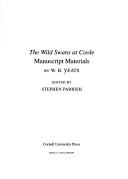
The elegiac volume that follows, containing An Irish Airman Foresees His Death and the title poem. Read it second: it shows what the new plain style is for once the anger of Responsibilities has cooled into grief.
The Two Great Late Volumes
IntermediateRead the books most critics mean when they call Yeats the major poet of the century, and hear the late voice at full strength.
▸ Study plan for this stage
Pace: Eight to ten weeks for about 245 pages across three books. These are the densest poems he wrote and they will not yield at four poems a sitting the way stage one did — try two or three, read aloud twice each, and expect to return to Sailing to Byzantium, Among School Children and Byzantium several t
- The Tower, from 1928, is the volume most critics mean when they call Yeats the major poet of the century. He is in his sixties, furious about ageing, and writing with more force than he had at thirty.
- Sailing to Byzantium and Among School Children are the two poems to slow down for. Both are about an old man's body and the mind that outlasts it, and both are built on a stanza he had spent forty years learning to handle.
- Meditations in Time of Civil War and Nineteen Hundred and Nineteen are written out of the Irish civil war, from a house with soldiers at the door. They are the point at which his public poetry stops being commentary and becomes eyewitness.
- The Winding Stair, from 1933, answers The Tower rather than repeating it. A Dialogue of Self and Soul chooses life over transcendence, and the Crazy Jane poems put the argument in the mouth of an old woman speaking bluntly about the body.
- Byzantium, in The Winding Stair, is a deliberate revision of Sailing to Byzantium. Read them as a pair, in that order, and the second becomes far less forbidding.
- Last Poems, published the year he died, is the smallest and strangest book. The Circus Animals' Desertion dismantles his own career image by image, and Under Ben Bulben is his self-written epitaph, ending with the lines cut into his gravestone.
- State the politics plainly, because it is in these books. Yeats served as a senator of the Irish Free State and took the Nobel Prize in 1923; in the 1930s he associated with the Blueshirts, Eoin O'Duffy's quasi-fascist movement, and wrote marching songs for them, later revising the words. He belonge
- Those facts sit alongside the poems rather than explaining them away. Readers reach different conclusions about how much the late work is contaminated by them; what is not in dispute is that the beliefs were real, late, and stated in his own prose.
- What does the speaker of Sailing to Byzantium want, and what does he say is wrong with the country he is leaving?
- How does Byzantium differ from Sailing to Byzantium in what it imagines the afterlife of art to be?
- In A Dialogue of Self and Soul, which side wins, and what is the argument that decides it?
- What do the Crazy Jane poems let Yeats say that he could not say in his own voice?
- What does The Circus Animals' Desertion claim about where his images came from, and is the poem's self-accusation persuasive or performed?
- Yeats's late political commitments are documented in his own prose. Where, if anywhere, do you find them audible in the poems themselves?
- Read Sailing to Byzantium and Byzantium back to back, aloud, in one sitting. They are a five-year argument with himself and separating them is why Byzantium has a reputation for being impenetrable.
- Take Among School Children and mark where each of its eight stanzas turns. It is the best-built poem in English of its century and the architecture is visible once you look for the pivots.
- Read Under Ben Bulben last of everything in this stage, whatever order the volume puts it in, and read the final three lines twice.
- Read Yeats's own prose on his politics rather than only accounts of it, then write half a page on what you make of the relationship between the man and the poems. Do this in writing; it is the question every serious reader of Yeats has to settle for themselves.
- Return to two poems from this stage a month later and note what has changed. These are the poems in his catalogue that most reliably improve on the fourth reading and get worse on the first.
Next up: The late poems constantly assume a system — gyres, phases, the antithetical self — which is stated nowhere in the verse, and the next stage is where you go and get it.
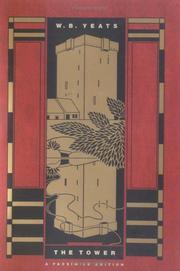
Sailing to Byzantium, Leda and the Swan, Meditations in Time of Civil War, Among School Children. If you read one Yeats volume, this is it — but it lands far harder after Responsibilities, because you can hear how much he had to unlearn to write it.
The companion volume and the answer to The Tower's rage against old age: Byzantium, Crazy Jane, A Dialogue of Self and Soul. Read the two back to back — Yeats meant them as an argument between two positions.

The posthumous final gathering, including Under Ben Bulben and The Circus Animals' Desertion, in which he inspects the whole career you have just read and dismantles it. The right place to stop the verse.
The System Behind the Poems
BeginnerGet the occult machinery, the gyres and the phases of the moon that the late poems assume, and Yeats's own account of the life.
▸ Study plan for this stage
Pace: Eight to ten weeks for about 990 pages of prose, most of it Autobiographies. Read the two short occult books first and slowly — Per Amica Silentia Lunae is 94 pages and repays a fortnight — then A Vision selectively rather than cover to cover, then Autobiographies at ordinary prose speed, 25 to 30 p
- Per Amica Silentia Lunae, in two short essays, is the readable statement of the doctrine of the Mask: that a man becomes an artist by putting on the opposite of himself. It also contains the sentence that explains his entire method — that out of the quarrel with others we make rhetoric, and out of t
- The Mask, or anti-self, is the key to a great many late poems. Once you have it, Ego Dominus Tuus and the dialogue poems stop looking cryptic and start looking like arguments with a position.
- A Vision is the full system: the gyres, two interlocking cones of history winding through each other, and the twenty-eight phases of the moon into which every human personality is sorted. It is the source of the widening gyre and of the two-thousand-year cycles the late poems keep invoking.
- The material came through automatic writing produced by his wife George in the years after their marriage. Yeats presents it as received rather than invented, and the book is written as though the system were fact.
- Read A Vision for the diagrams and the historical cones and stop there. It is a difficult, half-mad book, and reading every page of it is not a prerequisite for anything — you need the vocabulary, not the whole apparatus.
- Autobiographies is by far the most enjoyable prose in this stage and is where his London and Dublin life is: the Rhymers' Club, the Golden Dawn, the founding of the Abbey Theatre, Lady Gregory, and Maud Gonne, whom he proposed to repeatedly and who is behind a large proportion of the love poems.
- The autobiographies are shaped, not confessional. Yeats is composing a public self, which is itself an application of the Mask, and reading them as constructed rather than candid is more accurate and more interesting.
- What is the Mask, and what does Yeats claim a poet gains by adopting one?
- What is a gyre, and what is happening at the moment one cone reaches its widest point?
- How does the system of phases classify personality, and where does Yeats place himself?
- Where did the material in A Vision come from, and how does Yeats want the reader to regard its status?
- What does Autobiographies tell you about the founding of the Abbey Theatre, and what does that reveal about Yeats as an organiser rather than a poet?
- Having read the system, which specific late poems now read differently, and how?
- Draw the gyres yourself on a single sheet — two interpenetrating cones — and label what is at each end. The diagram is what the poems assume and five minutes of drawing beats twenty pages of exposition.
- Go back to The Second Coming after reading about the gyres and read it again. It is the clearest case in the whole catalogue of a poem the system unlocks.
- Read Per Amica Silentia Lunae with a pencil and mark every sentence you would quote. It is short, aphoristic and by some distance his best prose.
- Skim A Vision rather than grinding through it, and give yourself explicit permission to do so. Note the terms and move on; nobody reads it for pleasure and treating it as an obligation is how readers abandon Yeats at this point.
- After Autobiographies, write a short list of the people who mattered to him — Gonne, Gregory, Synge, his father — with one line each on what the poems do with them. The late elegies depend on this cast.
Next up: With the system and the life in hand, the 1890s poems you were told to skip stop looking like juvenilia and start looking like a style he chose and then deliberately destroyed.
The short prose essay where the doctrine of the mask and the anti-self is set out plainly. Read this before A Vision — it is thirty pages and it makes the larger book comprehensible rather than merely strange.
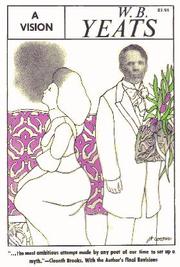
The full system, dictated (he claimed) by spirits through his wife's automatic writing: gyres, phases, the great wheel. Nobody reads it for pleasure, but The Second Coming and Byzantium are built on it, and it should come after those poems, not before.
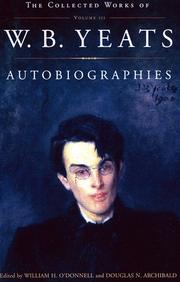
His own prose account of childhood, the Rhymers' Club, Maud Gonne and the founding of the Abbey. It resolves the biographical shorthand the poems keep using and reads far better than the poet's-memoir genre suggests.
Going Back for the Early Yeats
BeginnerNow read the 1890s work you skipped, with enough context to see it as a deliberate style rather than a false start.
▸ Study plan for this stage
Pace: Six to eight weeks for about 475 pages. Read Michael Robartes and the Dancer first and slowly — it is 34 pages and contains two of the most famous poems in the language — then The Wanderings of Oisin and The Celtic Twilight at a relaxed pace, then In the Seven Woods last and carefully, a few poems a
- Read this stage in a corrected order, because one of its four books is not early at all. Michael Robartes and the Dancer was published in 1920 and belongs chronologically between The Wild Swans at Coole and The Tower.
- It matters because that thin volume contains Easter, 1916 — his poem on the executed leaders of the Rising, with its refrain about a terrible beauty being born — and The Second Coming, and A Prayer for My Daughter. If you have not met those poems yet, read them here first, before anything else in th
- Easter, 1916 is the best single document of Yeats's ambivalence about Irish nationalism: he names the men, admits he had thought them figures of comedy, and refuses to resolve whether the sacrifice was justified.
- The Wanderings of Oisin, from 1889, is a long narrative poem in which the hero rides with a fairy woman to three islands and returns to find three hundred years gone. It is the Celtic Twilight at full volume — lush, mythological and deliberately un-modern.
- The Celtic Twilight is prose: folklore, fairy belief and second sight collected from country people in Sligo and Galway. It is the raw material of the early poems and it explains why the young Yeats believed what he believed.
- In the Seven Woods, from 1903, is where the turn begins. Adam's Curse is the poem to watch — a conversation in a room, in plain speech, about how much labour goes into making a line sound spontaneous.
- Read backwards like this, the early style stops looking like a false start. It was a coherent programme — a national literature built from myth and folklore — that Yeats abandoned on purpose, and knowing what he abandoned is what makes the late voice audible as an achievement rather than a default.
- This is also where his politics begin. The Celtic revival was a cultural nationalist project, and the line from it to the senator, and later to the pamphlets of the 1930s, runs through his own account of his life.
- What does Easter, 1916 refuse to decide, and how does the refrain hold both halves of that refusal?
- What is Yeats claiming in The Second Coming about historical cycles, and how does the system from the previous stage change what the poem's images mean?
- What does Oisin lose by returning, and why is that the founding image of his early period?
- In The Celtic Twilight, how does Yeats treat the people who tell him these stories — as informants, as evidence, or as something else?
- What is the argument of Adam's Curse about the work of writing, and how does its own plainness prove the point?
- Having read forwards then backwards, what exactly did Yeats give up when he changed style, and what did he gain?
- Read Easter, 1916 and The Second Coming on their own, aloud, before opening anything else in this stage. They are too famous to arrive in the middle of a folklore volume.
- Set Adam's Curse beside a poem from The Wanderings of Oisin and read both aloud. Fourteen years separate them and the difference in diction is the whole story of his first transformation.
- Take one image from The Celtic Twilight and find where it resurfaces in the later poems. The prose is a quarry and tracing a single stone through is the most satisfying way to read it.
- Now go back to Responsibilities from stage one and read A Coat again. Having read what he took off, the poem changes from a boast into a decision.
- Write one page on the full arc — 1889 to 1939 — naming the two or three moments where the voice changes. That page is the thing you actually came for, and it can only be written once you have read the early work last.
Next up: This closes the loop: you have read Yeats forwards from the hinge and then backwards to the beginning, which is the only order in which the fifty-year arc from Celtic Twilight to Under Ben Bulben reads as a single career.
The long Irish-mythological narrative poem that launched him at twenty-three. Read it late, as the thing the mature Yeats spent forty years arguing with — including in the last poem he wrote.
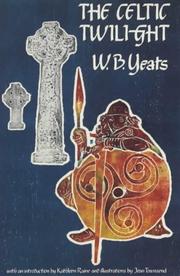
The prose collection of Sligo folk tales and fairy belief that gave a whole movement its name. It explains the imagery of the early verse and, more usefully, the lifelong seriousness about the supernatural that produced A Vision.
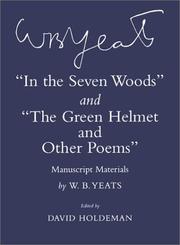
The 1903 volume where the dreamy manner starts to harden and Adam's Curse appears. This is the missing link between the Twilight and Responsibilities, and it is much easier to hear as such once you know both ends.
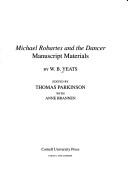
The slim 1921 volume that carries The Second Coming and Easter, 1916 — the two most quoted poems he wrote. Placed last deliberately: with the system and the early work behind you, the rough beast is no longer a vague phrase but a specific prediction.
Discussion
Keep reading
Paths that share books, cover the same subject, or open a related topic.