Vera Stanhope Reading Order: Where to Start with Ann Cleeves
Ann Cleeves's Northumberland detective is unusual among long-running series leads in that her own first novel barely contains her: The Crow Trap is told mostly by three women doing an environmental survey, and Vera does not properly arrive until the back half. That single fact governs all the advice about where to start, because a reader who picks up the series expecting the television version's Vera from page one will think they have the wrong book. This path reads the eleven novels in publication order, flags the point where the series stops being an ensemble mystery and becomes Vera's, and ends by pointing at Cleeves's Shetland books, which she was writing in parallel.
Where to actually begin
BeginnerStart in the right place with the right expectations, and understand why the first book reads so unlike the rest of the series.
▸ Study plan for this stage
Pace: Six to eight weeks for 1,310 pages, and the weight is unevenly distributed: The Crow Trap is 532 pages, half again as long as Hidden Depths at 368, with Telling Tales at 410 in between. Budget three weeks for The Crow Trap alone and expect the first half to move slowly — it is a three-hander about w
- Northumberland and its moorland as the series' first subject — Cleeves builds landscape before community and community before detective
- The Crow Trap's ensemble structure, and why a series lead who arrives late in her own first novel changes all the starting advice
- Vera Stanhope as written rather than as adapted: solitary, physically uncomfortable, deliberately underestimated
- Telling Tales' reopened conviction as the first pure Vera investigation, and the template for what the series does with the past
- Joe Ashworth as foil, settling into place in Hidden Depths — the working partnership is as much the point as the crimes
- The closed rural community as the series' standard field of suspects, in place from the first book
- What does The Crow Trap gain by withholding Vera for half its length, and would the series read differently if she had arrived on page one?
- Compare Vera's first substantial scene in The Crow Trap with her opening in Telling Tales. What has Cleeves decided about her in between?
- In Telling Tales, what does reopening an old conviction let the book do that a fresh murder would not?
- How does Joe Ashworth's presence change Vera's behaviour in Hidden Depths, and what is he actually for?
- If a friend had read only the first fifty pages of The Crow Trap and given up, what would you tell them?
- Mark the page in The Crow Trap where Vera arrives and note what proportion of the 532 pages precede it. Keep that number: it is the whole answer to the where-do-I-start question and you will be asked it.
- Track the three survey women's narration in The Crow Trap and note what each one sees that the others miss. The technique reappears, less obviously, in every later book's handling of a closed community.
- After Hidden Depths, write a two-line description of Vera in your own words. Do it before watching any adaptation, then compare — the gap between the two is what this stage exists to prevent.
- Note every reference to Vera's father Hector across the three books. There will not be many. The list matters later.
Next up: The landscape, the team and Vera's method are all in place, so the next three books can stop introducing and simply run the series at full strength.
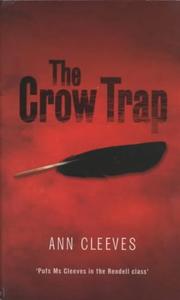
The first Vera novel, and the one readers most often abandon: it is a long, slow, three-hander about women on a moorland survey, and Vera does not take the book over until well past the halfway mark. Start here anyway — it establishes the Northumberland landscape the series never leaves — but start knowing that Vera arrives late.
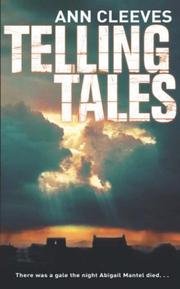
Read second, and read it as the real introduction to Vera: a decade-old conviction reopened in a Yorkshire village, with Vera in charge from the beginning. If The Crow Trap did not convince you, this is the book that decides it.
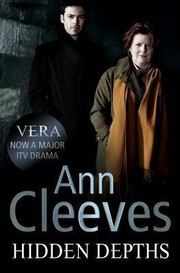
Third, and the book where Joe Ashworth settles into place as Vera's foil — the working partnership is as much the point of the series as the crimes. It is also the last book before a six-year gap in publication.
Vera takes over
BeginnerFollow the series through the period where Vera becomes the centre of gravity and the recurring team hardens.
▸ Study plan for this stage
Pace: Six weeks for three books totalling 1,099 pages — Silent Voices 352, The Glass Room 363, Harbour Street 384 — and all three are noticeably shorter and faster than The Crow Trap. A fortnight each is comfortable. Silent Voices is the first novel after a six-year gap in publication and after the televi
- Vera as centre of gravity: the ensemble structure of the first book is gone and the series is now hers
- A confident lead written without apology — the change Silent Voices makes to how Vera is presented
- Vera's private life as material, used sparingly through Jack and Joanna in The Glass Room
- The recurring team hardening into a fixed cast that later books can move around
- Tight plotting as a deliberate register: Harbour Street answers the charge that the series meanders
- The closed community relocated — health club, writers' retreat, a single street — showing the form is not tied to the moor
- What is different about how Silent Voices presents Vera compared with The Crow Trap, and what would you attribute the change to?
- The Glass Room puts Vera's neighbours in the case. Does bringing her private life inside a plot help the character or cost her something?
- Harbour Street is the most tightly plotted book so far. What does the tightening remove, and do you miss it?
- Across these three, what is the standard shape of a Vera investigation — where does the solution usually come from?
- Which of the three settings works best as a closed circle, and why?
- Write the standard Vera plot shape on one page from these three books, then test it against Hidden Depths. What is a formula and what is just Cleeves's habit?
- Note every scene in The Glass Room that is about Vera rather than about the case, and count the pages. It is a small number and it is deliberate.
- Compare the opening chapter of Harbour Street with that of The Crow Trap. Same author, same detective, entirely different contract with the reader.
- Keep adding to the Hector list. Three books on, it should still be short, and the shortness is the point.
Next up: The series is now assured enough with its own machinery to spend a novel on Vera's own history rather than on a stranger's.

The first novel after the six-year gap and after the television adaptation began, and noticeably tighter for it: a body in the sauna of a health club, and a Vera written with more confidence and less apology.

A murder at a writers' retreat, with Vera's neighbour Jack and his partner Joanna caught up in it, which is the closest the series comes to putting Vera's private life on the page. Read it here for that.

A stabbing on a Metro train in the snow, and the most tightly plotted of the mid-series books. It is the one to hand to someone who says the earlier books were too slow.
The mature series
IntermediateRead the run where Cleeves is most assured with the form, and where the team around Vera starts to be tested.
▸ Study plan for this stage
Pace: Six to eight weeks for 1,200 pages — The Moth Catcher 400, The Seagull 416, The Darkest Evening 384. Order matters more here than anywhere else on the path: The Seagull makes Vera's dead father Hector the case, so it depends on everything you have read and must not be taken early, and The Darkest Ev
- Amateur enthusiasm as a way into a closed community — the naturalist's moth-trapping in The Moth Catcher is method, not colour
- Hector as the source of most of what is wrong with Vera, promoted from background to plot in The Seagull
- Police corruption and old loyalties, which is the material The Seagull's case is actually made of
- Class and inheritance in The Darkest Evening: the branch of the family that kept the house and disowned Hector
- The team being tested rather than merely deployed, as the cases start to implicate Vera personally
- How a series earns a personal-history novel: a long run of books that mentioned Hector only in passing is what makes The Seagull work
- What does The Moth Catcher's naturalist material give the investigation that a purely social plot would not?
- The Seagull is the most important book for the character. What exactly does it establish about Hector, and how much of it did you already suspect?
- How does The Darkest Evening extend The Seagull rather than repeat it?
- What would The Seagull lose if it came third in the series instead of deep into it?
- By the end of this stage, has your view of Vera's behaviour in the earlier books changed? Where specifically?
- Read The Seagull with the Hector list you have been keeping since stage one open beside you, and mark which items the book confirms, contradicts or completes.
- Read The Seagull and The Darkest Evening back to back with nothing between them, then write one paragraph on what the pair says about inheritance that neither says alone.
- In The Moth Catcher, note how the moth-trapping detail is used at each point in the plot. Cleeves does this with a different enthusiasm in most books and it is worth seeing the mechanism once.
- Go back to the two-line description of Vera you wrote at the end of stage one and rewrite it. The difference between the two versions is the series' actual arc.
Next up: With Vera's own history opened and closed, the last books can go back to pure plotting — and this is the point at which Cleeves's other northern series becomes the obvious next thing.

Two bodies in a valley of new-build houses, with a naturalist's obsession at the centre — Cleeves at her most characteristic, using an amateur enthusiasm as the way into a closed community.

Vera's dead father Hector, the source of most of what is wrong with her, finally becomes the case. It is the single most important book for the character and depends on everything before it, so do not read it early.

Vera stumbles into an abandoned car in a blizzard and then into the grand house of the family branch that disowned Hector. Read it directly after The Seagull, which it extends.
The latest books, and the other northern series
IntermediateReach the current end of the series, then see the parallel Shetland books Cleeves was writing at the same time.
▸ Study plan for this stage
Pace: Two months for four books and 1,564 pages, but read them as two pairs. The two current Vera novels come first: The Rising Tide at 384 pages, a school reunion on Holy Island cut off by the tide, and The Dark Wives at 400, which involves a missing teenager from a children's home and is the current end
- The closed-circle plot in The Rising Tide — a tide-cut island — as a form the Vera books had not attempted before
- A series still changing shape this late, which is rarer than it sounds in long-running crime fiction
- Institutional care and a missing teenager as The Dark Wives' subject, and the series' late willingness to take on the state
- Cleeves's method held constant across two series: landscape first, community second, detective third
- Jimmy Perez against Vera — the same method producing an entirely different lead
- Shetland as an island setting that gets the closed circle for free, where Northumberland has to construct it each time
- The Rising Tide uses a geographical constraint the earlier books had to invent socially. Does the constraint improve the plot or just simplify it?
- What does The Dark Wives say about the institutions around the missing girl, and how does that compare with the series' earlier handling of authority?
- Reading Raven Black straight after two late Vera novels, what is unmistakably the same writer, and what is unmistakably a different series?
- Jimmy Perez and Vera Stanhope solve cases by different means. Name the difference precisely.
- After White Nights, do you want the Shetland series? What did the two books tell you that a synopsis could not?
- Read the opening chapters of The Rising Tide and Raven Black on the same day and list what the two landscapes are each being asked to do.
- Take the standard Vera plot shape you wrote in stage two and test it against Raven Black. Where it holds, you are looking at Cleeves's method; where it breaks, at Vera herself.
- Write the reading advice you would now give someone starting this series cold, in three sentences, including what to do about The Crow Trap. This is the single most useful thing to take away from the path.
- Decide your ending: stop at The Dark Wives with the Vera series current, or continue into Shetland from White Nights. Both are complete finishes, and the four books in this stage were arranged so you could choose.
Next up: This is the end of the path: the Vera novels are read to their current end and the parallel Shetland series has been sampled far enough to decide on.

A school reunion on Holy Island cut off by the tide — a closed-circle plot Cleeves had not attempted in the Vera books before, and a good demonstration of the series still changing shape at book ten.

The most recent Vera novel, involving a missing teenager from a children's home, and the current stopping point. The catalogue record drops the leading article from its display title; it is the 2024 novel.
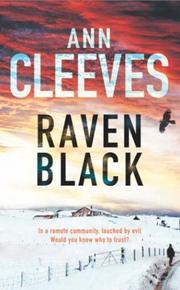
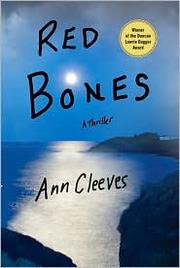
The first Shetland novel, written between Hidden Depths and Silent Voices, and the book that won Cleeves the Duncan Lawrie Dagger. Read it to see the same method — landscape first, community second, detective third — with Jimmy Perez instead of Vera.
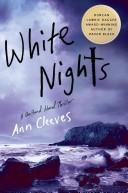
The second Shetland book, and enough to tell you whether that series is for you. It closes this path on the natural next thing to read rather than on a twelfth Vera that does not yet exist.
Discussion
Keep reading
Paths that share books, cover the same subject, or open a related topic.