Ann Cleeves books in order: where to start with Vera and Shetland
Ann Cleeves has written three long-running detective series and a great deal else, and the two people arrive at her through television — Vera and Shetland — do not behave the same way on the page. The Shetland books are a planned sequence with a real ending and should be read in order. Vera is a much looser series where the first book barely features her at all, which is why so many readers start it and stop. This path takes Shetland first because it rewards order most, then Vera, then her newest series, and it flags the places where the television adaptations diverge from the books badly enough to spoil things.
Shetland: The Original Quartet
BeginnerRead the four seasonal novels Cleeves originally planned as a complete sequence, and meet Jimmy Perez in the order the plot requires.
▸ Study plan for this stage
Pace: Six to eight weeks, about 1,540 pages across four novels of 370 to 400 pages each — roughly a fortnight per book at a relaxed pace, or faster if they take. Read them strictly in order: Raven Black, White Nights, Red Bones, Blue Lightning. Cleeves planned these four as a complete sequence built on th
- The seasonal structure — midwinter dark, midsummer simmer dim, spring, and the autumn bird migration on Fair Isle — as the organising frame Cleeves chose for the quartet
- Jimmy Perez as a detective defined by belonging: a Fair Isle man with a Spanish surname, an insider whose insiderness is the investigative tool
- The closed-community mechanism: each book confines the suspect pool geographically, and the confinement tightens across the four
- Fran Hunter and the domestic plot as a load-bearing structure rather than a subplot
- Cleeves's habit of establishing the murderer's presence early and inviting the reader to look past them
- Island genealogy and long memory as motive material, which Red Bones makes explicit
- The Gold Dagger for Raven Black and what it changed about Cleeves's career and the books' ambition
- How does the community react to Magnus Tait in Raven Black, and what is Cleeves saying through the reaction rather than through the solution?
- What does the midsummer setting of White Nights allow that the midwinter setting of Raven Black does not?
- How does Red Bones use the archaeological dig as more than a device for finding a body?
- Why does Blue Lightning have to be set on Fair Isle specifically, and what does the isolation do to the investigation?
- Taken together, what argument do the four books make about outsiders in a small community?
- Read Raven Black once, then go back and find every scene the murderer appears in. Cleeves plays fair, and cataloguing the appearances is how you learn to read her — do the same for Red Bones and see whether the second pass is easier.
- Keep a running note of the Shetland geography each book uses — mainland, Whalsay, Fair Isle — and mark where the physical setting constrains who could have done it. By Blue Lightning the geography is doing most of the plotting.
- Track Fran across all four novels and write a paragraph after each on what the domestic plot has changed about how Perez investigates.
- After Blue Lightning, watch the corresponding television episodes and write down every structural difference: what was moved, merged or given to a different character. This is the concrete evidence for why the books are not interchangeable with the series.
- Compare the opening chapter of each of the four and note how Cleeves signals the season within the first two pages.
Next up: The quartet was written to end; the next four books were written after Cleeves decided to continue, and they begin by dealing with the consequences of the ending you have just read.
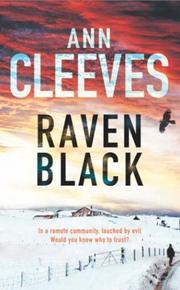
The best entry point to Cleeves full stop: a girl dead in the snow, an isolated man everyone has already convicted, and a landscape that does half the work. It won the Gold Dagger and effectively restarted her career.
Summer, the midsummer simmer dim, and an art opening that ends badly. Read it second — it is the lightest of the quartet and it establishes the Perez–Fran relationship the later books depend on.
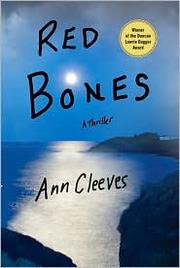
An archaeological dig on Whalsay and a family with a long memory. The most tightly plotted of the four and the one where Cleeves's interest in island genealogy pays off.
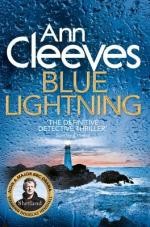
Fair Isle, a bird observatory cut off by weather, and an ending that makes reading the quartet in order non-negotiable. Do not read a plot summary of this one, and be aware the television series handles this event at a completely different point.
Shetland: The Second Half
BeginnerFollow the series past its intended ending into the four later books, and see how Perez is rebuilt after the quartet's conclusion.
▸ Study plan for this stage
Pace: Six to eight weeks, about 1,615 pages. Dead Water, Thin Air, Cold Earth and Wild Fire run 400 to 415 pages each. Read them in order and read Dead Water first without skipping — it opens with Perez barely functioning after Blue Lightning and it introduces Willow Reeves, who carries much of the rest o
- How a series handles a protagonist it has broken, and what Dead Water does with a detective who cannot work
- Willow Reeves as an outsider investigator and the deliberate contrast with Perez's insider method
- The shift from a planned quartet to an open-ended series, and what changes structurally when there is no designed endpoint
- Hamefarin', incomer politics and the economics of oil money as recurring Shetland material
- Cold Earth's use of landslide and exposure — a body nobody had reported missing — as the strongest geographical plot since Red Bones
- Wild Fire's deliberate closure, and how a series signals an ending from inside a genre that resists them
- That the second four are looser and more conventional than the quartet, which is a fair description rather than a complaint
- What state is Perez in at the start of Dead Water, and how long does the series take to restore him — or does it?
- How does Willow's outsider status change what an investigation can find that Perez's insider status cannot?
- Which of these four could be read out of order without loss, and which could not?
- How does Cold Earth use the physical event of the landslide structurally as well as as an inciting incident?
- What does Wild Fire close, and what does it leave open?
- Write a short comparison of the investigative methods of Perez and Willow using one specific interview scene from Dead Water and one from Cold Earth. The contrast is the reason Willow exists.
- Take the geography note you kept through the quartet and extend it across these four. Cold Earth and Blue Lightning are the two books where the land itself decides the plot, and the note makes that visible.
- Read the last chapter of Blue Lightning and the first chapter of Dead Water back to back, and write a paragraph on how Cleeves restarts a series she had finished.
- After Wild Fire, list every thread from Raven Black onwards that the eighth book resolves and every one it does not. Deliberate closure in a crime series is unusual and worth examining.
Next up: Shetland is a planned sequence that rewards strict order; Vera is the opposite, and the next stage is about starting a much looser series at the right place and surviving its first two hundred pages.
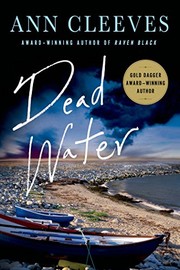
Written after Cleeves decided to continue, and it opens with Perez barely functioning. It introduces Willow Reeves, who carries much of the remaining series, so it is not skippable.
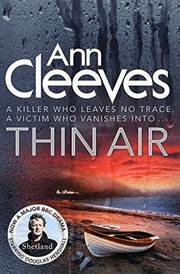
A hamefarin' celebration, a missing woman and an old drowning story. The most conventional of the later books and a good place to settle back into the series.
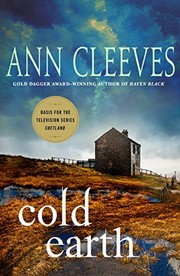
A landslide takes out a croft house and exposes a body nobody has reported missing. The strongest of the second four, with the best use of Shetland geography since Red Bones.

Written as Perez's last book, and it closes his story deliberately. Read it eighth and last in this strand — the series continued afterwards with a different detective, but this is the end of the arc you have been reading.
Vera Stanhope
BeginnerStart the Vera books at the right place, understanding that the first is structurally unlike the rest and that the series can otherwise be read loosely.
▸ Study plan for this stage
Pace: Seven to nine weeks, about 1,690 pages. The Crow Trap is the outlier at 532 pages and takes the longest; Telling Tales (410), Hidden Depths (368) and Harbour Street (384) are shorter. Start with The Crow Trap and expect to be tested: it runs as a three-hander about three women environmental surveyor
- The Crow Trap's structure: three named point-of-view sections before the detective arrives, and what the delay achieves
- Vera as a deliberate refusal of the charismatic-detective template — unwell, unkind, unmistakably competent
- Hector, Vera's father, as the explanation for her that the series supplies once and then relies on
- Joe Ashworth as the second centre of the books, and Harbour Street as the point at which the series admits it
- Northumberland and its coast used as social geography rather than scenery
- Cleeves's evident impatience with the serial-killer plot, which Hidden Depths demonstrates by attempting one
- That the Vera novels are largely standalone, so publication order matters far less here than in Shetland
- What do the three surveyor sections of The Crow Trap establish that Vera's later investigation depends on?
- How does Vera treat the people she interviews, and what does she get from it that a more sympathetic detective would not?
- What does Telling Tales show about the standard shape of a Vera novel that The Crow Trap conceals?
- In what specific ways does Hidden Depths decline to be a serial-killer novel while having the plot of one?
- What makes Harbour Street the strongest of the four, and what has it stopped being?
- Read the first two hundred pages of The Crow Trap and, before Vera appears, write down what you expect the detective in this book to be like. Then keep reading. The gap between the expectation and Vera is the whole design.
- Note every physical detail Cleeves gives about Vera in her first ten pages on the page, and then find the same details doing plot work later in the book.
- Take Hidden Depths and mark each convention of the serial-killer novel it invokes and each one it declines. The pattern is consistent enough to be deliberate.
- Compare Joe Ashworth's function in Telling Tales with his function in Harbour Street and write half a page on how much of the later book is actually his.
- Set the community of The Crow Trap beside the community of Raven Black and write a paragraph on how differently Cleeves uses an isolated group in her two series.
Next up: Two long series read; the last stage looks at the newest one and at the novel she published first, which together mark the range of a career the television adaptations only show two points of.
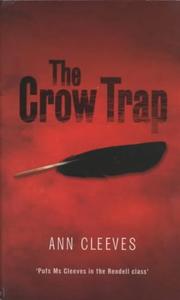
Book one, and the reason people bounce off Vera: it is a three-hander about environmental surveyors for two hundred pages before Vera walks in. Persist — the delayed entrance is the best character introduction in the series, and it explains her better than any later book does.
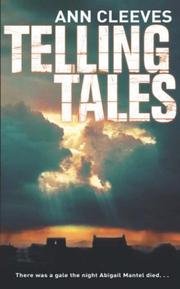
A conviction overturned ten years on, and a village that would rather it had not been. Read it second: it is the first book built around Vera from page one, so it shows you the actual series format.
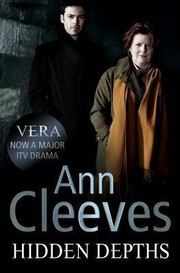
Bodies arranged with flowers on the Northumberland coast — the closest Cleeves gets to a conventional serial-killer plot, and a useful demonstration of how little she likes the form.

A woman killed on a crowded Metro train, and a book that is really about a boarding house and a long-buried scandal. Generally the best of the Vera novels, and where the series stops being a procedural and becomes a study of Joe Ashworth as well.
The Other Cleeves
IntermediateSee the newest series and the very early work, and understand how thin the catalogue is at the edges of her output.
▸ Study plan for this stage
Pace: Three to four weeks, about 620 pages. The Long Call (400 pages) is a current novel and reads quickly; A Bird in the Hand (221 pages) is her 1986 debut and is short. Read The Long Call first — it is a legitimate alternative starting point for Cleeves altogether if the northern settings do not appeal
- Matthew Venn as a third detective type: raised in and expelled from an evangelical community, an insider who has been cast out
- North Devon as a deliberate move away from the northern settings both established series depend on
- The Two Rivers books as a cleaner, more contemporary construction, with less of the sprawling ensemble of the Vera novels
- A Bird in the Hand as an origin document: the birdwatching subculture, the amateur detective pair, and how much of the later method is already there
- The gap between a 1986 debut and a 2006 Gold Dagger winner, which is the actual shape of the career
- That the Palmer-Jones series is incompletely available, so any honest reading plan for it has holes in it
- What does Venn's expulsion from his community give him as an investigator that neither Perez nor Vera has?
- How does The Long Call's structure differ from a Vera novel — how many viewpoints, how much ensemble, how much domestic plot?
- What is already recognisably Cleeves in A Bird in the Hand, thirteen years before The Crow Trap?
- How does the birdwatching subculture function in the debut, and where does the same use of a closed hobby community reappear later?
- If someone asked you where to start with Ann Cleeves, which of her four openings would you now name, and on what grounds?
- Read the first chapter of Raven Black, The Crow Trap, The Long Call and A Bird in the Hand one after another and write a paragraph on each: how quickly the body arrives, how the community is established, and how the detective is introduced. Four openings across thirty-three years is the most efficient view of the career available.
- Take the closed community of A Bird in the Hand and the closed community of The Long Call and list what each is closed by. Cleeves has been writing the same structural problem since 1986 with different walls around it.
- Write down which Palmer-Jones titles you can actually obtain and which you cannot. Building the list honestly is more useful than a reading order for books that are out of print.
- Compare how The Long Call handles a suspect community's hostility with how Raven Black handles Magnus Tait, and note what has changed in the writing rather than in the plot.
Next up: This closes the path: Shetland in the order it demands, Vera started at the right place, and the newest and earliest books that show the range on either side of them.

The first Two Rivers novel, moving to North Devon and Matthew Venn, a detective raised in and expelled from an evangelical community. A cleaner, more contemporary book than either older series, and a legitimate place to start if the northern settings do not appeal.

Her actual first novel, from 1986, opening the George and Molly Palmer-Jones birdwatching mysteries. Read it last and read it as an origin document rather than for itself — the early Palmer-Jones books are patchily in print and several are hard to find at all.
Discussion
Keep reading
Paths that share books, cover the same subject, or open a related topic.