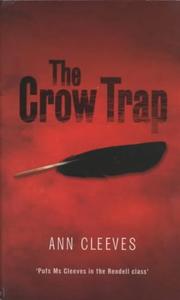
Start with The Crow Trap, and start knowing what it is: a long, deliberate three-hander about women running an environmental survey on the Northumberland moors, in which Vera Stanhope does not properly arrive until the back half. Readers who come to it from the television series expecting Vera on page one conclude they have bought the wrong book. They have not. The Crow Trap is the first novel, it establishes the landscape the series never leaves, and the eleven books run in strict publication order with no chronological alternative.
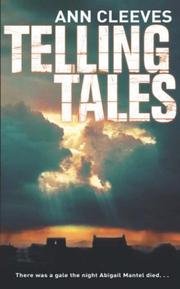
If that opening genuinely defeats you, the one legitimate substitution is to begin with Telling Tales and come back. Telling Tales is the real introduction to the character — a decade-old conviction reopened in a Yorkshire village, with Vera in charge from the first chapter. It is the book that decides whether the series is for you.
Where to actually begin
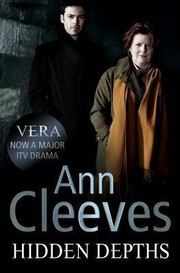
The Crow Trap is slow on purpose. Ann Cleeves builds her books landscape first, community second, detective third, and the survey team's three points of view are the mechanism for showing you the place before anyone investigates it. Telling Tales is where the method and the character lock together. Hidden Depths is the third, and the one where Joe Ashworth settles into position as Vera's foil — the working partnership is as much the subject of these novels as the crimes are. It is also the last book before the longest gap in the series.
Vera takes over
Silent Voices is the first novel after that gap and after the adaptation began, and it is noticeably tighter: a body in the sauna of a health club, and a Vera written with more confidence and less apology. The glass room puts a murder in a writers' retreat and drags Vera's neighbours into it, which is the closest the series comes to giving her a private life on the page. Harbour Street — a stabbing on a Metro train in the snow — is the most tightly plotted of the middle books and the one to hand to somebody who found the early novels slow.
The mature series
The moth catcher is Cleeves at her most characteristic, using an amateur naturalist's obsession as the way into a closed community of new-build houses. The seagull is the important one: Vera's dead father Hector, who is the source of most of what is wrong with her, finally becomes the case. It depends on everything before it, so do not read it early. The Darkest Evening extends it directly, sending Vera into a blizzard and then into the grand house belonging to the branch of the family that disowned Hector. Read those two together.
The current end of the series
The Rising Tide strands a school reunion on Holy Island behind the tide — a closed-circle plot Cleeves had not tried in these books before, and evidence that the series was still changing shape at book ten. Dark Wives, published as The Dark Wives and stored in our catalogue without its leading article, is the eleventh and most recent, built around a missing teenager from a children's home. That is the whole series to date: this path holds all eleven Vera novels, not a selection.
What the adaptation changes
The books' Vera is deliberately unglamorous, and the screen version softens her. On the page she is fat, unkempt, solitary, frequently unkind to the people who work for her, and drinking more than she should — Cleeves writes her as somebody who is difficult to be around, and the loneliness is not played for warmth. Brenda Blethyn's performance is broadly faithful but rounds the edges into something closer to comic brusqueness, and the television plots are largely original rather than adapted. Neither version is wrong; they are not the same character.
Then: Shetland
The path closes with two books from Cleeves's parallel series rather than a twelfth Vera that does not yet exist. Raven Black is the first Shetland novel, written between Hidden Depths and Silent Voices, and it won her the Duncan Lawrie Dagger; White nights is the second, and enough to tell you whether Jimmy Perez is worth the other six. The method is identical, the weather is worse.
One caveat on editions: a couple of the catalogue records here are non-English printings — the record we hold for The seagull is a German edition and White nights a Dutch one — so check the language and publisher before you order those two. The full ordered list sits on the Vera Stanhope path.