Best Books on Venice and the Venetian Republic, in Reading Order
Venice survives in most readers' heads as a scene rather than a state, so this path deliberately begins with the republic as a political and commercial machine and only then lets in the beauty. You start with two modern single-volume histories, follow the rise of a maritime empire built on trade and force, look at how the city actually governed and behaved, and finish with the long decline and the myth that grew over it. By the last stage Ruskin and Brodsky read as arguments about a place you know, not as travel writing.
Start here: the republic in one volume
BeginnerGet the thousand-year chronology, the constitutional oddities and the geography of the lagoon straight before reading anything specialised.
▸ Study plan for this stage
Pace: Four weeks. Read Madden's Venice first and steadily — it is the current standard single-volume history and the least sentimental about the republic's self-image, so it should take two weeks and set the chronology. Ackroyd's Venice: Pure City is 410 pages arranged thematically rather than chronologic
- The lagoon as the founding fact: a settlement on mudflats with no farmland, no stone and no timber, which had to trade or die — every later peculiarity descends from that
- The constitutional apparatus and its deliberate mutual suspicion: a duke elected for life with carefully limited powers, a Great Council, a Senate, and a small security council with extraordinary authority
- The closing of the Great Council at the end of the thirteenth century, which fixed membership by descent and converted an open commercial elite into a hereditary patriciate — and, paradoxically, stabilised the republic for five hundred years
- The ducal election procedure, which alternated lot and ballot through an absurd number of rounds specifically to make factional capture impossible
- The myth of Venice — the Most Serene Republic as the perfectly balanced constitution, immune to faction — as a deliberate and highly successful piece of state self-presentation, admired across Europe and believed by many historians since
- That the original wealth was salt, grain and the carrying trade rather than spices, and that Venice began as a Byzantine dependency rather than as an independent power
- Ackroyd's thematic method — water, glass, secrecy, ritual, spectacle — which is genuinely illuminating on a chronology you already hold and useless as a first introduction
- What did the closing of the Great Council actually do, and why did narrowing the ruling class make the state more rather than less stable?
- Describe the ducal election process. What threat was that elaborate machinery defending against, and did it work?
- The myth of Venice was manufactured. Who made it, for which audiences, and what did each audience want it for?
- What does Ackroyd's thematic organisation reveal that a chronological history conceals, and what does it lose?
- A city with no agricultural hinterland became the richest in Europe. What was the first source of that wealth, and what does the answer suggest about the later empire?
- Draw the lagoon with the six districts, the Arsenale, the Rialto, the Grand Canal and the main outer islands. Every later book assumes this map
- Diagram the constitution: which body elects which, which can overrule which, and where power actually sat as opposed to where the ceremony placed it
- Write 300 words treating the myth of Venice as propaganda — list its specific claims and mark which were true
- Write out the sequence of offices a patrician would expect to hold across a career. The cursus is how the constitution actually operated
- Note every claim in Ackroyd you suspect is impressionistic rather than evidenced, and check three of them against Madden
Next up: You have the constitution and the chronology — the next stage is the thousand-year story of how that machine acquired and defended an empire.

The most current single-volume history and the least sentimental about the republic's myth. The cleanest possible starting point.
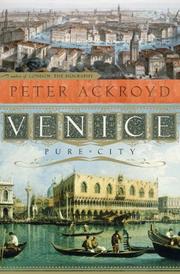
Ackroyd works thematically rather than chronologically — water, trade, secrecy, spectacle — which sticks best once Madden has given you the timeline. Read second, never first.
The maritime empire
BeginnerUnderstand how a town on mudflats became the dominant commercial power of the Mediterranean, and how it defended that position against Genoa and the Ottomans.
▸ Study plan for this stage
Pace: Ten weeks. Norwich's history is 704 pages told doge by doge and takes five; it is a pleasure once you have the map, and it can be read a century at a sitting. City of Fortune is 405 pages, tightly focused, and takes two to three. Empires of the Sea is 352 pages and takes two. Reading the two Crowley
- The Fourth Crusade and the diversion to Constantinople, in which a blind octogenarian doge turned a crusade into the sack of the Byzantine capital and secured Venice a defined share of the empire
- The stato da mar as a system of bases rather than territories: Crete, Negroponte, the Peloponnesian ports, the Dalmatian coast — a chain of harbours securing a trade route
- The muda: state-built merchant galleys auctioned to private merchants and sailed in scheduled convoys under state regulation, which is the institutional core of Venetian commerce and unlike anything elsewhere in Europe
- The Arsenale as an industrial enterprise of a scale with no medieval parallel, capable of building and fitting a galley at a rate that astonished every visitor
- The century of war with Genoa, culminating in a siege that nearly ended Venice and instead ended Genoa as a rival
- The Ottoman advance and the long retreat: the loss of the Aegean strongpoints, the loss of Cyprus, and finally Crete after one of the longest sieges in European history
- Lepanto as a victory that changed less than it is credited with, since Cyprus was already lost and the Ottoman fleet was rebuilt within a year
- The Portuguese Cape route to India and the standard claim that it destroyed Venetian commerce — which the evidence complicates considerably, since Venetian spice volumes recovered
- What did Venice gain from the Fourth Crusade, and what is the case for and against holding Dandolo personally responsible for the diversion?
- Explain the muda system from state auction to the return voyage. How did it combine public control with private risk, and why did that combination work?
- Why did Venice defeat Genoa? Give a structural answer rather than a narrative one
- How much did the Portuguese route actually damage Venetian trade? Cite the evidence rather than the received claim
- Lepanto was a Christian victory and Cyprus was lost anyway. What does that tell you about what naval battles could and could not decide?
- Map the stato da mar at its greatest extent, marking the date each possession was acquired and the date each was lost. The pattern of losses is the story of the fourth stage
- Write out a complete muda voyage — auction, financing, cargo, route, timing, return — as a process description. It is the best single window into how the republic worked
- Build a timeline of the Venetian–Ottoman wars with what changed hands in each
- Write 400 words on the Arsenale as an industrial organisation: labour, standardisation, throughput, and state ownership
- Pick one episode Norwich narrates at length and Crowley treats briefly, and write a paragraph on what the compression costs
Next up: You know what the republic did — the next stage asks how it held itself together, which turns out to be a question about ritual, art and social institutions as much as about law.

Still the great narrative history of the republic, doge by doge, and the fullest account of its political life. Long, but you now have the map to read it against.

Crowley focuses tightly on the commercial empire — the galleys, the colonies, the sack of Constantinople — which is the engine Norwich describes at greater leisure.
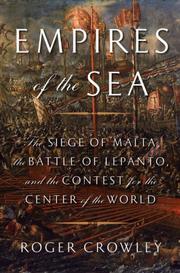
The Ottoman-Christian struggle for the Mediterranean that culminated at Lepanto, where Venice was a principal. Explains the strategic squeeze behind the decline in stage four.
How the city actually worked
IntermediateMove from events to institutions and social life: the closed constitution, the ritual calendar, the empire beyond the lagoon, and the practice of the mask.
▸ Study plan for this stage
Pace: Six weeks. Venice: Lion City is 415 pages and takes two to three, and should be read with images to hand — it is a book about paintings and will not work without looking at them. The Venetian Empire is 200 pages and takes a week. Venice Incognito is 317 pages of specialist social history and takes t
- Venetian public art as political argument rather than decoration: the cycles in the Doge's Palace make constitutional claims, and Wills teaches you to read them as such
- The great lay confraternities as a parallel social structure — wealthy, self-governing, open to citizens excluded from the patriciate, and a safety valve the closed constitution needed
- The ritual calendar as constitution made visible: processions in which each body of the state occupied its assigned position, performed annually before the whole population
- The Marriage to the Sea as the republic's central symbolic claim, and the question of whom the claim was addressed to
- The confrontation between a painter and the Inquisition over a religious canvas, which is the clearest single case of Venetian art and Venetian independence being the same argument
- Morris's treatment of the overseas possessions as lived places rather than as strategic points: Venetian architecture, administration and the lion of St Mark as an imperial marker from Dalmatia to Cyprus
- Johnson's finding about masking: that it was seasonally regulated, socially prescribed, and functioned to flatten status distinctions and permit civic anonymity rather than to license transgression
- That the libertine carnival of popular imagination is substantially an eighteenth-century foreign construction, which makes it a case study in exactly the kind of myth this path keeps meeting
- Take one painting Wills discusses and reconstruct the political argument it is making. Who is the audience and what claim is being asserted?
- What did the confraternities do, and why did a tightly closed patriciate tolerate a parallel structure of wealth and organisation?
- What was the Marriage to the Sea claiming, and to whom was the claim addressed — the population, the Church, or other powers?
- Johnson argues masking was not primarily about licence. What is his evidence, and who invented the alternative story and when?
- Morris treats the overseas empire as a coherent system. What held it together, given that Venice never had a large army?
- Take three works Wills discusses, look at each properly, and write the political reading of each in a paragraph. Do not read his interpretation until you have attempted your own
- Trace one annual ritual from beginning to end and write down what each stage of it asserted about the constitution
- After Johnson, write 300 words on what the mask actually did socially, then a second 300 on why the other version of the story is so much more popular
- Find images of Venetian building in one former overseas possession and write a paragraph on what that architecture was asserting to a local population
- Return to your constitutional diagram from the first stage and mark where the confraternities and the ritual calendar sit. They are not on it, and that absence is the point of this stage
Next up: Having seen the republic sustain itself through institutions and ceremony, you can read its collapse and its afterlife as the failure of that system rather than as picturesque decay.

Wills reads the republic through its art and public ritual as deliberate political argument, which turns the paintings you have been ignoring into evidence.
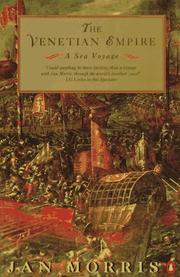
The overseas possessions — Crete, Cyprus, the Dalmatian coast — as a coherent imperial system rather than a footnote to the city.

A study of masking as a social institution, and the best corrective to the idea that Venetian carnival was mainly about licence. Specialist, and the most surprising book here.
Decline, ruin and the myth
IntermediateExplain how the republic ended, and how the city was rebuilt in the nineteenth-century imagination as a place of beautiful decay.
▸ Study plan for this stage
Pace: Five weeks. The Stones of Venice is 254 pages in this edition and is Victorian prose at full pressure — two weeks, and read 'The Nature of Gothic' separately and twice. Paradise of Cities is 320 pages and takes a week and a half; read it directly alongside or after Ruskin, since it is largely about
- Ruskin's architectural scheme — Byzantine, then Gothic, then Renaissance — read as a moral sequence in which the Renaissance represents decay, and the recognition that this is a Victorian Protestant moral framework imposed on Venetian building
- 'The Nature of Gothic' and its claim about the dignity of the imperfect handmade thing, which escaped architecture entirely and shaped the arts and crafts movement and parts of the labour movement
- The actual end of the republic: no siege, no battle, a French army in the hinterland, and the Great Council voting itself out of existence
- The Austrian decades, the revolt and siege of the late 1840s, and incorporation into a united Italy — Venice as a provincial city for the first time in a thousand years
- The nineteenth-century foreign colony Norwich describes — poets, critics, composers, expatriates — who found a poor, depopulated, decaying city and constructed from it the Venice of beautiful melancholy that everyone now arrives expecting
- The distinction that this path has been building toward: between what the republic was, which was a hard-headed commercial and naval state, and what it was made into after it died
- Brodsky's winter Venice, written from seventeen consecutive off-season visits, which refuses the tourist register entirely and is therefore the only aesthetic book on the path that earns its mood
- State Ruskin's moral-architectural thesis. Which parts are observation of buildings and which are a scheme brought to them from outside?
- The republic ended without resistance. Why did an institution that survived a thousand years vote itself out of existence in an afternoon?
- Trace how 'The Nature of Gothic' escaped architectural criticism and influenced arguments about labour. What was it about the argument that transferred?
- Name three specific features of the popular image of Venice that Norwich shows were invented by nineteenth-century foreigners
- Brodsky offers almost no history at all. Having read twelve books first, what does his refusal give you that it could not have given you on page one?
- Take one Venetian building and describe it twice: once in Ruskin's terms and once in Madden's. Note what each way of looking makes visible and what it suppresses
- Write 400 words on why the Great Council voted the republic out of existence, using Madden and Norwich rather than Ruskin's moral account
- Read 'The Nature of Gothic' separately and write out its argument as numbered steps. It is the most influential single chapter on this path and it is short
- Compare a passage of Ruskin on decay with a passage of Brodsky on the same city in the same season, and write a paragraph on what a century and a change of temperament did to the same material
- Write the closing essay: 1,200 words on whether Venice's decline was structural or contingent, citing a book from every stage and naming the point at which you think the republic became unsustainable
Next up: This closes the path; the natural continuations are the Byzantine empire Venice grew out of and helped destroy, the Ottoman Mediterranean from the other side, the history of European banking and commerce, and the Venetian painters read as painters rather than as evidence.

The Victorian book that taught Europe how to look at Venice, and the source of most of the aesthetic assumptions you started this path with. Read it knowing the history it distorts.
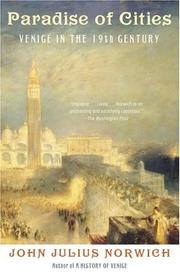
The nineteenth-century city as it was actually experienced by the foreigners who mythologised it, Ruskin included. The direct companion to reading Ruskin critically.
A short, cold-season meditation on the city in winter, and the right place to stop — because after twelve books it finally earns the mood everyone else starts with.
Discussion
Keep reading
Paths that share books, cover the same subject, or open a related topic.