Understanding Mary Wollstonecraft: books to read, in order
Mary Wollstonecraft made the argument that women's subordination is a political fact produced by their education rather than a natural one, and she made it inside a nine-year writing career that also produced two novels, a travel book, a history of the French Revolution and a schoolbook for children. This path starts with the two Vindications, then goes back to the early work that shows the argument forming, then follows her through the Revolution and Scandinavia to the unfinished novel, and finally deals with the life and the posthumous scandal — her husband's honest memoir destroyed her reputation for a hundred years, which is why she had to be recovered rather than simply inherited. Nearly everything here is primary text and none of it needs prior background.
The two Vindications
BeginnerRead the two arguments that made her, in the order she wrote them: the reply to Burke's Reflections on the Revolution in France, and then the extension of the same case from men's rights to women's — that women are not naturally frivolous but educated into frivolity, and that this is a political problem.
▸ Study plan for this stage
Pace: Three weeks for 636 pages, and there is a purchasing decision to make before you start. A Vindication of the rights of woman is 287 pages on its own; the second record here is the 349-page combined Cambridge edition, which prints A Vindication of the Rights of Men, A Vindication of the Rights of Wom
- The central claim: women's apparent frivolity is produced by their education, not by their nature
- Reason and virtue against sensibility — the argument that cultivated feeling has been made a substitute for character
- Rights as grounded in the capacity for reason, which is why the case for women follows from the case for men
- The attack on Rousseau's Sophie in Emile, which is the single most sustained piece of argument in the book
- Burke's inherited property and inherited deference as corrupters of sympathy itself — the argument of the Rights of Men
- Marriage as friendship between equals rather than as courtship prolonged
- The class limits of the argument, which Wollstonecraft largely accepts and which later readers have pressed her on
- What is Wollstonecraft's argument against Rousseau's account of women's education, and where does she agree with him?
- Why does the case for women's rights follow from the case for men's rights on her premises? State the inference.
- What is wrong with sensibility, as she uses the word? Give an instance from the text.
- Whose rights does the Rights of Men defend, and how does Burke's inheritance argument corrupt sympathy on her account?
- Which women does the Rights of Woman have in view, and which does it not?
- Check which edition you have bought and mark exactly which texts it contains before you read a page. The overlap here is total, not partial.
- Read the chapters on Rousseau, then read the relevant section of Emile if you can get it, and judge whether she represents him fairly.
- Take three passages where she is plainly angry and three where she is arguing carefully, and write what changes in the prose.
- Write a one-page statement of her core argument in modern terms, then list what has to be added to it to make it work for women who are not middle class.
Next up: Having read the finished arguments, the next stage shows them being assembled out of the work she did to earn a living.
The founding text of Anglophone feminism, and far angrier and funnier than its reputation as a classic suggests. Start here rather than with the earlier pamphlet, because it is the book you came for and it stands on its own.

The first published reply to Burke's Reflections, written in weeks and printed anonymously — Wollstonecraft argues that inherited property and inherited deference corrupt sympathy itself. Note that the catalogue record here is the combined Cambridge edition, which prints both Vindications and the Hints in one volume, so a reader buying this edition already has the previous book.
Before the Vindications
BeginnerSee the argument taking shape in the work she did as a governess, teacher and jobbing writer — a conduct book, a first novel and a set of children's stories — and understand that education was her subject from the start rather than a conclusion she arrived at.
▸ Study plan for this stage
Pace: Two to three weeks. Thoughts on the Education of Daughters is 170 pages, her first book, written out of direct experience of running a school, and is short, practical and conventional in places and startling in others — a week. Our record for Mary, A Fiction carries no page count; it is a short auto
- The governess and schoolteacher's practical knowledge as the source of the theory
- Conduct-book conventions and where Wollstonecraft breaks them
- Sensibility as a trap set for women, first dramatised in fiction before being argued in the Vindication
- Reason and self-command taught to children in place of obedience — the programme of Original Stories
- The problem of the woman of feeling as a literary type Wollstonecraft both uses and attacks
- The economic position of an educated woman without property, which is the unstated premise of all three books
- What does Thoughts on the Education of Daughters accept from the conduct-book tradition, and what does it refuse?
- How does Mary, A Fiction argue through a plot what the Vindication argues directly? Where is the fiction better and where worse?
- What is being taught in Original Stories that a contemporary children's book would not teach?
- Which of the three books would you not have guessed was by the author of the Rights of Woman, and why?
- How much of her later argument is already present here, and what is genuinely new in 1792?
- Read Original Stories and write down the moral lesson of each tale in a line. Then check each against a chapter of the Rights of Woman.
- Mark every passage in Thoughts on the Education of Daughters that assumes the reader will need to earn money, and write what that assumption does to the advice.
- Take the heroine of Mary, A Fiction and write what the Rights of Woman would say about her. The verdict is not straightforwardly sympathetic.
- Write a paragraph on what running a school taught her that reading philosophy did not.
Next up: With the early work behind you, the next stage follows her out of the schoolroom and into the Revolution she had defended in print.
Her first book, written at twenty-seven out of direct experience of running a school. Conventional in places and startling in others, and the clearest evidence that the Rights of Woman grew from practical work rather than from theory.

A short autobiographical novel about a woman of feeling trapped in a loveless marriage. Read for the argument it dramatises rather than as a novel; it is the earliest statement of the case that sensibility is a trap set for women.
Moral tales written for children and later illustrated by William Blake, teaching reason and self-command rather than obedience. Placed last in this stage because it shows the educational programme of the Rights of Woman being written for actual children.
Revolution, Scandinavia and the unfinished novel
IntermediateFollow her to Paris during the Terror, to Norway and Sweden on a commercial errand for a lover who was betraying her, and to the novel she left unfinished at her death — the point where the political argument turns into an argument about marriage law and women's sexual lives.
▸ Study plan for this stage
Pace: Four to five weeks for 897 pages. An historical and moral view of the origin and progress of the French Revolution and the effect it has produced in Europe is 522 pages — our catalogue holds it under that full original title — and it is the longest and least read thing she wrote; it was composed in
- Defending a revolution's principles while accounting for its violence — the problem the French Revolution book sets itself
- Her position between Burke and Paine, having answered Burke and then watched the Revolution she defended
- The travel letters as simultaneously commercial errand, political observation and record of heartbreak
- Solitude, landscape and feeling in the Letters, and the influence they had on the Romantics who read them
- The extension of the argument from education to marriage law, custody and women's sexual lives in Maria
- Class in Maria: the servant Jemima's history as the part of the argument the Vindication could not reach
- The unfinished ending, and what the surviving fragments suggest she intended
- How does the French Revolution book explain the Terror without abandoning the Revolution's principles? Is the explanation adequate?
- Godwin said the Letters were calculated to make a man fall in love with their author. What in the prose produces that effect?
- What does Maria claim about marriage that the Rights of Woman does not, and why could the argument only be made in fiction?
- Jemima's story is the most radical section of Maria. What does it add that the middle-class heroine cannot supply?
- Given the fragments, how do you think Maria was meant to end, and what would each ending mean for the argument?
- Read a chapter of the French Revolution book and rewrite its argument as a page of plain prose. Do this twice; it is the only way to get the book's thinking out of its narration.
- Take one letter from the Scandinavian book and mark where observation turns into feeling and back. That movement is the innovation.
- Write the case that Maria is an argument in the form of a novel, and then the case that it fails as a novel for exactly that reason.
- Compare her treatment of the Revolution with what you know of Burke's Reflections, which she answered in stage one. What has changed in her position?
Next up: She died before finishing Maria, and the next stage is what her husband published months afterwards and what it did to her reputation.
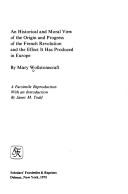
Written in France while acquaintances were being guillotined, and a serious attempt to defend the Revolution's principles while accounting for its violence. The catalogue holds it under its full original title, which continues and the effect it has produced in Europe.
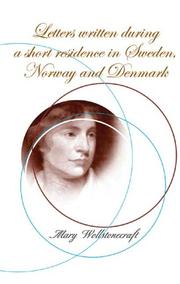
Travel letters that are also a record of heartbreak, and the book Godwin said was calculated to make a man fall in love with its author. Her best prose by a distance, and the one most readers end up loving most.

The unfinished novel, set in a madhouse where a husband has confined his wife, extending the Rights of Woman from education to marriage, custody and sexual desire. It goes further than the Vindication did and reads as the direction she was travelling when she died.
The life, and the scandal that buried it
IntermediateUnderstand why Wollstonecraft had to be rediscovered: her husband published a candid memoir naming her illegitimate child, her suicide attempts and her affairs, and reviewers used it to discredit the arguments for a century. This stage sets that memoir against two modern biographies.
▸ Study plan for this stage
Pace: Five weeks for 1,171 pages. Memoirs of the author of A vindication of the rights of woman is 206 pages, written by William Godwin months after she died in childbirth, and intended as a tribute; it names her illegitimate daughter, her affairs and her suicide attempts, and reviewers used those facts t
- Godwin's candour and its consequences: a tribute that functioned as an attack for a hundred years
- The pattern by which a woman writer's private life is used to dispose of her arguments
- Gilbert Imlay, Fanny Imlay, and the two suicide attempts, as facts of the record rather than as scandal
- The relationship with Godwin, their marriage, and the death from puerperal fever days after Mary Shelley's birth
- The century-long eclipse and the twentieth-century recovery, of which Tomalin's book is part
- Gordon's alternating structure as an argument in itself about inheritance across a generation
- The distance between the arguments and the life, which every biographer on this path handles differently
- What did Godwin think he was doing, and what did contemporaries do with it?
- Which specific arguments of the Rights of Woman were treated as refuted by her biography, and was the refutation ever stated as an argument?
- Where does Tomalin judge Wollstonecraft harshly, and is the judgement fair on the evidence she gives?
- What does Gordon's alternating structure show about the inheritance that a chronological life could not?
- Would you have advised Godwin to publish? Answer with reference to what the memoir preserves as well as what it cost.
- Read the Memoirs and mark every disclosure a hostile reviewer could use. Then check Tomalin for how they were used.
- Take one episode — the first suicide attempt, or the relationship with Imlay — and write how Godwin, Tomalin and Gordon each present it.
- Write the review of the Memoirs that a hostile 1798 critic would have written, then the reply Wollstonecraft's argument entitles her to.
- In Gordon, read one Wollstonecraft chapter and the Mary Shelley chapter that follows it, and write what the juxtaposition asserts.
Next up: With the life and the eclipse in view, the final stage returns to her as a thinker rather than as a story.
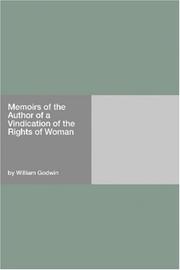
Written by her husband months after she died in childbirth, and intended as a tribute — its unguarded honesty about her private life became the weapon used against her. Read it first here, both as a document and as a lesson in how reputations are made.
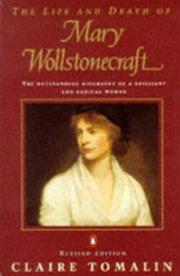
The 1974 biography that put her back into general circulation, clear-eyed about the contradictions between the arguments and the life. Still the best single-volume life; read it directly after Godwin.
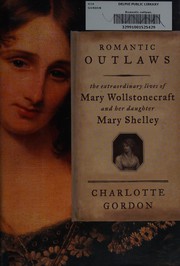
A double biography alternating chapters between Wollstonecraft and her daughter Mary Shelley, who never knew her. The structure is the argument — it makes the inheritance visible — and it is the most narratively enjoyable book on the path.
Reading her now
BeginnerClose with two books that treat her as a thinker rather than a symbol: a biography built around her intellectual convictions, and a scholarly collection covering the philosophy, the novels, the religion and the two centuries of contested reception.
▸ Study plan for this stage
Pace: Four weeks for 872 pages, both books secondary literature. Lyndall Gordon's Vindication is 576 pages and is a biography written explicitly against the habit of reading her life as a series of romantic disasters: the ideas are the spine and the affairs are episodes. Two and a half weeks at 40-50 page
- Wollstonecraft as a political thinker with a position, rather than as a symbol or a precursor
- Her religious thought, which most popular accounts omit entirely and which grounds the argument from reason
- The republican and the liberal readings of her politics, and why the choice matters
- The relationship between the fiction and the treatises as one body of argument
- Two centuries of reception: eclipse, Victorian rehabilitation, second-wave adoption, and current scholarly revision
- The standing criticisms — on class, on race and empire, on her account of the body — and what each does to the argument
- What a first great argument establishes and what it necessarily leaves for later
- How does Lyndall Gordon's decision to lead with the ideas change the shape of the life?
- What role does her religious thought play in grounding the appeal to reason, and does the argument survive without it?
- Is she better read as a republican or as a liberal? Take a side using the Companion's chapters and the primary texts.
- Which of the standing criticisms is most damaging, and can the argument be repaired against it?
- Having read the whole path, what is the single claim of hers you would most want defended today, and which book states it best?
- What did she actually invent, as against what she inherited from her dissenting and radical circle?
- Write the political theory of the Rights of Woman as a set of numbered propositions, then check them against the Companion's chapter on it.
- Take one standing criticism and write the strongest version of it and the strongest reply, citing primary texts rather than commentary.
- Set Lyndall Gordon's account of one episode beside Tomalin's from the previous stage and write which is doing more interpretive work.
- Write a 600-word answer to the path's question — what she established and what it cost her — citing books from at least four stages.
- Choose the four-book Wollstonecraft reader you would give someone with a month, and justify each choice in one sentence.
Next up: This is the end of the path: the arguments, the fiction, the life and the reception are all in hand, and she can now be read as a thinker rather than as a founding name.
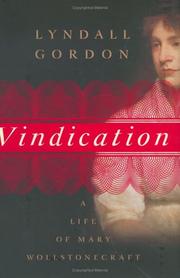
Secondary, and a biography written explicitly against the tendency to read her life as a series of romantic disasters — Gordon takes the ideas as the spine and the affairs as episodes. Catalogued under the bare title Vindication.
Secondary, and the standard scholarly collection: specialist essays on the political theory, the fiction, her religious thought and her reception from the 1790s to modern feminism. The right last book, and much more useful once the primary texts are behind you.
Discussion
Keep reading
Paths that share books, cover the same subject, or open a related topic.