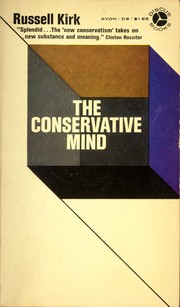
Understanding Edmund Burke: books to read, in order
Edmund Burke is claimed as the founder of modern conservatism, and the claim survives only because most people read one book of his. The Burke who wrote Reflections on the Revolution in France also spent fourteen years prosecuting the Governor-General of Bengal, defended the American colonists, argued for Catholic relief in Ireland, and began his career with a treatise on aesthetics. This path is built to show the whole of him: a modern introduction and an anthology first, then the early work, then the imperial and American speeches, then Reflections read against Paine's reply, and finally the scholarship on what he actually believed and how he became an American icon. Most of it is eighteenth-century prose written for the ear, and it rewards reading aloud.
Getting a grip on a career, not a book
BeginnerUnderstand before anything else that Burke was a working parliamentarian for nearly thirty years and that Reflections is a late intervention, not a system — and get a survey of the range so the individual speeches have somewhere to sit.
▸ Study plan for this stage
Pace: Four weeks for 911 pages, and the two books are used quite differently. Jesse Norman's Edmund Burke: The First Conservative is 338 pages, secondary, written by a serving British MP, and is half biography and half argument that Burke matters now; read the biographical half properly and the argumentat
- Burke as a working parliamentarian for nearly thirty years, with Reflections a late intervention rather than a system
- Prescription: long usage as a source of legitimacy in its own right
- Prejudice in Burke's technical sense — inherited practical judgement, not bigotry
- The party as a legitimate body of men united on a public principle, which Burke had to argue for
- The five theatres of the career — aesthetics, America, India, Ireland, France — and why any one of them alone misleads
- The distinction between a conservative disposition and a conservative doctrine, which the whole path tests
- What did Burke actually do for a living, and how does that change how you read the famous book?
- Define prescription and prejudice as Burke uses them, and give a modern case of each.
- Where is Norman most obviously arguing for a present-day position, and does it distort his account of the eighteenth century?
- Reading across the anthology, which of the five theatres least resembles the Burke of popular reputation?
- Is there a single principle that covers America, India, Ireland and France, or does the career require more than one?
- Build a career timeline from Norman: what Burke was fighting for in each decade, and which writing on this path belongs to which fight.
- From the anthology, take one passage on America and one on France and set them side by side. Write what a reader who had seen only one of them would conclude.
- List every claim Norman makes about Burke's contemporary relevance, and mark which ones need an eighteenth-century premise to work.
- Write, provisionally, what you take Burke's core commitment to be. Seal it and reopen it at the end of stage five.
Next up: The next stage is the writing from before there was a French Revolution to be against, which is where the sensibility can be seen forming on its own terms.

Secondary literature, by a serving British MP, and the most readable modern introduction: half biography, half argument that Burke matters now. Openly partisan about the second half, which is easier to discount once you know it; Norman's book is also sold under the bare title Edmund Burke, which is a separate catalogue record for the same work.

A well-chosen one-volume anthology spanning aesthetics, America, India, Ireland and France, with Kramnick's introduction. Read it now for orientation and keep it as the fallback for any speech not covered separately here; the catalogue credits it to Burke rather than to its editor.
The early Burke
IntermediateRead the writings from before Burke was a famous conservative — a satire on rationalist argument, a treatise on aesthetics that shaped Romanticism, and the pamphlet setting out his theory of party. The point of this stage is that the sensibility is fully formed thirty years before the French Revolution gave it a target.
▸ Study plan for this stage
Pace: Three weeks for 425 pages, all of it eighteenth-century prose written for the ear — read it aloud where you stall, because the sentences are built on cadence and the meaning arrives at the end. A vindication of natural society is 106 pages, a parody of Bolingbroke's rationalism so effective that rea
- The satire of abstract rationalism: an argument that proves too much proves nothing
- The sublime as founded on terror, obscurity and power, against the beautiful as small, smooth and social
- The appeal to feeling and effect over analysis, which is the same move Reflections later makes about political inheritance
- Party as principled association rather than faction, at a time when that was a novel claim
- The double cabinet and the critique of court influence — Burke attacking entrenched power rather than defending it
- Why the label conservative fits the 1790s Burke better than it fits the 1750s or 1770s one
- How does the Vindication's parody work, and what does it reveal about Burke's view of what reasoning can establish?
- What is the relationship Burke draws between the sublime and self-preservation, and between the beautiful and society?
- Trace the aesthetic argument's political shadow: what does it imply about how institutions command allegiance?
- In Thoughts on the Present Discontents, who is Burke attacking, and how does that fit the reactionary reading of him?
- Which of these three books would be hardest to predict from a reading of Reflections alone?
- Read the Vindication without knowing it is a satire for the first twenty pages, then reread with the frame. Note where the parody is detectable and where it is not.
- Apply the sublime-beautiful distinction to a landscape, a building and a piece of music. Then write what the categories cannot handle.
- Take Burke's defence of party and write the strongest eighteenth-century objection to it, then his reply.
- Find one sentence in the Enquiry about how the mind responds to obscurity, and set it beside a passage in your anthology from the writings on France.
Next up: The sensibility is formed; the next stage is Burke deploying it on three imperial questions where his conclusions surprise most readers.
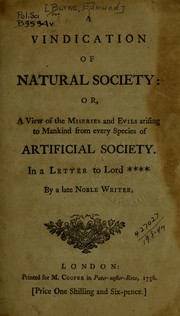
His first publication, a parody of Bolingbroke's rationalism which argues so effectively against all government that readers took it seriously. Start here: it shows the mind that later attacks abstract political reasoning already fully at work in 1756.
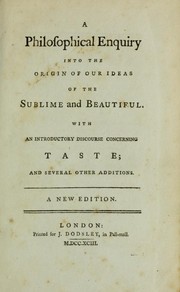
The aesthetic treatise that separated the sublime from the beautiful and influenced Kant, Wordsworth and two centuries of Romantic art. Read second; the appeal to feeling over analysis here is the same move Reflections makes about political inheritance.
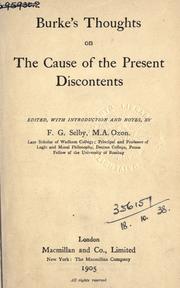
The 1770 pamphlet defending organised political parties as legitimate rather than factional, at a time when that was a novel claim. It is the practical political Burke, and it is what makes the label conservative a poor fit for the whole career.
America, India and Ireland
IntermediateMeet the Burke who defended the American colonists' claims, spent fourteen years impeaching Warren Hastings over the East India Company's conduct in Bengal, and pressed for the relief of Irish Catholics — positions that cannot be squeezed into a simple reactionary reading.
▸ Study plan for this stage
Pace: Four weeks for 602 pages. Burke's speech on conciliation with America is 126 pages in the old school edition our catalogue holds, and it is the single most-taught piece of his oratory — read it in two or three sittings, aloud if you can, and then reread the peroration. On Empire, Liberty, and Reform
- Circumstance and temper against abstract right: the argument that Parliament had the power to tax and should not use it
- The colonists' English inheritance as the source of their resistance, in Burke's account
- The Hastings impeachment and the fourteen-year campaign against the East India Company's conduct in Bengal
- The doctrine that power held in trust must answer to those over whom it is held, wherever they are
- Catholic relief in Ireland and the limits of Burke's position on it
- The problem these positions pose for reading him as a defender of established authority as such
- Geographical morality — the idea Burke attacked, that different standards govern conduct in India
- What is Burke's actual argument against taxing the colonies? Note that it is not that the tax is unjust.
- How does the Hastings prosecution square with prescription? If long usage legitimates, what legitimated the Company?
- State the geographical-morality argument and why Burke thought it the crux of the impeachment.
- On Ireland, how far does Burke go, and what does he decline to say?
- Do these positions require a different principle from Reflections, or the same one applied to different facts? Take a view now and test it next stage.
- Extract Burke's argument in the conciliation speech into numbered premises. Then mark which are empirical claims about the colonists and which are principles.
- From the Hastings material, write a one-page summary of the charge as Burke frames it, and one page of what a defender of the Company would say.
- Compare a passage on India with a passage on France from your stage-one anthology and write which one better supports the 'abuse of power' reading you will meet in stage five.
- Write out the sentence in this stage that is hardest to reconcile with the popular image of Burke, and say why.
Next up: You now know what Burke had spent thirty years arguing, which is the only way to see what is new in the book everyone reads.
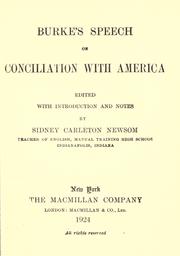
The 1775 speech urging Parliament to give way to the colonists' temper rather than assert an abstract right to tax them. The single most-taught piece of Burke's oratory and the clearest case of prescription and circumstance beating principle; the catalogue holds it in an old school edition.
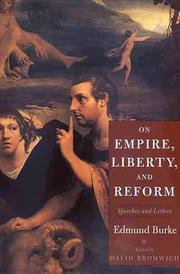
A selected volume of the major speeches and letters on exactly the subjects of this stage, including the Hastings impeachment material. The most efficient way to read the imperial Burke without working through the collected works.
Reflections, and the argument with Paine
IntermediateRead the famous book in the company of its most famous answer, so the argument is a genuine argument rather than a monologue. Burke on prescription, prejudice and inherited liberty against Paine on natural rights and the sovereignty of the living generation.
▸ Study plan for this stage
Pace: Four weeks for 804 pages, and the order is the whole design of the stage. Reflections on the revolution in France is 338 pages, furious, brilliant, digressive, and in places factually careless about events in Paris; read it over a fortnight and expect the argument to arrive in bursts between set-pie
- Prescription and inheritance as the ground of liberty, against natural rights derived from first principles
- The claim that abstract rights are true in the abstract and false in application, which is the hinge of the whole book
- The little platoon and the moral imagination as the sources of political attachment
- Paine's counter-principle: no generation can bind its successors, and the living hold sovereignty
- Paine's charge that Burke pities the plumage and forgets the dying bird
- The dispute over whether the Revolution's course vindicates Burke's prediction or merely coincides with it
- Levin's five axes as a way of seeing that the two men often are not answering the same question
- What is Burke's objection to natural rights? State it so that Paine would recognise it as his opponent's real view.
- Where is Reflections factually careless, and does the carelessness damage the argument or only the rhetoric?
- How does Paine's argument about generations handle the fact that any constitution must be written by someone at some time?
- Which of Levin's five axes produces the sharpest disagreement, and which one is closest to a misunderstanding?
- Burke wrote before the Terror. What exactly did he predict, and what did he not?
- Read the passage on the little platoon and the passage in Paine on hereditary government, and write the two-sentence version of each that its opponent would accept as fair.
- List every prediction Burke makes about where the Revolution will lead, and mark each as vindicated, falsified, or unfalsifiable.
- Using only Reflections and the stage-three speeches, write the case that Burke's position is consistent across America and France. Then write the case that it is not.
- Take one of Levin's five axes and rewrite the dispute along it in 400 words, without naming either man's conclusions first.
Next up: Having read the argument in its own voices, the last stage is what two centuries of scholars have made of it — and of him.

The book everything else is measured against: a furious, brilliant and in places factually careless attack on the Revolution written a year before the Terror it half-predicted. Read it after the earlier stages so you can see which of its arguments are new and which are thirty years old.
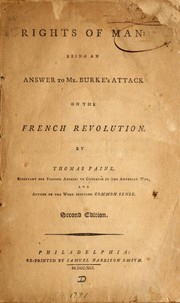
Not Burke, and included deliberately: Paine's direct reply, arguing that no generation can bind its successors and that Burke pities the plumage and forgets the dying bird. It outsold Reflections enormously and is the other half of the founding argument of modern politics.
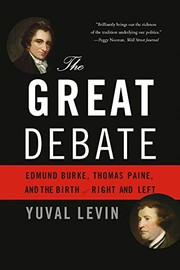
Secondary, and a clear thematic reconstruction of the Burke-Paine exchange on nature, justice, choice, generations and change. Read it after both primary texts; it is far more useful as a synthesis than as an introduction.
What Burke actually thought, and what was made of him
IntermediateTurn to the scholarship: a passionate revisionist argument that Burke's consistent theme was the abuse of power, a major intellectual biography that places him in Enlightenment political thought, and a study of how an Irish Whig became an American conservative icon. Expect these three to disagree with each other and with Norman.
▸ Study plan for this stage
Pace: Nine weeks for 2,013 pages, the heaviest stage on the path, and all three books are secondary literature that disagree with each other and with Norman. Conor Cruise O'Brien's The great melody is 692 pages, thematic rather than chronological, written by an Irish politician and historian with a case t
- O'Brien's thesis that the constant theme across America, India, Ireland and France is the abuse of power
- Burke's Irishness and his family's Catholic connections as O'Brien's interpretive key, and the objection that it is overplayed
- Bourke's contextualist method: recovering what Burke's arguments meant to the people he was arguing with
- The eighteenth-century categories — natural law, manners, empire, sovereignty — in which Burke actually thought
- Maciag's reception history: the recruitment of an Irish Whig into American conservatism from the nineteenth century to the Cold War
- The difference between what Burke argued and what a tradition needs him to have argued
- Why three serious scholars can read the same corpus and produce incompatible Burkes
- Is O'Brien's abuse-of-power thesis a discovery or a frame? Test it against the stage-three material yourself.
- What does Bourke's contextualism rule out as a way of reading Burke, and what is the cost of that discipline?
- Where do O'Brien and Bourke most directly contradict each other, and what evidence would settle it?
- On Maciag's account, which Burke did American conservatism import, and what did it have to leave behind?
- Reopen the commitment you wrote at the end of stage one. What would you change now, and which book changed it?
- Is Burke the founder of modern conservatism? Answer with the reception history in view, not only the texts.
- Take one episode — the Hastings impeachment, say — and write how Norman, O'Brien and Bourke each handle it. The divergence is the historiography in miniature.
- From Maciag, trace one specific Burkean phrase through its American career and note what it comes to mean by the end.
- Write the strongest case that Burke is not a conservative in any modern sense, using only primary texts from stages two, three and four.
- Write a 600-word answer to the path's question — why both conservatives and liberals claim him — citing at least one book from every stage.
- Choose the five-piece Burke reader you would give someone with a month, and justify each choice in one sentence.
Next up: This is the end of the path: you have read the parliamentarian, the aesthetician, the prosecutor and the polemicist, and can now say which of them the word Burkean is being used to mean.
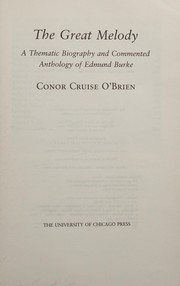
A thematic biography built around Yeats's line about the great melody in Burke's speeches on America, India, Ireland and France, written by an Irish politician and historian with an argument to press. Combative, personal, and the most enjoyable book in this stage.

The major modern scholarly study, setting Burke's whole political thought in its eighteenth-century context rather than in later conservative tradition. Long and demanding, and the corrective to every book here that has a present-day point to make; catalogued with an ampersand as Empire & Revolution.

The reception history: how a critic of the French Revolution was progressively recruited into American conservatism from the nineteenth century to the Cold War. The right closing book, because it explains why the label this path opened with exists at all.
Discussion
Keep reading
Paths that share books, cover the same subject, or open a related topic.